


Blog
Useful and free info on dental implants, cosmetic dentistry, family dentistry, and more. All posts written by our doctors, not AI or some outside marketing firm. If you are in Campton Hills, St Charles, Geneva, Batavia, Elburn, Elgin, or anywhere in Kane County, these posts will be helpful!
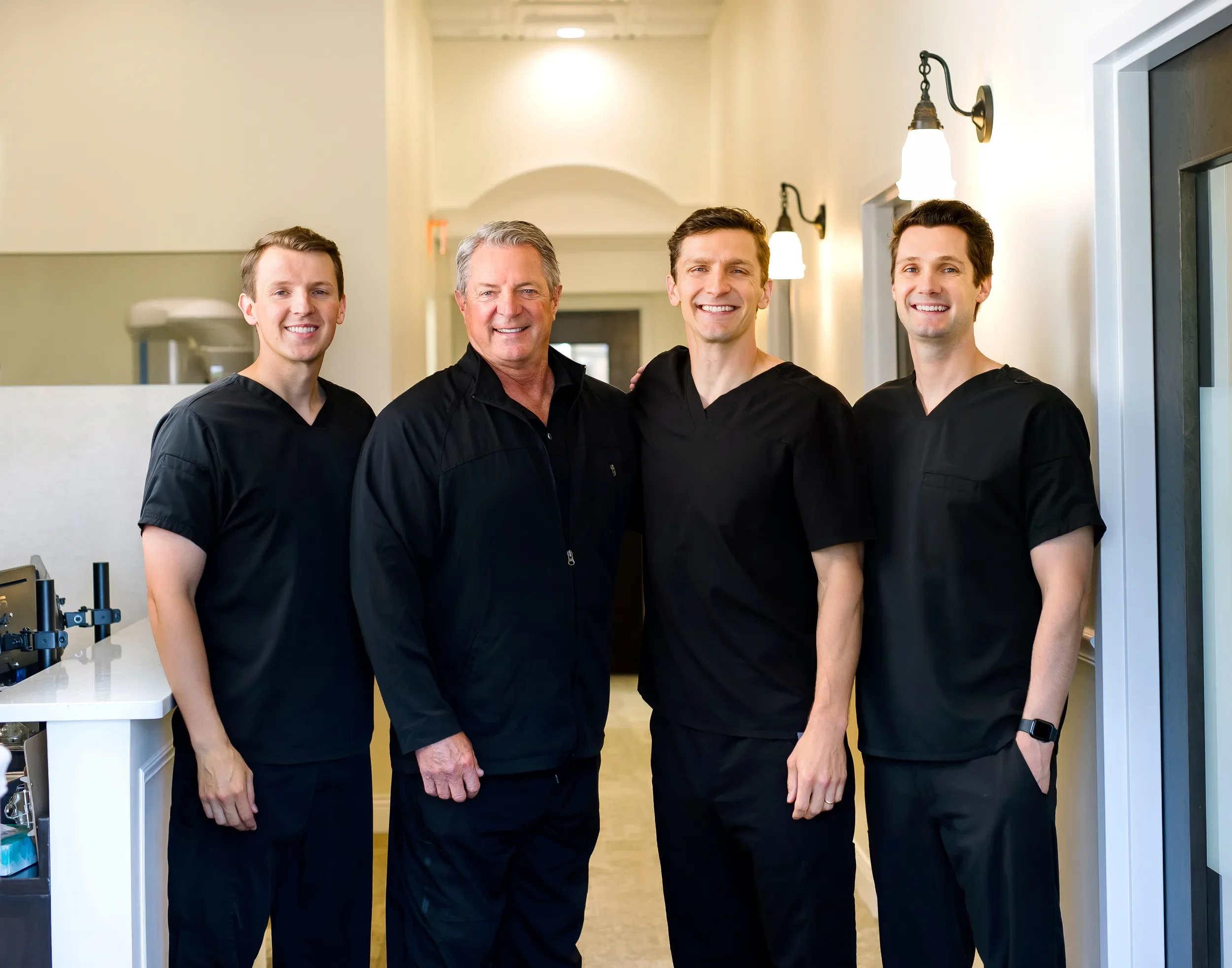
Four Teuscher Dentists, One Practice: Our Family Featured in Kane County Magazine
Kane County Magazine featured our family practice and the four Teuscher dentists in St. Charles. Here's the part a magazine profile can't capture — what four doctors under one roof means for your care.
In the News
Most families argue about where to eat. Ours argues about occlusion.
Kane County Magazine recently ran a story about our practice and how three of Dr. Michael Teuscher's four sons ended up joining him in it. It covers Dr. Michael's nearly four decades in the profession, how the family landed in St. Charles, and the renovation of our building on Campton Crossings Drive.
Read the full articleThe piece also mentions the 2026 Best of the Fox results, which we wrote about separately. That one came from our patients, and it still means more to us than anything a profile can say.
But there's a part of the story that's hard to capture in a magazine profile, and it's the part that actually changes your experience as a patient.
What "four dentists under one roof" really means for you
In most practices, a complicated case means a referral. You get a name, a phone number, a new set of paperwork, and a doctor who's meeting you for the first time with none of your history.
Here, a complicated case means we walk down the hall.
Each of us has pushed our training in a different direction:
-
MT
Dr. Michael Teuscher
Nearly 40 years of restorative, cosmetic, and general dentistry — from knowing when a tooth needs a crown to caring for families across generations.
-
RT
Dr. Riley Teuscher
Orthodontics for children and adults and cosmetic dentistry, with a focus on growth, development, and airway health.
-
BT
Dr. Brayden Teuscher
Implant dentistry, wisdom teeth removal, restorative and cosmetic dentistry, and occlusion.
-
JT
Dr. Jameson Teuscher
Restorative and cosmetic dentistry — rebuilding damaged teeth and refining the way a smile looks.
One patient, one plan
Say someone comes in with worn front teeth, a narrow palate, and a molar that's failing. At a lot of offices that becomes three referrals and three waiting rooms.
Here it becomes one conversation. Whether that molar needs a bone graft after it comes out. Whether an implant can go in the same day or needs to wait. Whether the airway and the bite are what wore the front teeth down in the first place. And what those front teeth should actually look like when we're finished. Then one treatment plan comes back to you — not four opinions you're left to reconcile on your own.
The same thing happens on bigger cases. A full-arch rehabilitation or a set of implant-supported dentures involves surgery, bite design, and esthetics all at once. Those are exactly the cases that go better when four people who already know you are in the room.
That's the whole reason we built the practice this way.
Legacy isn't just the name on the sign
The word "legacy" could easily be a marketing flourish. For us it's a standard we inherited: take the time, explain the options, and treat the person rather than the tooth.
"Choose Excellence" has been our phrase since the beginning — and it applies as much to how long we sit with you as it does to the materials we use.
We're grateful Kane County Magazine told the story, and more grateful to the patients across St. Charles, Geneva, Campton Hills, Elburn, and the Fox Valley who made it worth telling.
Been putting off a complicated dental question?
If you've been avoiding it because you didn't want to get bounced between three offices, give us a call or text. And if nerves are part of what's kept you away, oral sedation has helped a lot of our patients get through the door.
Teuscher Legacy Dental40W131 Campton Crossings Drive, St. Charles, IL 60175
The Doctors at Teuscher Legacy Dental
Serving St. Charles, Geneva, Campton Hills, Elburn, and the Fox Valley.
Not Enough Bone for an Upper Implant? A Real Sinus Lift Case, Start to Finish
The CBCT showed 6 mm of bone between the ridge and the sinus — enough to start an implant, not enough to finish one. Here's the whole case, photos included.
Upper back teeth sit directly beneath the maxillary sinus — an air space that tends to expand downward once a tooth is gone. When a patient wants an implant there, the question is rarely whether we can do it. It's whether there is enough bone between the top of the ridge and the floor of that sinus to hold one.
In this patient's case, there wasn't. After a failed root canal was removed and the socket was grafted, our CBCT measured roughly 6 mm of bone from the crest of the ridge up to the sinus floor. That is enough to start an implant, but not enough to finish one properly.
So we made more. This post walks through the whole case — the failing tooth, the socket graft, the 3D measurements, and the internal sinus lift performed through the implant site itself, with the implant placed at the same visit. It's a procedure many patients are told requires a referral to a specialist and a separate surgery. It often doesn't — this one was done start to finish in our St. Charles, Illinois office.
Key takeaways
- An internal sinus lift (also called a crestal, transalveolar, or osteotome sinus lift) raises the sinus floor through the same small opening used to place the implant — no side window, no separate surgical site.
- It is generally suited to gaining a modest 2–4 mm of height when there is already enough bone to stabilize the implant. Larger deficits still call for a lateral window approach.
- Implants placed with this technique show a pooled 92.8% survival at three years across 4,388 implants, and other reviews report better than 96% at five years.1,2
- The site was prepared by osseodensification — burs that compact bone outward instead of drilling it away. The technique is associated with higher insertion torque and lower membrane perforation rates than the original malleting approach.8
- A short, wide implant (4.6 × 7.5 mm) was chosen deliberately, so the sinus only had to be raised a couple of millimeters rather than four or five.
- This implant reached 50 Ncm of insertion torque — excellent primary stability. That let us place a healing abutment the same day and skip the second-stage uncovery surgery entirely.
- Gum thickness measured 4–5 mm, which is favorable. Thicker tissue around an implant is associated with better crestal bone stability over time.3
- We perform sinus lifts, extractions, grafting, implant placement, and the final crown under one roof — so one plan carries the case from start to finish.
In this article
- Why upper molars are the hard ones
- Step 1: A root canal that failed
- Step 2: Extraction and socket graft
- Why we placed at eight weeks
- Step 3: The CBCT — 6 mm
- Internal vs. lateral sinus lift
- Step 4: Planning the implant
- Surgery day, step by step
- Why 50 Ncm changed the plan
- Why 4–5 mm of gum tissue matters
- Are you a candidate?
- Do you need a specialist?
- Frequently asked questions
Why upper molars are the hard ones
Your maxillary sinuses are two air-filled chambers in your cheekbones. The floor of each one sits directly above the roots of your upper premolars and molars — sometimes separated by a centimeter of bone, sometimes by a paper-thin shell.
When an upper molar is removed, two things happen at once. The ridge resorbs from below, as it does anywhere in the mouth. But the sinus also pneumatizes — it expands downward into the space the roots used to occupy. You lose bone from both directions.
This is measurable. A radiographic study of extraction sites found the sinus floor dropped an average of 1.83 mm after extraction compared with the same site beforehand, and second molar sites averaged closer to 3 mm. Sites where several adjacent teeth were removed pneumatized about four times as much as single-tooth sites.4
That combination — ridge collapsing from below, sinus descending from above — is the single most common reason a patient is told they "don't have enough bone" for an upper back implant. It is also why we take socket grafting at the time of extraction so seriously in this part of the mouth. You can read our full real-case walkthrough of that step in Part 1 of our bone graft case series.
Step 1: A root canal that failed
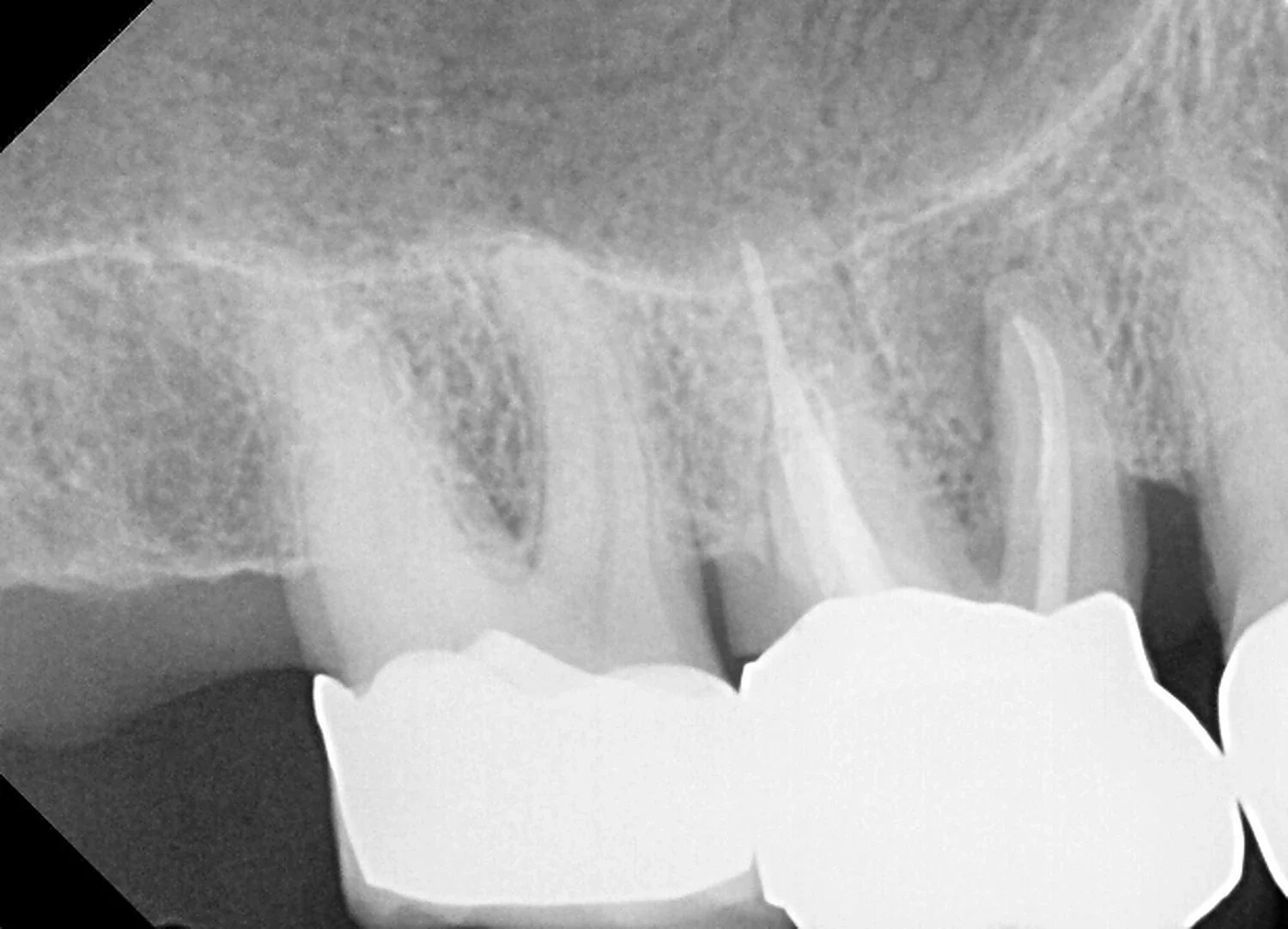
This patient came to us with tooth #3 — the upper right first molar — carrying a root canal done years earlier. The X-ray showed what we were concerned about: dark areas at the root tips, the radiographic signature of ongoing infection in the bone around the ends of the roots.
A previously treated tooth can hold low-grade infection for a long time without hurting. That is worth repeating, because patients are often surprised: no pain does not mean no problem. We wrote more about silent findings like this one in what a dental CBCT scan can reveal.
We reviewed every option before recommending removal — retreatment of the root canal, referral to an endodontist, apical surgery. In this case the combination of the infection, the amount of remaining tooth structure, and the long-term prognosis pointed the same direction. The tooth came out.
Our standard: we don't extract a tooth that can be predictably saved. When a tooth genuinely can't be, the next decision — what happens to the bone in the hours after it's removed — determines how good the implant can be two years later.
Step 2: Extraction and socket preservation graft
The tooth was removed as gently as possible, preserving the bony walls of the socket rather than expanding them. Then we filled the socket with particulate bone graft, covered it with a collagen plug, and sutured the site.
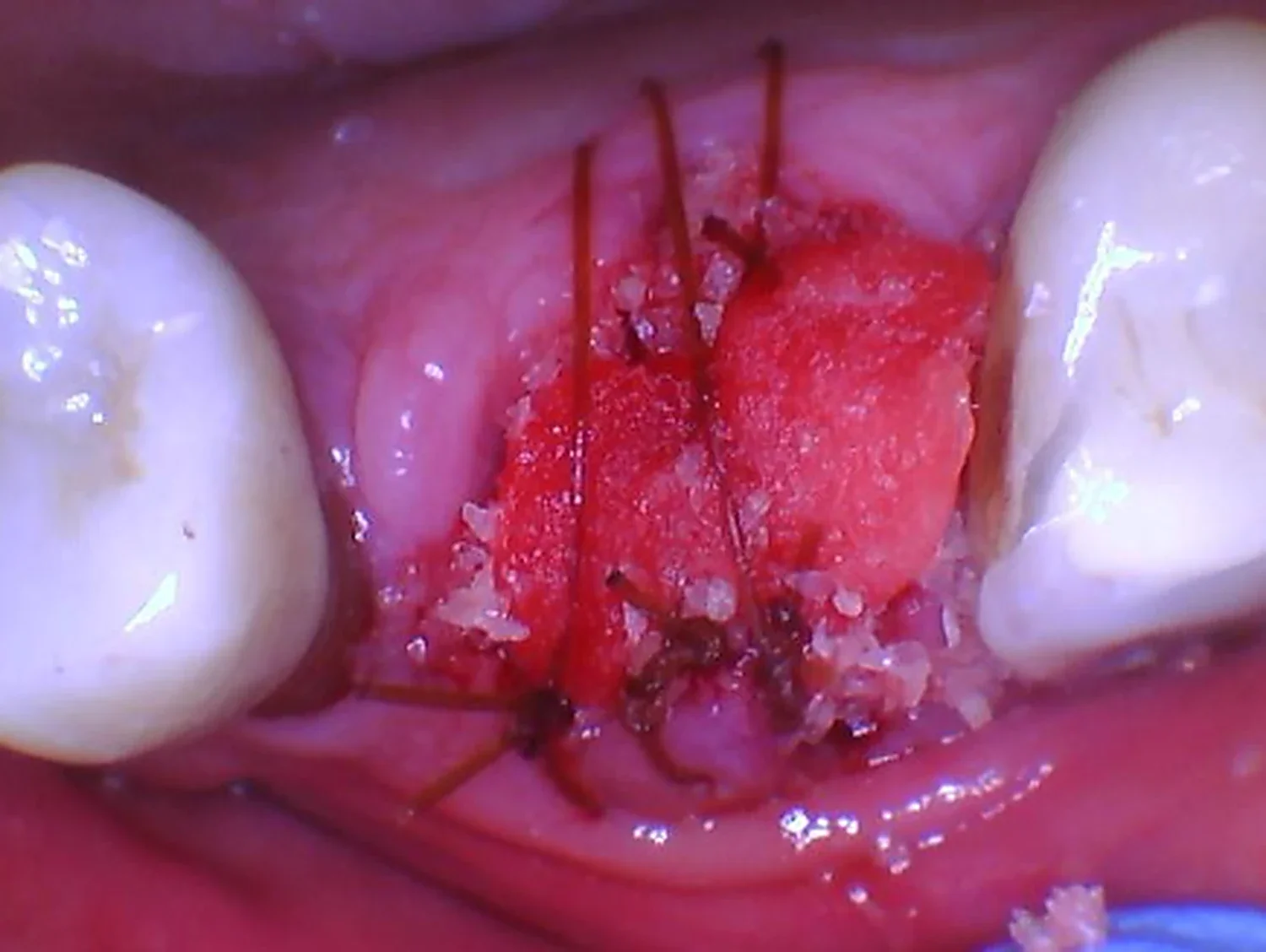
About those loose particles. Grafting is a slightly messy procedure, and this photo shows it honestly rather than cleaned up. For several days afterward you may taste or feel grit, and a few granules may rinse out. Surface particles at the edges of the site were never structural — the graft that matters is the volume packed down inside the socket, held there by the collagen plug and the sutures you can see. Losing a few from the top doesn't change the result.
What isn't routine is losing a meaningful amount out of the socket itself: a visible divot forming, a lot of material coming away at once, or the plug dislodging in the first few days. That does affect the outcome and is worth a phone call rather than a wait. Grit is expected; emptying is not. Avoiding vigorous rinsing, spitting and straws early on is the single best thing you can do to keep the graft where it belongs.
A socket preservation graft is not a bone transplant in the way people often imagine. It is a scaffold. The graft particles hold the space and give your own cells a lattice to migrate into, and over the following months your body gradually replaces that scaffold with living bone of its own.
Without it, a substantial share of ridge width and height is lost in the months after extraction — most of it within the first eight weeks.7 In the upper molar region, that loss gets compounded by the sinus expanding downward into the same space. Grafting at the time of extraction doesn't stop sinus pneumatization — but it protects the bone below, which is the half of the equation we can control.
More on this decision, including when it isn't necessary: do I need a bone graft after a tooth extraction? And if you'd like to see how these sites look as they heal week by week, we've documented that too — at one week, two weeks, and one month.
Why we placed the implant at eight weeks
Conventional guidance after a socket graft is to wait four to six months before placing an implant. We placed this one at eight weeks, and that deserves an explanation rather than a shrug — faster is not automatically better, and in plenty of cases we do wait the longer interval.
Two things made the shorter timeline reasonable here.
The first is what we grafted with. A graft weighted toward cancellous bone — the spongy, highly vascular type — with a smaller cortical fraction turns over faster than a dense cortical-heavy graft. Cancellous particles give blood vessels and bone-forming cells more surface to colonize, so the body converts the scaffold into its own living bone sooner.
The second is how we prepare the site. Because osseodensification compacts bone rather than cutting it, we can achieve strong primary stability in bone that is still maturing — bone that a conventional drilling protocol might find too soft to hold an implant firmly. The technique widens the window of when a site is ready.
Neither reason, by itself, would justify going early. Together, with a healthy patient and a CBCT confirming the graft had consolidated, they did. We verify this case by case; we don't apply an eight-week rule to everyone.
The honest version: shortening a healing timeline is only a benefit if the result holds up for decades. We shorten it when the biology supports it and we leave it alone when it doesn't — the same reasoning we apply to same-day implants.
Step 3: The CBCT — and the number that changed the plan
Once the graft had matured, we took a CBCT scan to measure what we actually had to work with. This is the step a 2D X-ray cannot do. A flat film overlaps the sinus floor, the ridge, and the roots of neighboring teeth into one image, and it routinely makes available bone look like more than it is.
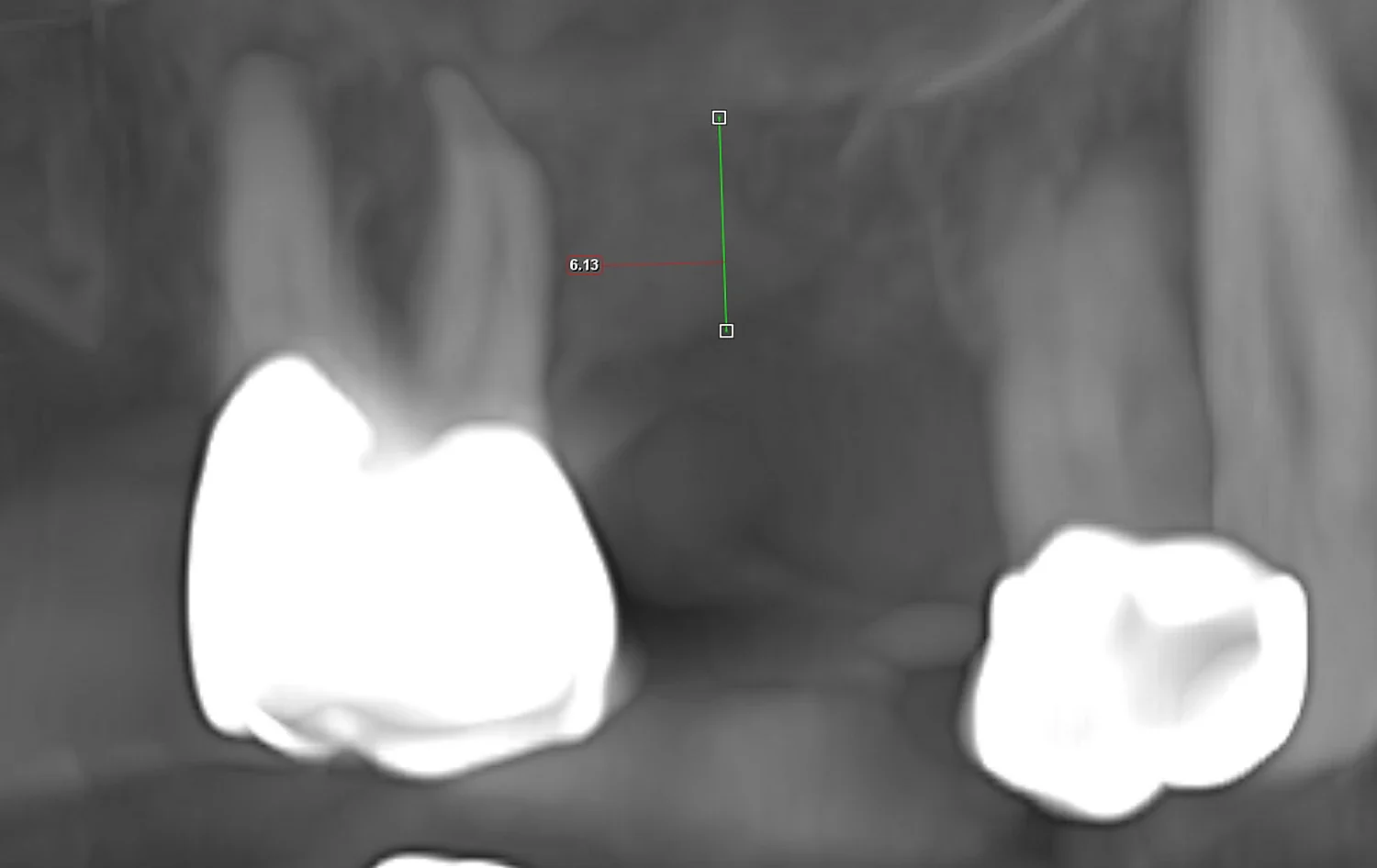
Six millimeters is an interesting number. It sits right at the decision point.
With less than about 5 mm, an implant often cannot get enough grip in the native bone to stay still while it heals, and a lateral window sinus lift — a separate, larger procedure, usually with its own healing period before the implant goes in — becomes the better choice. With 10 mm or more, no lift is needed at all.
At 6 mm, we had enough bone to hold an implant firmly on the day of surgery, and we could raise the sinus floor through the implant osteotomy itself to gain the extra height. One surgery. One site. No window through the side of the jaw.
Internal sinus lift vs. lateral window: what's the difference?
Both procedures do the same fundamental thing — gently lift the Schneiderian membrane that lines the floor of the sinus and place graft material underneath it, so new bone forms in the space created. The difference is how we get there.
| Internal (crestal) sinus lift | Lateral window sinus lift | |
|---|---|---|
| Access | Through the implant site itself, from the top of the ridge | Through a window opened in the side of the upper jaw |
| Typical height gained | About 2–4 mm5 | Larger gains possible |
| Bone needed to start | Generally 5–6 mm or more | Can be used with very little remaining bone |
| Implant timing | Usually placed the same day | Often a separate surgery months later |
| Membrane perforation | Reported less frequently than the lateral approach2 | Reported in roughly 25–44% of cases2 |
| Patient experience | Smaller site, less swelling, one appointment | Larger surgical field, more post-op swelling |
| At our office | Performed in-house | Referred to a periodontist or oral surgeon |
Swipe the table sideways to compare both approaches.
Neither one is better in the abstract. The lateral window is the right answer — sometimes the only answer — when the deficit is large. But when a case can be handled through the crest, the patient gets the same end result through a much smaller door.
The goal was never to avoid a sinus lift. It was to do the smallest one that would work.
Step 4: Planning the implant in 3D
With the anatomy measured, we planned the implant in our 3D software before touching the patient — position, angle, depth, and how much sinus elevation would be required to accommodate the implant length we wanted.
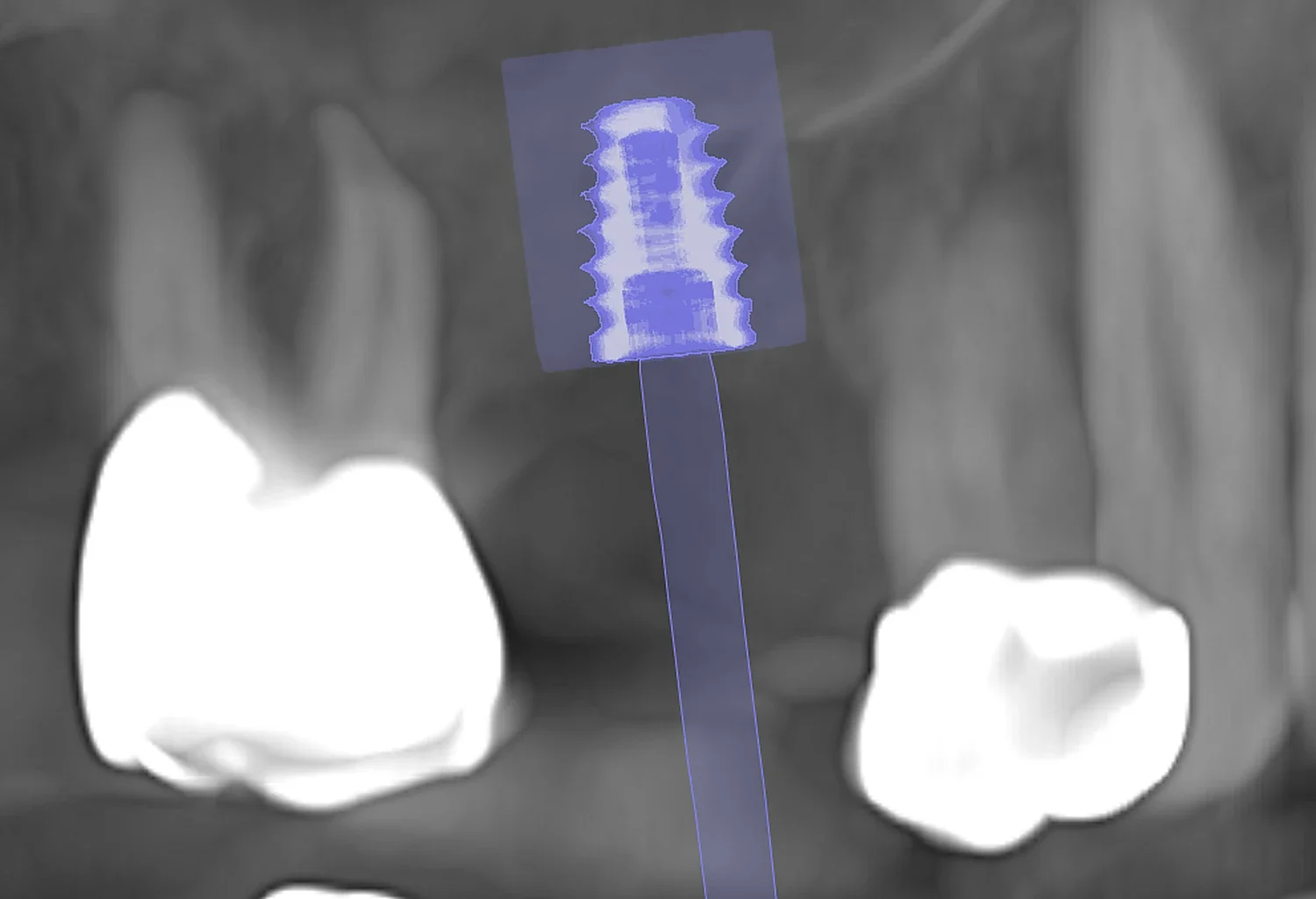
This image is the whole argument for 3D planning in one picture. The implant length that gives this patient the best long-term result does not fit in the bone that exists today. Knowing that before surgery is the difference between a planned, controlled sinus elevation and an unwelcome surprise with the patient already numb.
Modern implant planning also inverts an older habit. Rather than putting the implant wherever bone happens to be and building a crown to match, we decide where the final tooth needs to be for proper bite and appearance — then create the bone to support an implant in that position. More on that philosophy in how we use surgical guides for dental implants.
Surgery day, step by step
The internal sinus lift technique was introduced by Dr. Robert Summers in 1994 and has been refined steadily since.6 The principle is elegant: instead of cutting the bone away, you move it.
- Densify the bone instead of drilling it away. We prepare the site with Densah burs run in reverse — counterclockwise, under heavy irrigation. Rather than excavating bone and carrying it out of the site, the burs compact it outward against the walls of the osteotomy. In the posterior maxilla, where bone is naturally soft, that distinction matters enormously: we finish with a denser, stronger site than we started with instead of a weaker one.
- Stop short of the sinus floor. The preparation advances to within roughly a millimeter of the sinus, deliberately leaving a thin shelf of bone intact. The CBCT measurement tells us exactly where to stop.
- Lift the membrane with bone, not with an instrument. As the bur advances, compacted bone is propelled ahead of it and a gentle hydraulic wave lifts the sinus membrane upward. The patient's own bone acts as the cushion between instrument and membrane — which is a large part of why this approach reports lower perforation rates than the original malleting technique.8
- Graft beneath the membrane. Graft material is introduced through the osteotomy and advanced in increments. Each increment tents the membrane a little higher and creates the space where new bone will form.
- Verify the lift. We confirm the membrane is intact and the elevation is adequate before anything else happens. If a membrane tears, the plan changes on the spot — that is a judgment call made in the moment, which is why experience matters more than any single technique.
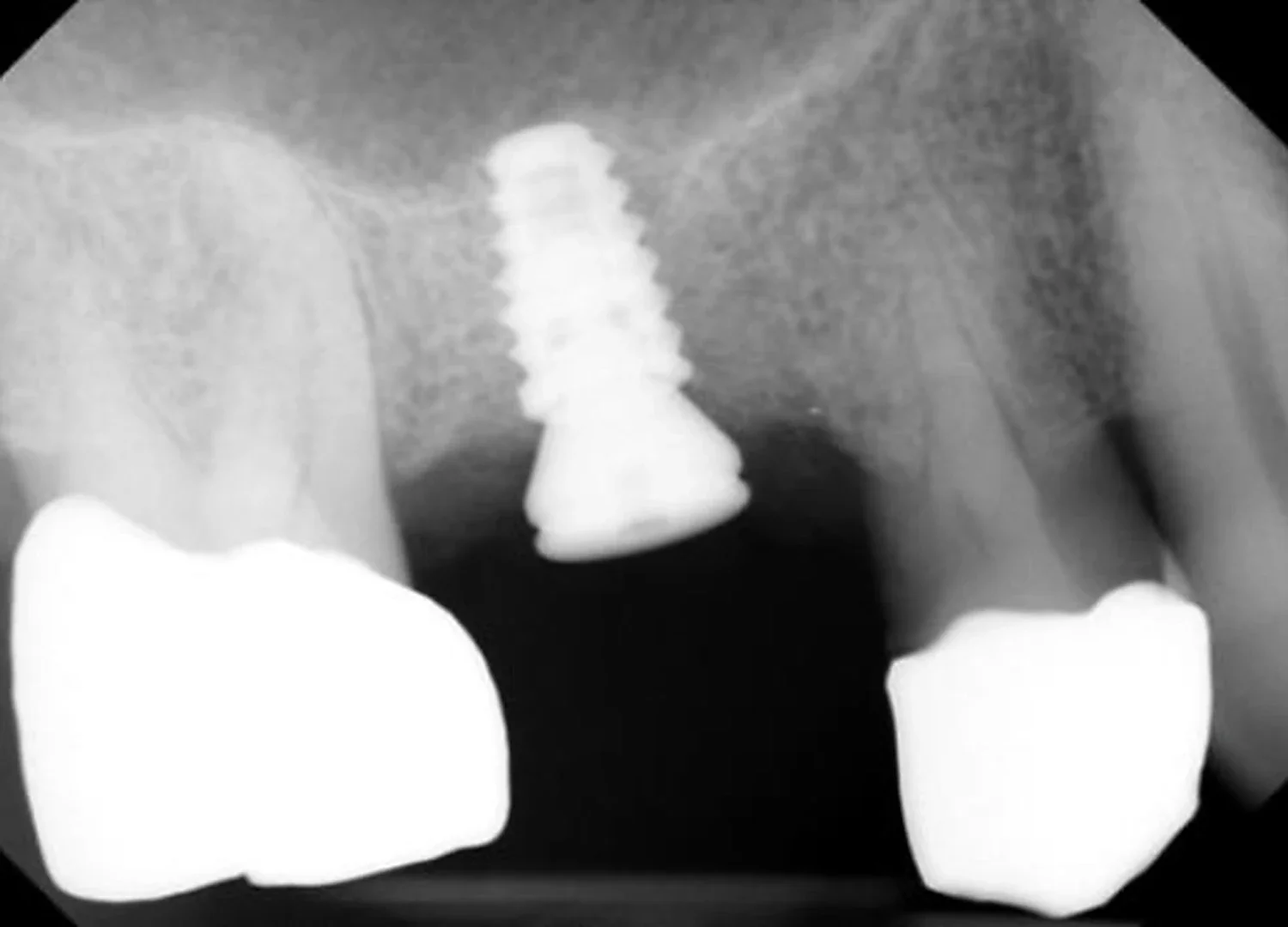
- Place the implant. A 4.6 × 7.5 mm BioHorizons Tapered Short implant goes into the prepared site, engaging the densified native bone below for stability while its upper portion sits within the newly grafted space.
- Measure insertion torque. This is the number that determines what happens next — and in this case, it determined a great deal.
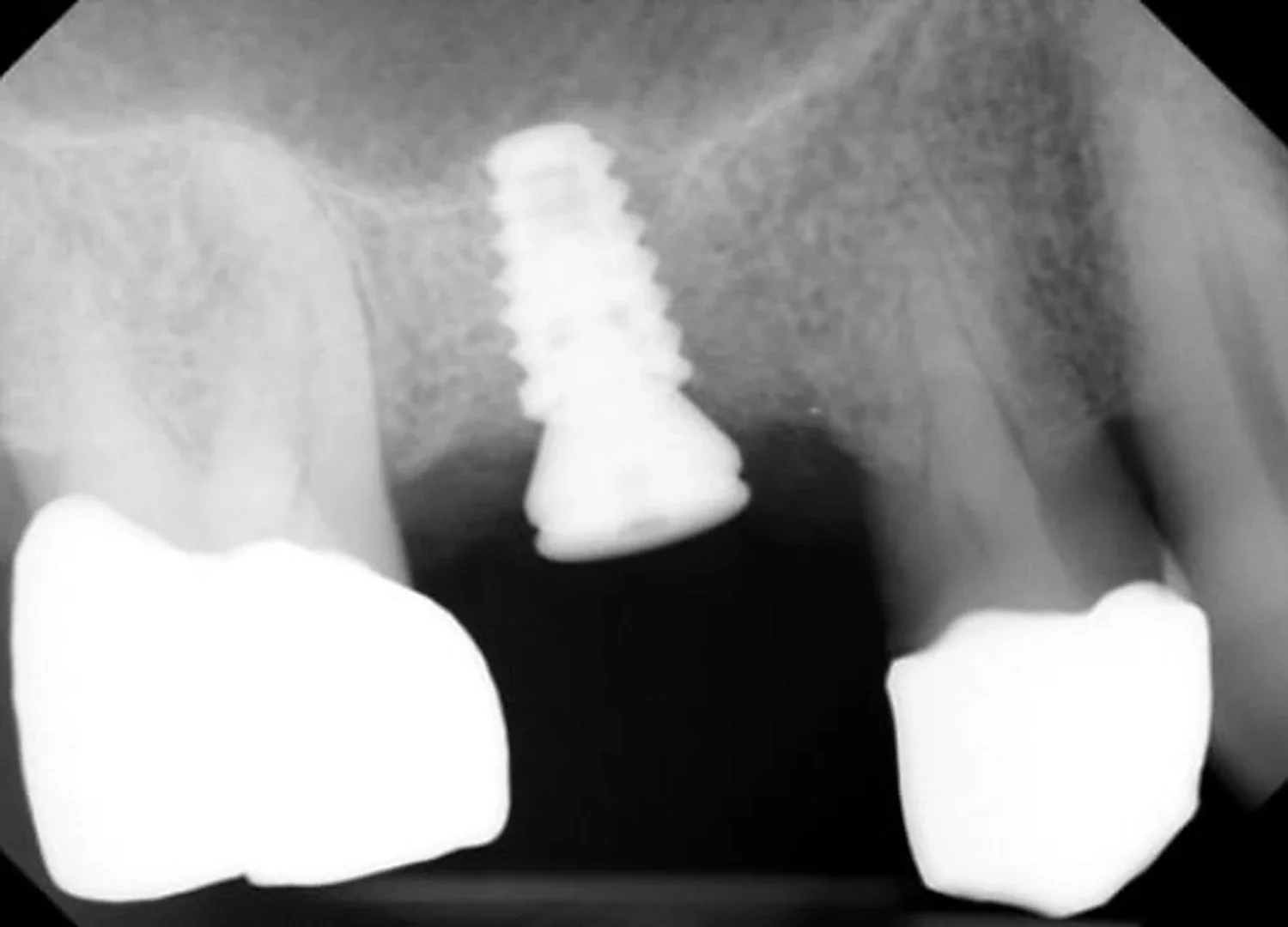
This is the image we want patients to see, because it makes the abstract part concrete. The sinus floor used to sit right about where the top of that implant is now. We moved it, filled the space underneath, and the implant is anchored through both the patient's original bone and the newly created volume above it.
Why a shorter implant was the right call here
There's a decision buried in that radiograph worth pointing out. We used a short implant — 7.5 mm — rather than a longer one, and that was deliberate.
With roughly 6 mm of bone to start, a longer implant would have demanded a correspondingly larger sinus elevation: more lift, more graft, more membrane stretched further, more that can go wrong. Choosing a short implant meant we needed to raise the sinus floor by only a couple of millimeters. Modern short implants in the posterior maxilla perform well, and the wider 4.6 mm diameter compensates for the reduced length by increasing the surface area in contact with bone.
Put plainly: we sized the implant to fit the patient's anatomy rather than reshaping the patient's anatomy to fit a standard implant. The smaller the intervention that still produces a durable result, the better.
What patients actually feel: most are surprised by how unremarkable this is. The site is numb, the pressure is gentle and brief, and because nothing is opened through the side of the jaw, swelling is typically modest. We offer oral sedation for patients who want to be more relaxed, and televisions in the ceiling for everyone else.
Why 50 Ncm changed the plan
When an implant is seated, we measure how much rotational force it takes to drive it to its final position. That figure — insertion torque, measured in newton-centimeters — is our best immediate read on primary stability: how firmly the implant is locked into bone on day one.
This implant torqued out at 50 Ncm. That is excellent, particularly in the posterior maxilla, where bone is often softer than anywhere else in the jaws, and particularly in a site that had been grafted and included a sinus elevation.
It also wasn't luck. Compacting the bone outward during preparation rather than drilling it away leaves a denser site for the implant to thread into, and studies comparing the two approaches consistently find higher insertion torque with the densifying technique.8 The instrumentation choice made earlier in the surgery is a direct reason the number came out where it did — and therefore a direct reason this patient avoided a second procedure.
This case at a glance
- Site
- Tooth #3 — upper right first molar
- Starting problem
- Failed root canal with periapical infection
- Prior step
- Extraction with socket preservation graft (70/30 cancellous–cortical)
- Healing interval
- 8 weeks, graft to implant placement
- Residual bone height
- ~6 mm, crest to sinus floor
- Procedure
- Internal (crestal) sinus lift with simultaneous implant placement
- Instrumentation
- Versah Densah burs, osseodensification sinus lift protocol
- Implant
- BioHorizons Tapered Short, 4.6 × 7.5 mm
- Insertion torque
- 50 Ncm
- Soft tissue thickness
- 4–5 mm
- Result
- Healing abutment placed same day — second-stage surgery eliminated
Here is why that matters to the patient rather than just to us. Implants are often placed in two stages: the implant is buried under the gum to heal undisturbed, and then a second minor surgery months later reopens the tissue to attach a healing abutment and shape the gum around it. Two appointments. Two episodes of numbing. Two healing periods.
When primary stability is strong enough, we can skip that. We placed the healing abutment at the same visit — a small titanium cap that protrudes through the gum, protects the implant, and begins sculpting the tissue contour that the final crown will emerge through.
One number, measured in about two seconds, removed an entire surgery from this patient's treatment plan.
This is a decision made at the chair, not in advance. We plan for the possibility of a one-stage approach, but we only commit to it when the bone cooperates. If this implant had torqued in at 15 Ncm, it would have been buried and allowed to heal quietly, and the patient would have come back for a brief uncovery later. Neither path is a failure. One is simply more efficient when the biology allows it — the same philosophy we described in our honest take on same-day implants.
Why 4–5 mm of gum tissue matters more than you'd think
We also measured the thickness of the gum tissue over the ridge: 4–5 mm. Patients rarely hear about this, but it has real consequences for how the implant looks and holds bone a decade from now.
Your body maintains a certain vertical dimension of soft tissue attachment around an implant. If the gum is thin, the body can obtain that dimension by resorbing crestal bone — trading bone for the soft tissue height it needs. A prospective clinical trial found that implants placed in thin tissue (about 2 mm or less) showed significantly greater crestal bone loss over the first year than those in thicker tissue.3
At 4–5 mm, this patient has a comfortable margin. Practically, that meant we could select a taller healing abutment to pass cleanly through the tissue, and we can expect a more stable bone level and a better emergence profile when the final crown is placed.
It is a small measurement that most patients never hear mentioned. It is also the kind of detail that separates an implant that looks good at delivery from one that still looks good in fifteen years.
Are you a candidate for an internal sinus lift?
The honest answer is that a CBCT scan decides this, not a conversation. But broadly, an internal sinus lift tends to be a good fit when:
- You're replacing an upper premolar or molar
- You have roughly 5–6 mm or more of bone between the ridge crest and the sinus floor
- The deficit is modest — you need a few millimeters, not a rebuilt sinus floor
- Your sinuses are healthy, with no active infection or significant chronic sinus disease
- You don't have anatomy that complicates a closed approach, such as a steeply sloped sinus floor or a septum crossing the site
And the cases where we'd steer you elsewhere:
- Very little residual bone, where an implant can't be stabilized at the same visit — these need a lateral window lift, which we refer to a periodontist or oral surgeon
- Active sinus infection or untreated chronic sinusitis — this gets addressed first, often with your physician or ENT
- Large multi-tooth spans needing substantial vertical rebuilding
- Uncontrolled systemic conditions or heavy smoking, which affect healing in every grafting procedure
We also want to say this plainly: a patient who has been told they need a referral and two separate surgeries for an upper molar implant has not necessarily been told something wrong. It depends entirely on their anatomy. It is worth a second scan and a second opinion to find out which situation you're actually in.
Do you need a specialist for a sinus lift?
Not necessarily — and this is worth understanding, because it quietly determines how your case gets scheduled, priced, and handed between offices.
Sinus elevation sits in a grey zone. Oral surgeons and periodontists perform it routinely. So do general dentists with surgical training in implant dentistry. The procedure doesn't belong to a specialty. It belongs to whoever has the training, the 3D imaging, and enough repetition to do it predictably — and to manage a complication calmly if one appears.
So the useful questions aren't about credentials. They're these:
- Will they take a CBCT and actually show it to you, rather than describing it?
- Can they tell you, before surgery, what they would do if the sinus membrane perforated?
- Do they both place and restore the implant, or does your case split between two offices?
- How often do they perform this specific procedure?
At Teuscher Legacy Dental, the extraction, the socket graft, the sinus lift, the implant, and the final crown all happened in our St. Charles office. For this patient that meant one surgical plan, one CBCT, one team accountable for the result, and no gap where the case belonged to nobody. Our practice is built around that continuity — four doctors covering implant surgery, prosthodontics, airway and cosmetic dentistry under one roof, so cases that would be split across referrals elsewhere in Kane County stay in one place.
That said, the honest version of this answer has a second half, and it matters more than the first.
Where we refer out. We do not perform lateral window sinus lifts in our office. When the deficit is large enough to need one — generally when there isn't enough residual bone to stabilize an implant at the same visit — we send that case to a periodontist or oral surgeon. The same goes for significant sinus disease, extensive multi-tooth vertical rebuilding, and anatomy that makes a closed approach unwise. Those cases belong in specialist hands, and knowing exactly where that line sits is part of the job.
We work alongside specialists regularly, and we'd rather send you to one at the start than discover halfway through that a case needed more than a crestal approach could give it. The point of doing the internal lift in-house isn't to keep everything; it's that a case which genuinely fits the crestal approach shouldn't be split across two offices and two timelines just because of where it was first evaluated.
We would give the same advice to someone having this done anywhere else: what you want is continuity where continuity helps and a referral where it helps, which is a judgment made on your CBCT rather than on what a given office happens to offer.
Been told you don't have enough bone for an upper implant?
We'll scan it, measure it, and show you your own anatomy on screen — then tell you honestly which approach your case actually needs, even if that answer sends you elsewhere. Complimentary consultation with a 3D CBCT scan.
Schedule a 3D implant consultation Ask us a question
Teuscher Legacy Dental · Dental implants in St. Charles, IL
40W131 Campton Crossings Dr, St. Charles, IL 60175 · (630) 762-0000
Serving St. Charles, Geneva, Batavia, Campton Hills, Elburn, South Elgin, Elgin, Wasco, Wayne and all of Kane County.
Frequently asked questions
What is an internal sinus lift?
An internal sinus lift — also called a crestal, transalveolar, or osteotome sinus lift — raises the floor of the maxillary sinus through the same small opening prepared for the dental implant. Bone graft material is placed beneath the lifted sinus membrane to create additional height, and the implant is usually placed at the same appointment. No window is opened through the side of the jaw.
How is it different from a traditional sinus lift?
A traditional lateral window sinus lift accesses the sinus through an opening made in the side of the upper jaw. It can create large amounts of new bone and is the right choice when very little bone remains, but it is a larger procedure and the implant is often placed months later. An internal lift works through the implant site itself, typically gains about 2 to 4 millimeters, and usually allows the implant to be placed the same day.
How much bone do I need for an internal sinus lift?
Generally about 5 to 6 millimeters or more of bone between the crest of the ridge and the sinus floor, because the implant needs enough native bone to be stable on the day of surgery. In the case described here, the patient had roughly 6 millimeters. Below that threshold, a lateral window approach is often the safer and more predictable option. Only a CBCT scan can determine this accurately.
Is an internal sinus lift painful?
Most patients report less discomfort than they expected. The procedure is done with local anesthesia, the surgical site is small, and because nothing is opened through the side of the jaw, swelling is typically modest compared with a lateral window lift. Oral sedation is available for patients who prefer to be more relaxed during treatment.
How successful are implants placed with an internal sinus lift?
A systematic review of 19 studies and 4,388 implants reported a pooled three-year survival rate of 92.8%. Other systematic reviews of the osteotome technique have reported survival above 96% at five years. These are favorable numbers, comparable to implants placed in sites that required no sinus elevation at all.
What does 50 Ncm insertion torque mean?
Insertion torque measures how much rotational force was needed to seat the implant in bone, and it reflects primary stability — how firmly the implant is locked in place on the day of surgery. A reading of 50 newton-centimeters is excellent, especially in the upper back jaw where bone is typically softer. High primary stability is what allows a healing abutment to be placed immediately rather than burying the implant.
What is a healing abutment, and why does placing it the same day matter?
A healing abutment is a small titanium cap attached to the implant that passes through the gum and shapes the tissue while the implant integrates with bone. When it can be placed on surgery day, the patient avoids second-stage uncovery — a separate minor surgery months later to reopen the gum and attach it. That means one fewer appointment, one fewer anesthetic, and one fewer healing period.
Will the sinus lift affect my breathing or sinuses?
No. The procedure raises the membrane lining the sinus floor by a few millimeters and places graft material beneath it. It does not enter the sinus air space in a way that changes airflow, drainage, or breathing. Patients with active sinus infections or significant chronic sinus disease should have those addressed before grafting, which may involve coordinating with a physician or ENT.
How long does the whole process take?
It varies with the starting situation. In a case like this one — extraction, socket graft, healing, then implant placement with sinus lift, then integration before the final crown — the full sequence generally spans several months. The surgical appointments themselves are relatively short. We map out the specific timeline for your case before anything begins.
Are short dental implants as good as longer ones?
In the posterior jaws, modern short implants perform comparably to longer implants, particularly when a wider diameter compensates for the reduced length by increasing the surface area in contact with bone. Choosing a shorter implant can also avoid the need for a larger grafting procedure. In the case described here, a 4.6 × 7.5 mm implant meant the sinus floor only had to be raised a couple of millimeters instead of four or five.
What is osseodensification, and why does it matter?
Osseodensification uses specially designed burs run in reverse to compact bone outward against the walls of the implant site rather than cutting it away and removing it. In the soft bone of the upper back jaw this produces a denser, stronger site. Research comparing it with conventional drilling consistently reports higher insertion torque, and in crestal sinus elevation it also allows the membrane to be lifted by the patient's own compacted bone, which is associated with lower perforation rates.
Is it normal for bone graft particles to come out after surgery?
A few, yes. For several days after a socket graft it's common to taste or feel grit and to have a few granules rinse out — you can see loose particles sitting on the tissue in the photo earlier in this post, which is how these sites genuinely look. Surface granules at the edge of the site were never structural; the graft that matters is packed down inside the socket and held by the collagen plug and sutures. What isn't routine is losing a meaningful volume out of the socket itself, a visible divot forming, or the plug coming away in the first few days — that's worth a phone call rather than waiting. Avoiding vigorous rinsing, spitting and drinking through a straw early on is the best way to keep the graft where it belongs.
How long should you wait between a bone graft and the implant?
Commonly four to six months, though it depends on the graft material, the site, and the patient's healing. A graft weighted toward cancellous bone turns over faster than a dense cortical graft, and site preparation that compacts rather than cuts bone can achieve stability in bone that is still maturing. In this case the implant was placed at eight weeks after a CBCT confirmed the graft had consolidated. That is a case-by-case judgment, not a standard interval.
Do I need an oral surgeon or periodontist for a sinus lift?
It depends on which kind you need. An internal (crestal) sinus lift isn't restricted to a specialty — oral surgeons, periodontists and general dentists with surgical training in implant dentistry all perform it, and what matters is training, 3D imaging, how often the clinician does it, and whether they can manage a complication. A lateral window sinus lift is a larger procedure and more often belongs with a specialist. At Teuscher Legacy Dental in St. Charles we perform internal sinus lifts in-house, alongside the extraction, bone graft, implant placement and final crown; we refer lateral window cases to a periodontist or oral surgeon.
Where can I get an internal sinus lift in St. Charles or Kane County, IL?
Teuscher Legacy Dental performs internal sinus lifts with simultaneous implant placement at our St. Charles office, at 40W131 Campton Crossings Dr. We serve St. Charles, Geneva, Batavia, Campton Hills, Elburn, South Elgin, Elgin, Wasco, Wayne and the surrounding Kane County and Fox Valley area. Consultations include a 3D CBCT scan, which is the only way to know whether an internal lift, a lateral window lift, or no lift at all is appropriate for your anatomy.
How much does a dental implant with a sinus lift cost in Kane County?
In the Kane County area, a single-tooth implant including the post, abutment and final crown generally runs about $5,200 to $7,000; ours comes to just under $6,100 all-inclusive. Bone grafting and sinus elevation are quoted separately, because the amount of grafting varies considerably from case to case. We give you the complete figure in writing after the CBCT, before any treatment begins.
Can the sinus membrane tear during the procedure?
It can, and it is the most common complication of sinus elevation. Perforation is reported less frequently with the crestal technique than with the lateral window approach. When a perforation occurs, it is managed at the time — sometimes with a membrane repair, sometimes by changing the plan and allowing the site to heal before proceeding. Careful CBCT planning and controlled technique are what keep this uncommon.
Clinical sources
- Tan WC, Lang NP, Zwahlen M, Pjetursson BE. A systematic review of the success of sinus floor elevation and survival of implants inserted in combination with sinus floor elevation. Part II: Transalveolar technique. Journal of Clinical Periodontology. 2008;35(Suppl 8):241–254.
- Taschieri S, Corbella S, Saita M, Tsesis I, Del Fabbro M. Osteotome-mediated sinus lift without grafting material: a review of literature and a technique proposal. International Journal of Dentistry. 2012;2012:849093.
- Linkevicius T, Apse P, Grybauskas S, Puisys A. The influence of soft tissue thickness on crestal bone changes around implants: a 1-year prospective controlled clinical trial. International Journal of Oral & Maxillofacial Implants. 2009;24(4):712–719.
- Sharan A, Madjar D. Maxillary sinus pneumatization following extractions: a radiographic study. International Journal of Oral & Maxillofacial Implants. 2008;23(1):48–56.
- International Team for Implantology. Overview of the sinus floor elevation procedure in implant dentistry — Part 2: the transcrestal approach. ITI Clinical Insights.
- Summers RB. A new concept in maxillary implant surgery: the osteotome technique. Compendium of Continuing Education in Dentistry. 1994;15(2):152–162.
- Araújo MG, Lindhe J. Dimensional ridge alterations following tooth extraction. An experimental study in the dog. Journal of Clinical Periodontology. 2005;32(2):212–218.
- Gaspar J, Mazor Z, Bonfante EA. Osseodensification technique in crestal maxillary sinus elevation — a narrative review. Clinical Implant Dentistry and Related Research. 2025;27(1):e13399. doi:10.1111/cid.13399
This article describes a single real case treated at Teuscher Legacy Dental and is intended for patient education. Individual anatomy, healing, and outcomes vary. It does not replace an individualized dental evaluation, and the approach described here is not appropriate for every patient. Clinical images are published with patient permission.
Resin Infiltration: Erasing White Spots on Teeth - Without a Drill or Needle
Cosmetic Dentistry · St. Charles, IL
Those chalky white marks on your front teeth aren't stains, and no amount of brushing or whitening will remove them. Here's the conservative, single-visit treatment that can make them virtually disappear — while preserving nearly all of your natural enamel.

The Short Version
- White spots are structural — pores inside the enamel that scatter light. Whitening and brushing can't touch them.
- Resin infiltration fills those pores with a clear resin so light passes through normally and the spot blends in. It's a treatment we've performed for years.
- One visit, about an hour. No drilling, and usually no anesthetic.
- It's the most conservative option — nearly all of your natural enamel stays intact, and every future treatment door stays open.
Do you have white, chalky spots on your front teeth that simply won't go away, no matter what you try? You're far from alone — and more importantly, you're not without options. These marks are notoriously resistant to brushing, whitening strips, and even professional cleanings, because they aren't surface stains at all. They're a structural change within the enamel itself.
The encouraging news: we can treat many of these cases in a single visit, with no drilling and usually no anesthetic at all.
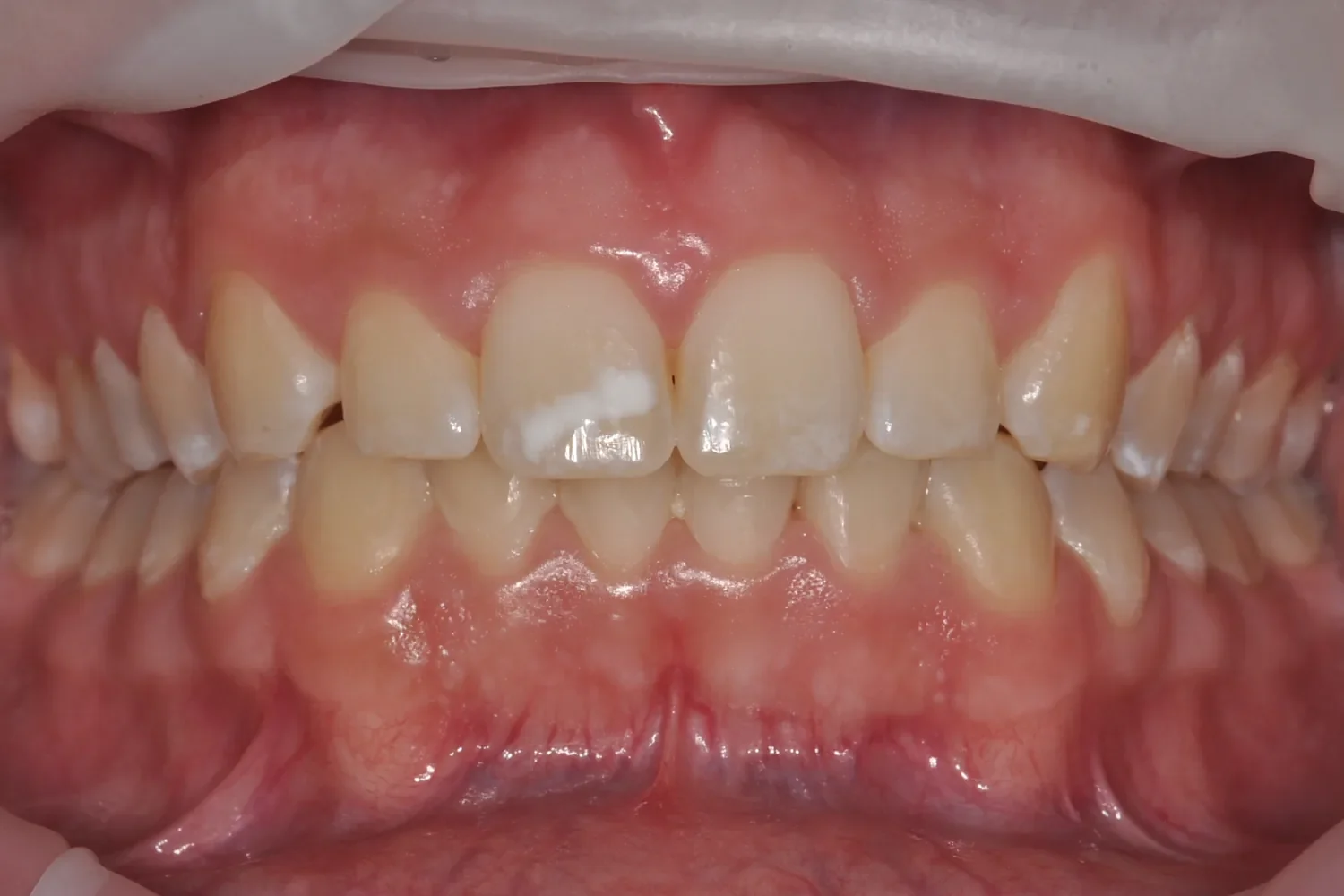
What Actually Causes White Spots on Teeth?
Healthy enamel is naturally translucent, allowing light to pass through smoothly to the dentin beneath. But when microscopic pockets of air or water form within that enamel, they change how light travels through it. Instead of passing evenly, light scatters off these pores — creating the chalky, opaque appearance dentists call a white spot lesion.
Because we approach dentistry from a whole-body perspective, we look at enamel health as one piece of a larger picture. White spots can develop from several different sources:
- Early demineralization — often driven by acid exposure, diet, dry mouth, or the oral microbiome
- Orthodontic treatment — difficulty cleaning thoroughly around brackets during braces
- The earliest stage of tooth decay — before an actual cavity forms
- Fluorosis — excess fluoride exposure during childhood tooth development
- Developmental enamel defects — irregularities that occurred while the tooth was still forming
Whatever the underlying cause, most white spots can be dramatically improved without a drill or a needle.
What Is Resin Infiltration?
Resin infiltration is a conservative cosmetic treatment that fills those microscopic pores with a clear, medical-grade dental resin. Once the resin cures, it restores the enamel's natural refractive properties — meaning light passes through the tooth the way it was designed to again, and the white spot visually blends back into the surrounding enamel.
Unlike a filling or a veneer, resin infiltration doesn't cover the problem — it corrects the way light interacts with your enamel at a microscopic level, preserving nearly all of your natural tooth.
What to Expect During Your Appointment
One of the greatest advantages of resin infiltration is how straightforward the visit is. Here's what treatment looks like from start to finish:
- Clean and isolate. The tooth is thoroughly cleaned and isolated to keep the treatment area completely dry.
- Prepare the enamel. A specialized gel is applied to gently open the surface of the affected enamel.
- Infiltrate. The tooth is dried and a low-viscosity liquid resin is applied, allowing it to soak deep into the porous, weakened enamel.
- Cure and polish. The resin is hardened with a curing light, then polished to a smooth, natural-looking finish.
Most patients describe the procedure as comfortable and easy, and it's typically completed in about an hour — often with no numbing required at all. Many watch something on the TV mounted above the chair and are surprised when we tell them we're finished.
Why Patients Choose Resin Infiltration
- No drilling
- Usually no anesthetic or numbing
- Preserves your healthy, natural tooth structure
- Immediate, visible cosmetic improvement
- Completed in a single one-hour visit
A Real Patient Case
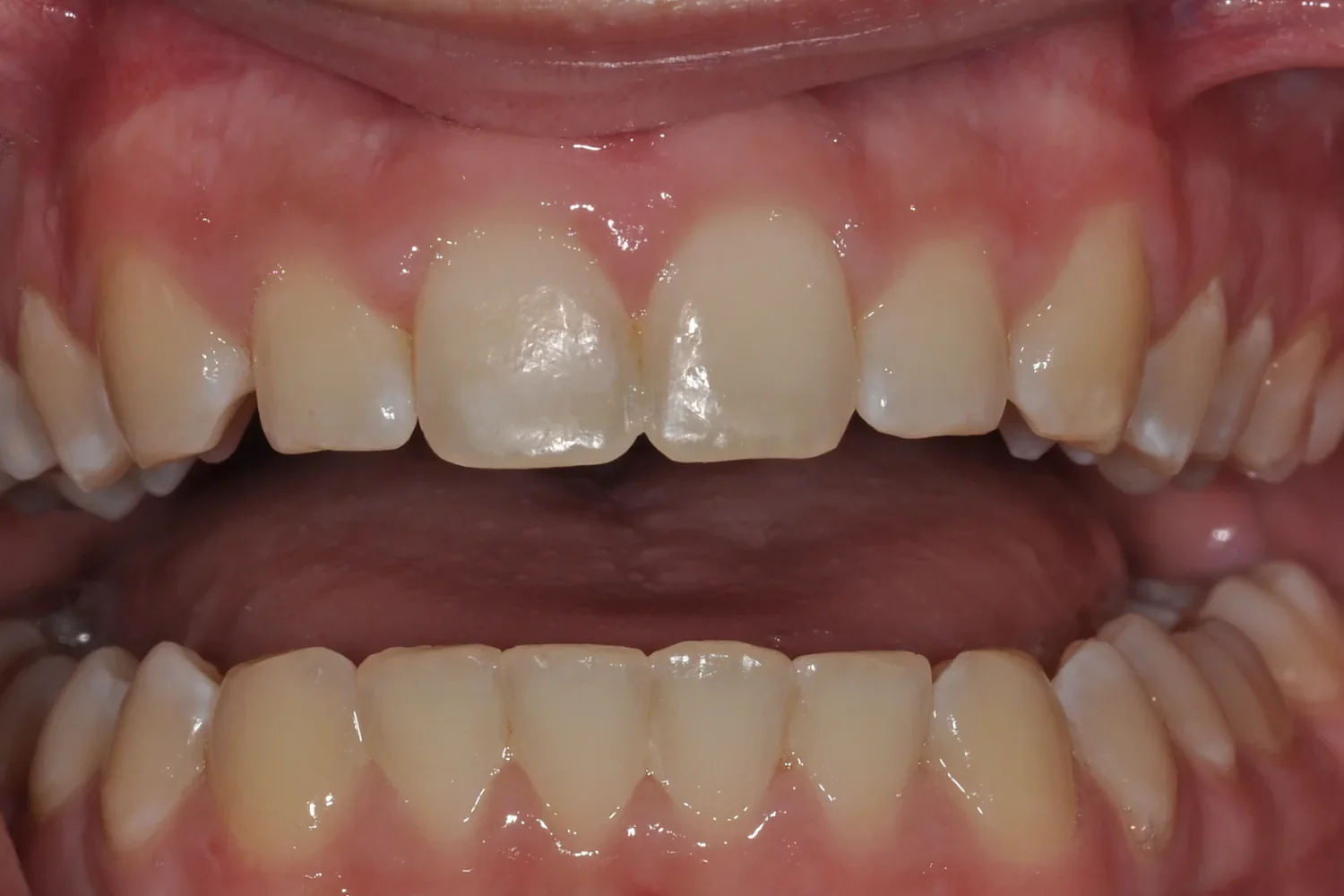
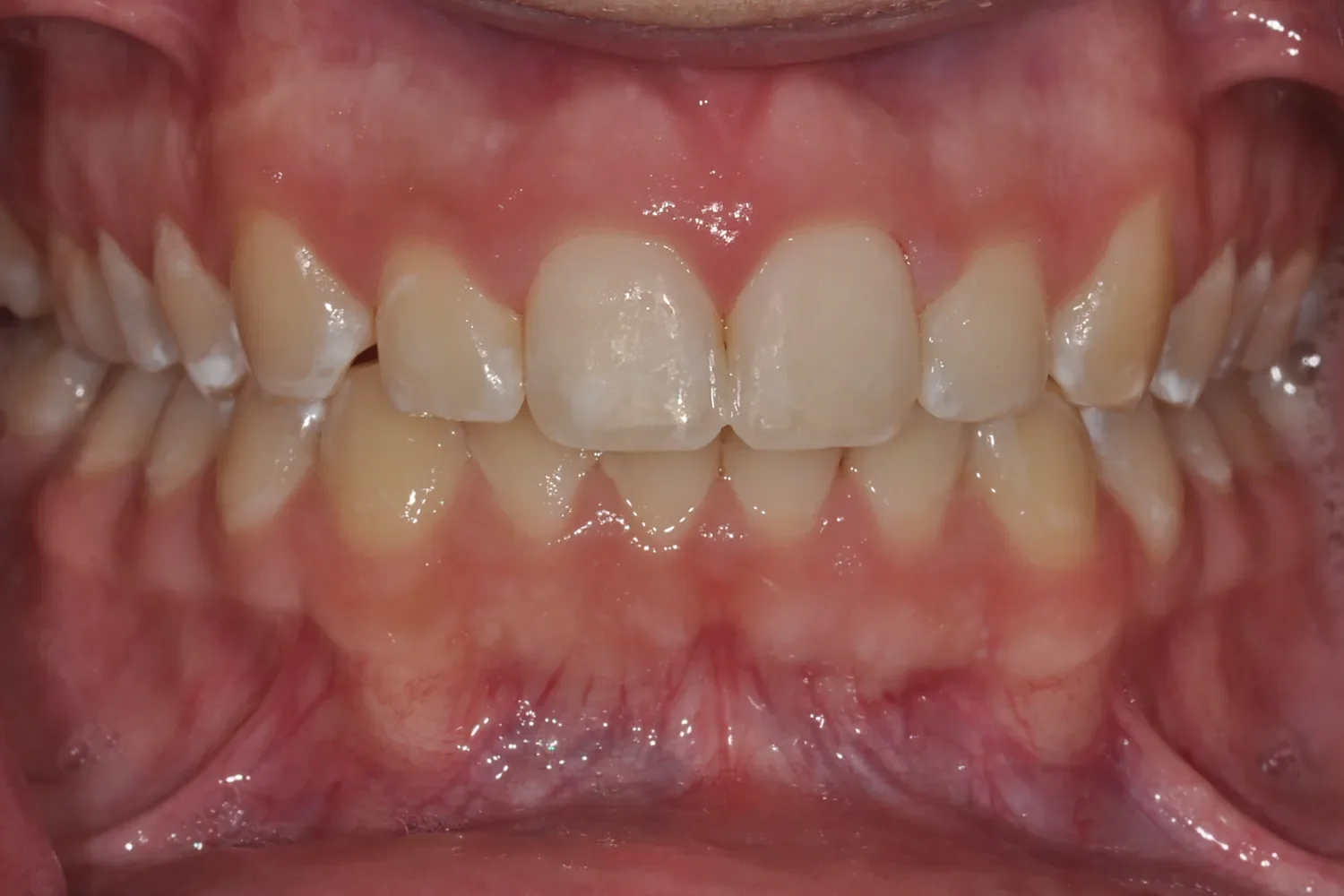
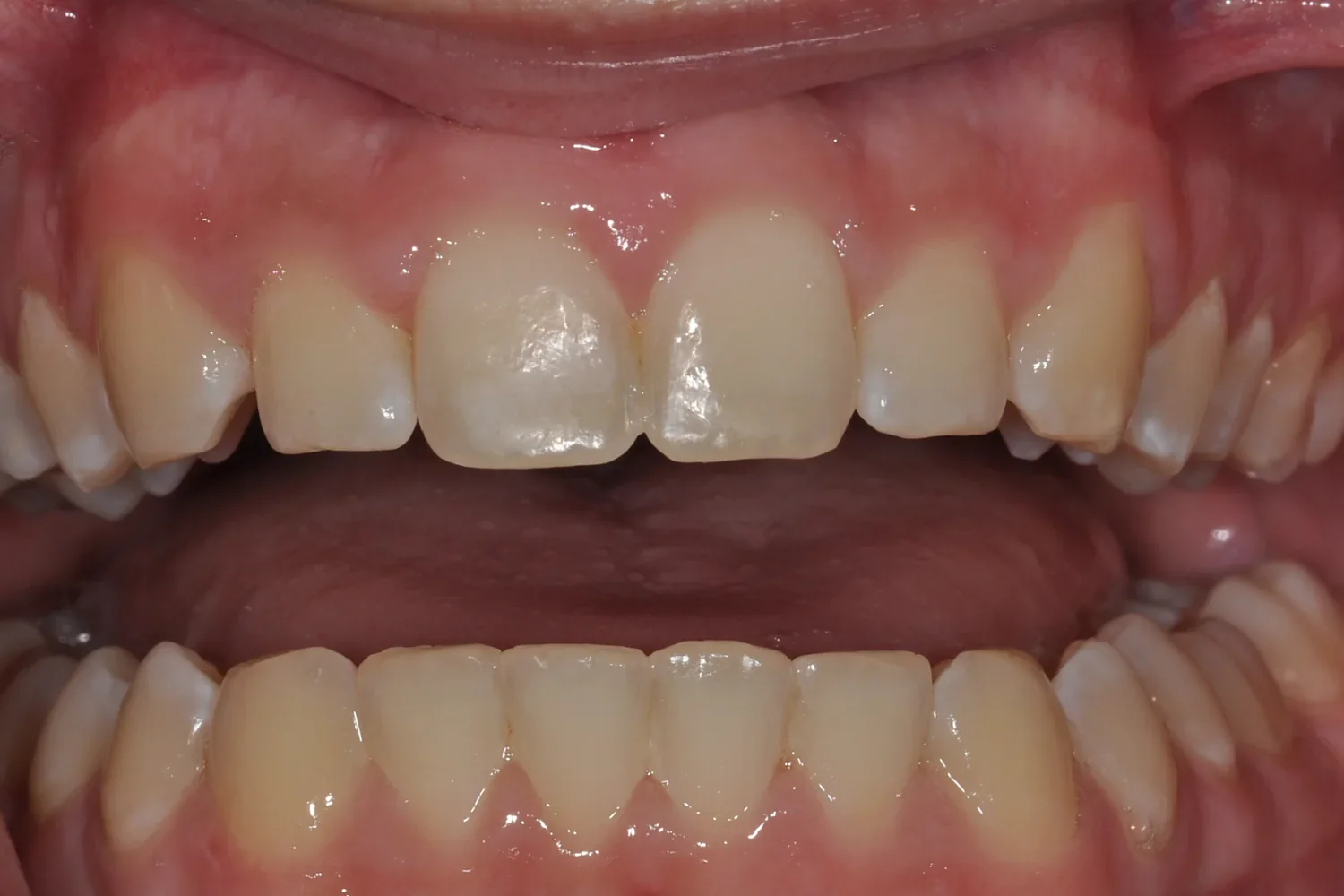
This young man was thrilled to finally have his braces removed — and who wouldn't be? His teeth were beautifully aligned, but the moment the brackets came off, chalky white spots on his two front teeth were impossible to ignore.
In a single one-hour appointment — no drill, no anesthetic — we performed resin infiltration on both central incisors. He walked out with an even, natural smile on the very same day his braces came off.
Curious what your own results could look like? A consultation takes about 30 minutes.
Book a ConsultIs Resin Infiltration Right for Everyone?
Every smile is different, and results vary depending on the depth and origin of the lesion. Deeper white spots and certain developmental enamel defects may improve significantly while remaining faintly visible. During a personal consultation, we'll carefully evaluate your enamel — often with magnification and digital imaging — and walk you through exactly what you can expect in your case. An honest conversation up front is what leads to a result you'll genuinely love.
How Long Do the Results Last?
With consistent home care and regular dental visits, results from resin infiltration can last well beyond a decade. Protecting that investment is simple: brush and floss consistently, follow the remineralization plan we recommend for you, and keep up with routine hygiene visits so the surrounding enamel stays strong.
Resin Infiltration vs. Veneers or Bonding — Which Is Right for You?
The right treatment always depends on your specific goals.
If white spots are your only concern, resin infiltration is typically the most conservative first step, because it preserves the maximum amount of natural enamel. Porcelain veneers or cosmetic bonding may be the better fit when a tooth has several concerns at once — discoloration, chips, worn edges, or a shape you'd like changed.
Whenever possible, we recommend the least invasive treatment capable of achieving an excellent, lasting result — never more dentistry than a smile actually needs.
Wondering if resin infiltration could work for you?
If white spots have kept you from smiling with full confidence, the best next step is a professional evaluation. We'd love to answer your questions and show you what's possible.
Book Your Consultation Or call us at (630) 762-0000 · Send us a messageFrequently Asked Questions
Does resin infiltration hurt?
For the vast majority of patients, no. Because there is no drilling and no removal of healthy tooth structure, anesthetic is usually unnecessary. Most patients describe the appointment as comfortable and relaxed.
How much does resin infiltration cost?
Cost depends on how many teeth are treated and the complexity of the case. Because resin infiltration preserves natural tooth structure, it is typically a fraction of the cost of veneers on the same teeth. We provide a clear, itemized estimate before any treatment begins — no surprises.
Will insurance cover it?
Resin infiltration is generally considered a cosmetic procedure, so most dental plans do not cover it. We're happy to review your specific benefits and discuss payment options during your consultation.
Can resin infiltration be combined with teeth whitening?
Yes, and sequence matters. When whitening is part of the plan, we typically whiten first and allow the shade to stabilize before infiltrating, so the resin blends seamlessly with your final tooth color.
Will the treated area stain over time?
The infiltrating resin is highly stain-resistant and doesn't respond to whitening the way natural enamel does. Routine hygiene visits and polishing keep the treated teeth looking their best long-term.
Is resin infiltration safe for teenagers?
Yes — in fact, teens who have just finished orthodontic treatment are among the most common candidates. It's a conservative option that leaves all future treatment doors open as they grow.
Dr. Jameson Teuscher, DMD Dr. Jameson practices cosmetic and family dentistry at Teuscher Legacy Dental in St. Charles, Illinois, where he and the team combine advanced technology — CBCT imaging, digital Medit scanning, and modern minimally invasive materials — with an unhurried, whole-body approach to care. He has a particular passion for conservative cosmetic dentistry that keeps as much natural tooth as possible. Meet our team →
This article is for educational purposes and is not a substitute for an in-person evaluation. Individual results vary. Photos are of an actual Teuscher Legacy Dental patient, published with permission.

What a Dental CBCT Scan Can Reveal: Carotid Artery Findings, Hidden Infections, and Radiation Facts
We take a CBCT — a 3D dental scan — to plan an implant, evaluate a tricky root, or map out someone's sinus and jawbone anatomy. Most of the time, we find exactly what we went looking for.
But often, the scan shows something we weren't specifically looking for at all: a calcified spot near a carotid artery, or an area of bone change at a tooth root that never caused a moment of pain. Those can be serious findings. Here's more on why, and what it means if one shows up in your own CBCT scan.

Key takeaways
- A dental CBCT can show a possible carotid artery calcification — found in roughly 6 to 12% of scans, depending on the population studied.
- What it can do is show a calcification in the expected carotid region that may be consistent with calcified atherosclerotic plaque. It cannot confirm the diagnosis, measure blood flow, or tell us how narrowed the artery may be — which is why medical follow-up matters.
- Effective radiation dose from a CBCT varies substantially with field of view, patient size, and protocol. We choose the smallest field and lowest exposure that will reliably answer the clinical question.
- We review the entire volume of every scan, not just the region of interest we were asked to look at, because we often find other medically relevant things worth knowing about.
- We look actively for connections between your mouth and the rest of your health, and we bring your physician into the conversation when something matters.
In this article
What is a dental CBCT scan?
CBCT stands for cone beam computed tomography. The machine rotates around you, capturing many individual images with a cone-shaped X-ray beam, and software stitches them into a three-dimensional model of the area.
A standard dental X-ray is still a fine tool, but it flattens three-dimensional anatomy onto a flat image, so roots, bone, and restorations overlap and hide one another. CBCT lets us move through the anatomy one thin slice at a time, from any angle. Sometimes that changes what we can see entirely.
We don't order a CBCT for every patient or every problem. It carries more radiation than a standard X-ray, so we use it selectively — when the extra three-dimensional detail is likely to change a diagnosis or a treatment plan. That's the same principle the American Association of Endodontists and American Academy of Oral and Maxillofacial Radiology reaffirmed in their 2025 joint update, released January 2026: use CBCT deliberately, not routinely.1
Carotid artery calcification on a dental scan
Depending on the field of view, part of your neck and the expected path of your carotid arteries falls inside the frame. In some patients, we see areas of calcification in that region that may be consistent with calcified atherosclerotic plaque — deposits associated with atherosclerosis, the slow buildup of plaque inside artery walls.
This isn't rare, and it isn't trivial.
Those middle and right figures come from a prospective study out of Umeå University in Sweden, which followed patients who had this finding on routine dental imaging for a mean of 9.5 years and tracked myocardial infarction, stroke, and vascular death.3 Those are the kinds of numbers that make us look carefully, every single time.
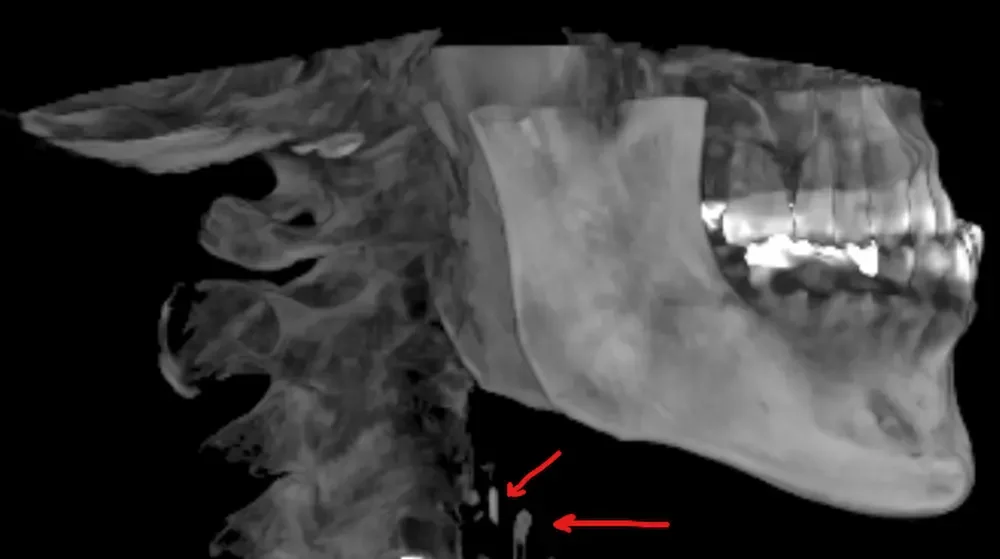

Does that mean an artery is blocked?
Not necessarily — and that distinction is worth understanding, because it's exactly what makes this finding useful rather than alarming. Calcification and narrowing aren't the same thing. Arteries remodel outward as plaque accumulates, so a calcified vessel can still carry normal blood flow.
What a CBCT can do is show a calcification in the expected carotid region that may be consistent with calcified atherosclerotic plaque. It cannot confirm the diagnosis, measure blood flow, or tell us how narrowed the artery may be — which is why medical follow-up matters. The logic is similar to coronary artery calcium scoring in cardiology: that test doesn't measure blockage either. It reflects plaque burden, and it remains one of the better-validated risk tools cardiologists use.
Most routine wellness visits don't include imaging of the neck. Ours sometimes does.
So the answer is layered: it doesn't mean your artery is blocked, and we can't diagnose blockage from a dental scan. But it does mean something worth following up on — a signal your physician can evaluate that they would otherwise have no particular reason to look for. If this were our own family member, we'd want someone to point it out plainly, and we'd want them to take the next step.
Why we read every scan whole
A CBCT captures far more than the tooth or implant site that sent us looking. When we scan to plan a dental implant, the volume also contains jawbone, sinuses, airway, joints, and — depending on the field of view — the vessels of the neck.
The American Academy of Oral and Maxillofacial Radiology addressed this directly in its executive opinion statement on CBCT: practitioners are expected to review the whole exposed volume, not just the region they ordered the scan for. The statement notes that oral and maxillofacial radiologists can assist practitioners who are unwilling to accept that responsibility.4 We accept it. Here's what that looks like in practice:
- We review the full volume. Every scan, every time — the region of interest and everything else the scan captured.
- We document what we find. Findings go in your chart in plain language, whether they're dental, incidental, or simply worth watching.
- We show you the images. On the screen, walking through what we're seeing, so you understand your own anatomy rather than taking our word for it.
- We loop in your physician when it matters. If something belongs in a medical conversation, we make sure it gets there instead of sitting in a dental file.
There are practical reasons this matters beyond curiosity. Patients preparing for joint replacement are often asked to have a dental evaluation beforehand — a check for active infection a surgeon would rather address before, not after, a new hip or knee goes in. The AAOS's 2024 clinical practice guideline reviews the evidence on dental screening and antibiotic prophylaxis around arthroplasty and is worth reading with your surgeon, since practice varies.5 When we already have a CBCT in hand for another reason, checking it for hidden sources of infection costs nothing extra and may answer your surgeon's question before they ask it.
A dental infection may remain localized and painless for a long time, but it still deserves evaluation. Full-volume review means carefully evaluating every structure captured by the scan — a habit we build into every case because we're looking for connections to the rest of your health, not just the reason you're in the chair.
How much radiation is involved?
Less than most people expect when they hear "3D CT scan" — but the honest answer is that it depends, and we'd rather give you the real range than a comforting single number.
Effective dose varies substantially based on the field of view, patient size, and imaging protocol. Published values for the Planmeca ProMax 3D Mid range from very low-dose scans of roughly 4 µSv up to approximately 190 µSv for certain larger standard protocols.6 Some low-dose scans are comparable to a long flight; larger scans involve more radiation. We choose the smallest field of view and lowest exposure that will reliably answer the clinical question — the ALARA principle (As Low As Reasonably Achievable) that governs how every dentist and physician should think about imaging.
For context, in microsieverts (µSv), the standard unit of effective dose:
| Source | Typical effective dose |
|---|---|
| Single digital bitewing or periapical X-ray | 1–5 µSv |
| Lateral cephalometric X-ray | 1–6 µSv |
| Digital panoramic X-ray | 15–20 µSv |
| CBCT, Planmeca ProMax 3D Mid (varies by protocol) | ~4–190 µSv |
| Round-trip transatlantic flight | ~40 µSv |
| Medical CT scan (head, chest, or abdomen) | 500–10,000+ µSv |
| Natural background radiation, per year (US average) | ~3,000 µSv |
Planmeca's published dose table for this unit lists a low-dose protocol as low as 4 µSv for a small sinus view, and 190.7 µSv for a 16 × 16 cm wide-view, high detail scan.6 Even at the upper end, that remains a fraction of a single medical CT scan and well within the range of ordinary annual background exposure. The FDA's guidance on dental cone-beam CT is a good plain-language resource if you'd like to read more.7
The oral-systemic connection
Here's the real reason we care when your gums bleed a little at your cleaning, or an X-ray shows a few millimeters of bone loss: it was never really about the gums. Chronic periodontal inflammation doesn't stay put. The same bacteria and inflammatory signaling living under an infected gumline show up in the bloodstream, in blood vessels, in the same inflammatory pathways implicated in heart disease and poorly controlled diabetes.
This isn't a fringe idea. In 2020, the European Federation of Periodontology and the World Heart Federation convened a joint consensus workshop specifically on this relationship, and concluded there is strong epidemiological evidence that periodontitis is associated with increased risk of future cardiovascular disease — recommending that patients with periodontitis actually be told so.8 Cardiologists and periodontists sat in the same room to write that. A bleeding gum, by itself, tells us almost nothing interesting. What it's usually a sign of is what makes us pay attention.
If it were only about a bleeding gum, we honestly wouldn't be talking about it.
We want to be precise about what the evidence supports, because precision is what makes this credible instead of a talking point. The research shows a real, consistent association between periodontal disease and cardiovascular disease — not proof that one causes the other, and not proof that treating your gums will prevent a heart attack. Nobody can honestly promise that, and we won't. But "just an association" undersells it badly. Associations this consistent, across this much research, are exactly the kind of signal that changes how a careful clinician practices.
So here's what we'll actually tell you: if it were our own mother with bleeding gums, we wouldn't stop at "floss more." We'd want her to know that inflammation sitting under her gumline doesn't stay under her gumline, and that treating it is one of the few genuinely low-risk, high-value things she could do — not just for her smile, but for her whole-body health.
- Periodontal disease is a chronic inflammatory condition, and inflammation doesn't respect the border between your mouth and the rest of you.
- Dental findings deserve evaluation even when they don't hurt, because "no pain" doesn't mean "no systemic signal."
- Diabetes, smoking, nutrition, dry mouth, airway and breathing patterns, and overall health all shape your dental risk — and your dental health shapes them right back.
- Unexpected imaging findings belong in a conversation with you and your physician, not filed away.
- We coordinate with physicians whenever a finding crosses the line between oral and medical health, because your care shouldn't live in silos.
To us, whole-body dentistry means treating a bleeding gum like the systemic signal it actually is — without overselling what we can promise, and without pretending it's "just" a dental problem either. If that's how you think about your own health, you'll probably feel at home here.
When we recommend a CBCT
At Teuscher Legacy Dental, a CBCT might come up for:
- Dental implant planning
- Complex extractions and impacted wisdom teeth
- Bone graft and socket preservation planning
- Unclear endodontic symptoms, or evaluating a previously treated root canal
- Suspected root fracture or resorption
- Complex anatomy near a sinus or nerve
- Selected airway and orthodontic or TMJ evaluations
- Any other situation where 3D information is likely to change your care
We don't recommend advanced imaging simply because we own the technology. The scan has to answer a real question. When it's appropriate, we'll show you the images, walk you through what we see in plain language, and tell you if something belongs in a conversation with your physician. You can see more of the services we offer or read answers to common questions.
Periapical findings that don't hurt
A CBCT is also useful for a tooth with unclear symptoms, or a previously completed root canal. A tooth can carry inflammation around the root tip without causing pain, swelling, or any obvious sign. On imaging, this shows up as a periapical lesion — an area of bone change at the tip of the root that may reflect apical inflammation or infection. A standard X-ray can miss these entirely when overlapping roots or dense bone get in the way.
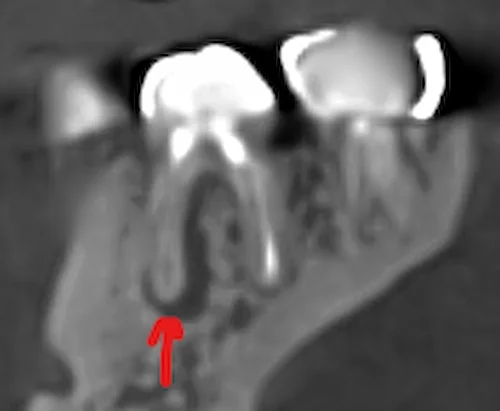
A dark area on a CBCT doesn't automatically mean the tooth has to come out. We weigh it against your history, symptoms, clinical testing, conventional X-rays, restorability, and long-term prognosis. Depending on the situation, the right next step might be monitoring, a root canal, retreatment, a referral to an endodontist, apical surgery, or — only when the tooth truly can't be saved — extraction with bone grafting.
Better imaging doesn't replace judgment. It gives us better information to use it with.
Want a dental team that looks at the whole picture?
We serve St. Charles, Campton Hills, Geneva, Batavia, Elburn, South Elgin, Wasco, Wayne, and the surrounding Fox Valley. New patients welcome.
Schedule a visit Ask us a questionFrequently asked questions
Can a dental scan detect blocked arteries?
No. A dental CBCT can show a calcification in the expected carotid region that may be consistent with calcified atherosclerotic plaque. It cannot confirm the diagnosis, measure blood flow, or tell us how narrowed the artery may be — which is why medical follow-up matters.
Is carotid artery calcification the same as a coronary calcium score?
No, though the logic is similar. Both reflect plaque burden rather than blockage. A coronary calcium score comes from a dedicated medical CT scan and produces a validated numerical risk score; a dental CBCT finding is an observation that warrants medical follow-up.
How much radiation does a dental CBCT involve?
Effective dose varies substantially with field of view, patient size, and protocol. Published values for the Planmeca ProMax 3D Mid range from roughly 4 µSv for a small low-dose scan up to about 190 µSv for certain larger standard protocols — a fraction of a medical CT scan (500 to several thousand µSv).
Do dentists review the whole CBCT scan or just the tooth?
The American Academy of Oral and Maxillofacial Radiology expects practitioners to review the entire exposed volume, not only the region of interest. That's our standard at Teuscher Legacy Dental — every scan, every time.
Should I see a dentist before joint replacement surgery?
Many orthopedic surgeons ask for a dental evaluation beforehand. The AAOS published an updated clinical practice guideline in 2024 addressing dental screening and antibiotic prophylaxis around joint replacement; it's worth reviewing with your surgeon. If yours has asked, we're glad to help.
Can a tooth have a problem without hurting?
Yes. A tooth with a dead nerve, a previous root canal, or chronic low-grade inflammation around the root can cause little or no pain. No pain doesn't always mean a healthy tooth.
Does everyone need a dental CBCT scan?
No. We use CBCT selectively, when the added 3D information is likely to improve diagnosis or treatment planning. Conventional dental X-rays remain appropriate for most routine care.
Clinical sources
- Special Committee to Revise the Joint AAE/AAOMR Position Statement. AAE and AAOMR Joint Position Statement: Use of Cone-Beam Computed Tomography in Endodontics — 2025 Update. Oral Surgery, Oral Medicine, Oral Pathology and Oral Radiology. 2025.
- Dief S, Veitz-Keenan A, Amintavakoli N, McGowan R. A systematic review on incidental findings in cone beam computed tomography (CBCT) scans. Dentomaxillofacial Radiology. 2019;48(7):20180396. doi:10.1259/dmfr.20180396
- Garoff M, Ahlqvist J, Edin LT, Jensen S, Levring Jäghagen E, Petäjäniemi F, Wester P, Johansson E. Bilateral vessel-outlining carotid artery calcifications in panoramic radiographs: an independent risk marker for vascular events. BMC Cardiovascular Disorders. 2019;19(1):225. doi:10.1186/s12872-019-1211-3
- Carter L, Farman AG, Geist J, Scarfe WC, Angelopoulos C, Nair MK, Hildebolt CF, Tyndall D, Shrout M. American Academy of Oral and Maxillofacial Radiology executive opinion statement on performing and interpreting diagnostic cone beam computed tomography. Oral Surgery, Oral Medicine, Oral Pathology, Oral Radiology and Endodontology. 2008;106(4):561-562.
- American Academy of Orthopaedic Surgeons. Prevention of Total Hip and Knee Arthroplasty Periprosthetic Joint Infection in Patients Undergoing Dental Procedures: Evidence-Based Clinical Practice Guideline. Published November 18, 2024.
- Planmeca. Planmeca ProMax 3D Mid — Effective Doses (ICRP 1990 and ICRP 2007). Manufacturer dosimetry table.
- U.S. Food and Drug Administration. Dental Cone-Beam Computed Tomography.
- Sanz M, Marco del Castillo A, Jepsen S, et al. Periodontitis and cardiovascular diseases: Consensus report of the joint workshop of the European Federation of Periodontology and the World Heart Federation. Journal of Clinical Periodontology. 2020;47(3):268-288. doi:10.1111/jcpe.13189
This article is intended for patient education and does not replace an individualized dental or medical evaluation. Dental CBCT imaging may reveal findings that warrant medical follow-up, but it does not diagnose cardiovascular disease or any other medical condition.

Teuscher Legacy Dental Named a 2026 Best of the Fox Readers’ Choice Winner for Best Dentist
Teuscher Legacy Dental Named a 2026 Best of the Fox Readers’ Choice Winner for Best Dentist
Teuscher Legacy Dental is honored to share that our practice has been voted a Best Dentist in the 2026 Kane County Chronicle Readers’ Choice Awards: Best of the Fox.
This award is especially meaningful because it was voted on by real people in our local community. It was not bought. It was not a paid placement. It was not something we simply claimed about ourselves. It came from patients, families, friends, and neighbors who took the time to support our team.

Most importantly, this award belongs to our entire team.
It is not just an award for one dentist, one doctor, or one person at Teuscher Legacy Dental. It reflects the care, effort, hospitality, clinical excellence, and patient-first attitude of our whole team — from the people who greet patients, answer phones, coordinate care, clean teeth, assist during treatment, manage schedules, sterilize instruments, support procedures, and help create the kind of dental experience our patients have come to expect.
To everyone who voted for Teuscher Legacy Dental as one of the Best Dentists in Kane County, thank you. We are humbled, grateful, and encouraged to continue serving families throughout St. Charles, Campton Hills, Geneva, South Elgin, Elburn, Wasco, Wayne, and the greater Kane County area.
A Community-Voted Dental Award in Kane County
The Kane County Chronicle Best of the Fox Readers’ Choice Awards are meaningful because they reflect the voice of the local community. For a family-owned dental practice like ours, that matters deeply.
We know that people have many options when searching for a dentist in St. Charles, IL or a dental office in Kane County. To have local families vote for Teuscher Legacy Dental as the Best Dentist is an honor we do not take lightly.
Our name is on the door. Our family is part of this community. And our team works hard every day to make patients feel known, respected, and well cared for.
Recent Local Recognition for Teuscher Legacy Dental
The 2026 Best of the Fox award continues a pattern of local recognition for our practice:
- Best Dentist — Kane County Chronicle Best of the Fox Readers’ Choice Awards, One of the Best 2026
- Best Dentist — Kane County Chronicle Best of the Fox Readers’ Choice Awards, One of the Best 2024
- Best Cosmetic Dentist in St. Charles — BusinessRate, 2025
- Best Cosmetic Dentist — BusinessRate, 2026
Awards are never the main goal. Our goal is to serve people well, provide excellent dentistry, and treat patients with the same care and attention we would want for our own families.
Still, when the local community recognizes that effort, it is a tremendous encouragement to our doctors, hygienists, assistants, front office team, and everyone who helps make Teuscher Legacy Dental what it is.
This Award Belongs to the Whole Teuscher Legacy Dental Team
When someone says they voted for Teuscher Legacy Dental as Best Dentist, we do not hear that as recognition of only one provider. We hear it as recognition of the entire patient experience.
Patients do not experience a dental practice through one person alone. They experience it through the first phone call, the greeting at the front desk, the warmth of the hygienist, the attention of the assistant, the clarity of the doctor, the cleanliness of the room, the follow-up after treatment, the scheduling help, the financial conversations, and the countless behind-the-scenes details that make care feel smooth and personal.
That is why this award belongs to our whole team. Every person in our office plays a role in earning patient trust.
What “Best Dentist” Means to Us
Being voted a Best Dentist in Kane County is not about claiming perfection. It is about responsibility.
It reminds us to keep earning the trust patients place in us. It reminds us to keep improving. It reminds us that excellent dentistry is not only about teeth — it is about people.
At Teuscher Legacy Dental, we believe patients deserve thoughtful care, honest recommendations, clear explanations, and treatment that is designed for long-term health. Whether someone visits us for preventive care, cosmetic dentistry, dental implants, orthodontics, airway-focused dentistry, tooth replacement, or a second opinion, our goal is to help them understand their options and feel confident in their care.
A Relationship-Based Dental Practice in St. Charles, Illinois
Teuscher Legacy Dental is a family-owned dental practice located in St. Charles, IL, serving patients throughout Kane County and the western suburbs of Chicago.
Our practice is built around relationship-based dentistry. That means we are not trying to rush patients through appointments or treat people like numbers. We want to know our patients, understand their goals, explain what we see, and help them make wise decisions for their oral health and overall wellness.
Many patients come to our office because they are looking for a dental team that combines modern technology with old-fashioned values: excellence, honesty, hospitality, and personal care.
Comprehensive Dentistry for Families in Kane County
Our dental office provides a wide range of services for adults, children, and families, including:
- Preventive dental cleanings and exams
- Family dentistry
- Cosmetic dentistry
- Porcelain crowns and veneers
- Tooth-colored fillings
- Dental implants
- Tooth extractions and oral surgery
- Orthodontic care, including clear aligners and braces
- Airway-focused dentistry and growth guidance for children
- Second opinions and comprehensive treatment planning
Whether patients are looking for a family dentist in St. Charles, a cosmetic dentist near Campton Hills, or a dental implant dentist in Kane County, our team is grateful for the opportunity to serve.
Thank You to Our Patients and Community
To our patients: thank you for trusting us with your care. Thank you for referring your family and friends. Thank you for leaving kind reviews, encouraging our team, and choosing a local family dental practice.
To our team: thank you for the daily work that often happens quietly and behind the scenes. This award reflects your consistency, compassion, skill, and commitment to serving patients well.
To our Kane County community: thank you for supporting local businesses, independent healthcare practices, and family-owned dental offices.
We are grateful for this recognition, and we are excited to continue serving St. Charles, Campton Hills, Geneva, South Elgin, Elburn, Wasco, Wayne, and the surrounding communities for years to come.
Watch Our Thank You Message
We’ll be sharing a short video soon to thank our patients and community for voting Teuscher Legacy Dental as a Best Dentist in the 2026 Best of the Fox Readers’ Choice Awards.
Looking for an Award-Winning Dentist in St. Charles or Kane County?
If you are looking for a dentist in St. Charles, Campton Hills, Geneva, South Elgin, Elburn, or the greater Kane County area, we would be honored to meet you.
Contact Teuscher Legacy DentalFrequently Asked Questions
What award did Teuscher Legacy Dental win in 2026?
Teuscher Legacy Dental was voted a Best Dentist in the 2026 Kane County Chronicle Readers’ Choice Awards: Best of the Fox.
Was the Best of the Fox award purchased?
No. The Best of the Fox Readers’ Choice Award is a community-voted recognition, voted on by real people. Not voted on by AI, Russia, or other hackers! Teuscher Legacy Dental is grateful to the real patients, families, and neighbors who took the time to vote.
Does this award recognize one dentist or the whole practice?
This award belongs to the entire Teuscher Legacy Dental team. Patients experience a dental practice through the combined care of the doctors, hygienists, assistants, front office team, scheduling coordinators, and everyone working behind the scenes.
Where is Teuscher Legacy Dental located?
Teuscher Legacy Dental is located in St. Charles, Illinois, and serves patients throughout Kane County, including Campton Hills, Geneva, South Elgin, Elburn, Wasco, Wayne, and surrounding communities.
What dental services does Teuscher Legacy Dental provide?
Teuscher Legacy Dental provides preventive care, family dentistry, cosmetic dentistry, dental implants, orthodontics, oral surgery, airway-focused dentistry, restorative dentistry, and comprehensive treatment planning.
If you have searched for a biological dentist, holistic dentist, integrative dentist, or whole-body dentist in St. Charles, Campton Hills, or the Fox Valley, you may have noticed that different dental offices use these terms in different ways.
For some patients, biological dentistry means avoiding metal fillings. For others, it means thinking carefully about dental materials, ozone therapy, mercury-safe protocols, gum inflammation, airway health, nutrition, the oral microbiome, root-cause prevention, or how the mouth affects the rest of the body.
At its core, holistic dentistry is built around one simple idea:
The mouth is intimately connected to the body.
And that is a belief we strongly share.
At Teuscher Legacy Dental, we do not believe dentistry is only about teeth. We believe oral health is connected to whole-body health, inflammation, breathing, sleep, growth and development, nutrition, the oral and gut microbiome, periodontal health, TMJ function, and long-term wellness.
We Were Talking About Holistic Dentistry Before It Became a Buzzword
Before “holistic dentistry” or “biological dentistry” became common buzzwords, we were already writing about the relationship between oral health and overall health.
For years, we have educated patients about gum disease, systemic inflammation, airway health, chewing, tongue posture, mouth breathing, fluoride decisions, children’s jaw development, and the oral microbiome.
This is not a new trend for us.
It is part of how we think.
Here are just a few examples of holistic, or biological dentistry related blogs I’ve written dating back to 2019:
Gum Disease, Heart Disease, and Pregnancy
https://teuscherdental.com/blog/gum-disease-heart-disease-and-pregnancy
Gum Disease, Cancer, and Diabetes
https://teuscherdental.com/blog/gum-disease-cancer-and-diabetes
What We’re Learning About COVID-19 and Gum Disease
https://teuscherdental.com/blog/what-were-learning-about-covid-19-gum-disease
Gum Disease Linked to Severe COVID
https://teuscherdental.com/blog/gum-disease-linked-to-severe-covid
Dr. Andrew Huberman on Oral Health
https://teuscherdental.com/blog/dr-andrew-huberman-on-oral-health
Mold Exposure, Mouth Breathing, and Airway Dentistry
https://teuscherdental.com/blog/mold-exposure-mouth-breathing-and-airway-dentistry
Something to Chew On
https://teuscherdental.com/blog/something-to-chew-on
The Surprising Health Benefits of Chewing
https://teuscherdental.com/blog/benefits-of-chewing
Fluoride and Your Family’s Health
https://teuscherdental.com/blog/fluoride
The Hidden Risks of Tongue and Lip Tie — Part 1
https://teuscherdental.com/blog/hidden-risks-of-tongue-and-lip-tie-part-1
Why have I written about these topics?
Because we are not just treating teeth.
We are caring for people.
What Is Biological Dentistry?
Biological dentistry is a broad term. Different biological dentists may define it differently, but the general philosophy is that dental care should consider the health of the whole person.
Biological dentistry often focuses on questions such as:
What materials are being placed in the mouth?
How does gum disease affect systemic inflammation?
How do oral bacteria influence the rest of the body?
How does the oral microbiome relate to the gut microbiome?
How do breathing, sleep, and airway health affect oral health?
How can dentistry support healing, prevention, and long-term wellness?
How can treatment be as conservative and biocompatible as possible?
Some biological dental offices also offer therapies such as ozone treatment, highly specialized amalgam removal protocols, cavitation-focused treatment, and more. There may be a lot of value there!
At Teuscher Legacy Dental, our focus is on whole-person dentistry: oral-systemic health, periodontal health, prevention, pediatric airway development, conservative treatment planning, high-quality materials, oral microbiome awareness, nutrition, chewing function, TMJ health, and significant collaboration with other health professionals. Ok, that's a lot of stuff. It can get complicated. That's why you want to see Teuscher Legacy Dental! We can help you understand what is actually relevant for you and your health, and will not use scare tactics or be pushy.
What Is Holistic Dentistry?
Holistic dentistry, sometimes called whole-body dentistry or integrative dentistry, focuses on treating the patient as a whole person rather than treating the mouth as an isolated system.
A holistic dental approach may consider:
Gum health and systemic inflammation
Cavities and diet
The oral microbiome
The gut microbiome
Airway development
Mouth breathing
Tongue posture
Sleep quality
Jaw growth
Chewing function
TMJ symptoms
Dental materials
Nutrition
Prevention
Long-term health
At Teuscher Legacy Dental, that kind of whole-person thinking is central to how we practice dentistry. In fact, I'm reflecting as I write that to approach from a "tooth centric" perspective is so foreign. It just isn't how we think at Teuscher Legacy Dental.
We are not asking, “What tooth needs to be fixed?”
We are asking:
Why is this happening?
What patterns are contributing to it?
How is the body adapting?
What can we do to support long-term health?
In fact, our entire clincial philosophy is centered on "Holistic Risk Factors", not just "cavities when they show up". If you've seenour new MyChart portal, you'll know what I mean!
The Oral Microbiome and Gut Health
One important part of whole-body dentistry is understanding the oral microbiome.
The mouth is full of bacteria. Some are helpful, some are harmful, and many exist in a delicate balance. When that balance is disrupted, patients may experience cavities, gum inflammation, bad breath, dry mouth, or increased risk for oral disease.
But the oral microbiome does not exist in isolation.
The mouth is the beginning of the digestive tract. Every day, oral bacteria, saliva, food, and inflammatory byproducts are swallowed and introduced into the gut environment.
That is why oral health and gut health are connected.
In our article summarizing Dr. Andrew Huberman’s discussion on oral health, we talked about the importance of nasal breathing, the oral microbiome, and why harsh antibacterial mouthwashes may not always be ideal for every person.
The goal is not simply to “kill bacteria.”
The goal is to support a healthier oral environment.
That includes:
Healthy saliva flow
Nasal breathing
Good plaque control
Periodontal health
A nutrient-dense diet
Thoughtful use of mouth rinses
Avoiding chronic dry mouth
Reducing inflammatory burden
Supporting healthy chewing and digestion
For patients searching for a holistic dentist in St. Charles, IL, biological dentist near Campton Hills, or dentist who understands the oral microbiome, this is an important part of how we think.
Gum Disease and Whole-Body Health
One of the clearest ways the mouth connects to the body is through periodontal health.
Gum disease is not just a “cleaning issue.”
Periodontal disease is a chronic inflammatory condition involving bacteria, bleeding tissues, bone loss, immune response, and long-term risk to the teeth and supporting structures.
That is why I have spent years writing about the relationship between gum disease and systemic health, including heart health, pregnancy, diabetes, cancer, COVID-era inflammatory concerns, and whole-body wellness.
At Teuscher Legacy Dental, periodontal health is one of the foundations of our holistic dental philosophy.
We want patients to understand that bleeding gums are not normal. Chronic inflammation is not something to ignore. Bone loss around teeth is not just a dental inconvenience.
Gum health matters because the mouth is connected to the body.
Pediatric Airway Development
Another major part of our whole-body approach is pediatric airway development.
In children, oral health is not just about cavities.
Breathing patterns, tongue posture, oral habits, narrow arches, jaw growth, facial development, sleep quality, and airway health can all influence a child’s long-term well-being.
At Teuscher Legacy Dental, we pay attention to signs such as:
Mouth breathing
Snoring
Restless sleep
Low tongue posture
Thumb sucking or oral habits
Narrow arches
Crowding
High palates
Jaw growth patterns
Speech or swallowing concerns
Tongue and lip ties
Signs of sleep-disordered breathing
This is why pediatric airway dentistry is such an important part of our practice philosophy.
A child’s mouth is developing rapidly. The way a child breathes, sleeps, chews, swallows, and rests their tongue can shape their growth over time.
For families searching for an airway dentist in St. Charles, pediatric airway dentist near Campton Hills, holistic family dentist, or children’s airway dentistry in the Fox Valley, this is one of the most important parts of what we do.
As an aside- this part of our practice is exploding. We've literally got families driving to see Dr Riley Teuscher from out of state to help with their children's jaw growth. We are so excited about this therapy. Here's a really interesting podcast to learn more: Tim Ferris and “Breath: The new science of a lost art” author, James Nestor
Mouth Breathing, Mold Exposure, and Airway Health
In our article on mold exposure, mouth breathing, and airway dentistry, we discussed how children may adapt to nasal inflammation or airway challenges by breathing through the mouth.
Mouth breathing is not simply a bad habit.
Often, it is an adaptation.
But over time, mouth breathing can affect tongue posture, jaw growth, oral dryness, the oral microbiome, cavity risk, gum inflammation, sleep quality, and airway development.
This is why we care so much about nasal breathing, tongue posture, and jaw development.
Cavities matter. But airway development, jaw growth, sleep quality, and healthy breathing patterns matter WAY more.
Tongue Ties, Lip Ties, and Whole-Body Development
Tongue and lip ties are another area where dentistry overlaps with function, feeding, growth, sleep, speech, and development.
A restricted tongue can affect breastfeeding, swallowing, oral posture, speech development, jaw growth, and airway patterns.
That does not mean every tongue tie needs to be released.
It means every child deserves a thoughtful evaluation.
In our own writing on tongue and lip ties, we emphasized the importance of looking at each child individually and considering input from multiple providers when appropriate.
This may include lactation consultants, myofunctional therapists, speech pathologists, physical therapists, chiropractors, pediatricians, and other professionals.
A multidisciplinary perspective matters because the body is connected.
Chewing, Digestion, and Health
Chewing is another overlooked part of whole-body dentistry.
Chewing is not just about breaking food into smaller pieces. Hormonally, the act of chewing has huge downstream systemic effects!
Chewing affects digestion, satiety, nutrition, jaw development, muscle function, and quality of life.
For growing children, chewing more textured, less processed foods can help support jaw development and oral function.
For adults, missing teeth or unstable dentures can reduce chewing ability, limit food choices, affect nutrition, and make it harder to eat a healthy diet.
This is why replacing missing teeth is not just cosmetic.
It can be a health decision.
When we restore teeth, improve chewing function, or help a child develop better oral function, we are thinking beyond the smile.
We are thinking about the whole person.
Fluoride, Materials, and Individualized Care
Biological and holistic dentistry often involves thoughtful questions about materials, fluoride, toxicity, and personal health preferences.
We think those questions are valid.
At Teuscher Legacy Dental, we do not take a one-size-fits-all approach. Our recommendations are based on each patient’s unique risk factors, health history, preferences, and goals.
For example, some patients may benefit from fluoride as part of a cavity-prevention strategy. Others may have low cavity risk and prefer to avoid it.
Personally, I only use fluoride toothpaste occasionally. And my young kids never do. But I know their risk factors. (And I make sure they are brushing at night, trust me :))
The bottom line is we do not force the same recommendation on every patient.
We believe patients deserve education, options, and respect. Individualized care. Peter Attia, Medicine 3.0 style care : https://www.youtube.com/watch?v=n8qzoBOPzB0
That is whole-person care.
Biological Dentistry and Dental Materials
One common part of biological dentistry is concern over what materials are placed in the mouth.
We understand and appreciate that concern. It's usually the primary concern people have when searching for holistic dentistry.
At Teuscher Legacy Dental, we do not place metal amalgam fillings in our practice. We use modern tooth-colored materials and high-quality ceramics designed to restore teeth in a natural-looking and durable way.
For patients looking for a metal-free dentist in St. Charles, IL, holistic dental care near Campton Hills, or a biocompatible dental approach in the Fox Valley, Teuscher Legacy Dental can help.
TMJ, Posture, Fascia, and the Connected Body
The jaw does not function in isolation.
TMJ symptoms, clenching, jaw tension, headaches, neck tension, posture, breathing patterns, tongue position, and shoulder mobility can all be connected.
Right before writing this article, I had coffee with a local chiropractor and we talked about fascial connections, scapular mobility, posture, TMJ issues, and how one area of the body can influence another.
That conversation reflects how we think about dentistry.
We are not just treating isolated teeth.
Sometimes we need to look at the bite.
Sometimes we need to look at the airway.
Sometimes we need to look at oral habits.
Sometimes we need to consider posture, function, or muscle patterns.
Sometimes we need to collaborate with other providers.
The goal is not to overcomplicate dentistry.
The goal is to ask better questions.
We Collaborate With Other Health Professionals
Because the body is connected, we often collaborate with other providers when appropriate.
That often includes:
Myofunctional therapists
Physical therapists
Speech pathologists
Chiropractors
Lactation consultants
Functional medicine providers
Pediatricians
ENTs
Orthodontic providers
Nutrition-focused professionals
No single provider sees the whole picture perfectly.
That is why collaboration matters.
For patients looking for a holistic dentist in St. Charles, airway dentist near Campton Hills, TMJ dentist in the Fox Valley, or whole-body dental practice, this collaborative mindset is an important part of our care.
Do We Offer Everything Associated With Biological Dentistry?
No.
Every dental office approaches biological, holistic, functional, or integrative dentistry differently.
Some biological dentists offer ozone therapy, highly specialized specific mercury-safe protocols, cavitation-focused treatment, or other therapies that may be important to their philosophy.
At Teuscher Legacy Dental, our whole-body approach is focused primarily on oral-systemic health, periodontal health, prevention, pediatric airway development, oral microbiome awareness, chewing function, conservative treatment planning, high-quality materials, patient education, and collaboration with other health-focused providers.
We respect that different offices may use different tools and different terminology.
For us, the label matters less than the philosophy.
We want to help patients become healthier from a whole body perspective.
Whole-Body Dentistry in St. Charles and Campton Hills
If you are looking for a holistic dentist in St. Charles, IL, a biological dentist near Campton Hills, a metal-free dentist, an airway-focused dentist, a pediatric airway dentist, a TMJ dentist, or a whole-body dental practice in the Fox Valley, we would be honored to help.
At Teuscher Legacy Dental, we believe dentistry should be thoughtful, comprehensive, conservative, and connected to the health of the whole person.
We are not just treating teeth. We are not just fixing isolated problems.
We are looking at gum health, airway health, inflammation, breathing, jaw development, chewing function, oral microbiome health, TMJ function, dental materials, prevention, and long-term wellness.
Because the mouth is connected to the body.
And excellent dentistry supports the health of the whole person.
Choose Excellence.
-Dr Brayden Teuscher
Teuscher Legacy Dental
40W131 Campton Crossings Drive
St. Charles, IL 60175
Serving St. Charles, Campton Hills, South Elgin, Elburn, Geneva, Wasco, Wayne, Batavia, and the surrounding Fox Valley communities.
Frequently Asked Questions About Holistic and Biological Dentistry
What is biological dentistry?
Biological dentistry is a dental philosophy that considers how dental materials, oral infections, gum disease, inflammation, airway health, oral bacteria, and dental treatment may affect the rest of the body. Different biological dentists may offer different services, but the central idea is that the mouth is connected to whole-body health.
What is holistic dentistry?
Holistic dentistry, sometimes called whole-body dentistry or integrative dentistry, focuses on treating the patient as a whole person rather than only treating individual teeth. A holistic dental approach may consider gum health, inflammation, nutrition, airway development, sleep, breathing, TMJ function, dental materials, the oral microbiome, and long-term prevention.
Is Teuscher Legacy Dental a holistic dentist in St. Charles, IL?
Teuscher Legacy Dental takes a whole-body approach to dentistry in St. Charles, IL. Our practice focuses on oral-systemic health, periodontal health, prevention, pediatric airway development, oral microbiome awareness, chewing function, TMJ-related concerns, conservative treatment planning, and collaboration with other health professionals when appropriate.
Is Teuscher Legacy Dental a biological dental office?
Teuscher Legacy Dental shares many values commonly associated with biological dentistry, including whole-body health, high-quality materials, prevention, periodontal health, airway health, and the connection between oral health and systemic health. We do not offer every therapy that some biological dental offices provide, such as ozone therapy, but we do take a comprehensive, health-centered approach to dentistry.
How are the oral microbiome and gut microbiome connected?
The mouth is the beginning of the digestive tract. Oral bacteria, saliva, food, and inflammatory byproducts are swallowed throughout the day, which means oral health can influence the digestive environment. Supporting a healthy oral microbiome may involve nasal breathing, saliva flow, periodontal health, plaque control, nutrition, and thoughtful use of antibacterial rinses.
Why does gum disease matter for overall health?
Gum disease is a chronic inflammatory condition involving bacteria, bleeding gum tissue, bone loss, and immune response. Because the mouth is connected to the rest of the body, periodontal health is an important part of whole-body wellness.
What is pediatric airway dentistry?
Pediatric airway dentistry looks at how a child’s breathing, jaw growth, tongue posture, oral habits, arch development, sleep, and facial growth may affect long-term health. At Teuscher Legacy Dental, pediatric airway development is an important part of how we evaluate growing children.
What does mouth breathing have to do with dentistry?
Mouth breathing can contribute to dry mouth, altered tongue posture, narrow jaw development, increased cavity risk, gum inflammation, poor sleep, and airway concerns. In children, mouth breathing can influence jaw growth and long-term airway development.
Do you evaluate tongue ties and lip ties?
Yes. Teuscher Legacy Dental evaluates tongue and lip ties as part of a broader look at oral function, feeding, tongue posture, speech, sleep, jaw development, and airway health. Not every tongue or lip tie needs treatment, so each child should be evaluated individually.
Why does chewing matter for whole-body health?
Chewing supports digestion, satiety, nutrition, jaw development, muscle function, and quality of life. Missing teeth, poor chewing function, or overly soft diets can affect food choices, digestion, and long-term oral function.
Does Teuscher Legacy Dental place metal fillings?
No. Teuscher Legacy Dental does not place metal amalgam fillings. We use modern tooth-colored restorative materials and high-quality ceramics to restore teeth in a natural-looking way.
Do you work with myofunctional therapists or other providers?
Yes. When appropriate, Teuscher Legacy Dental collaborates with myofunctional therapists, physical therapists, speech pathologists, chiropractors, lactation consultants, ENTs, pediatricians, and other health professionals to support airway health, oral function, TMJ health, posture, and whole-body wellness.
Who should consider a holistic or whole-body dental approach?
Patients who are interested in prevention, gum health, airway development, oral microbiome health, biocompatible materials, TMJ health, chewing function, and the relationship between oral health and overall health may appreciate a holistic or whole-body approach to dentistry.

Awarded Best Cosmetic Dentist in Kane County, IL (2026): Why This Matters for Your Smile
We Won Again — But This Time, It’s Bigger
Last year, we were honored to be named Best Cosmetic Dentist in St. Charles, Illinois.
This year, that recognition expanded.
Teuscher Legacy Dental has been named “Best Cosmetic Dentist in Kane County, Illinois” for 2026.
That means patients across St. Charles, Geneva, Batavia, Elburn, South Elgin, and surrounding communities are choosing our office—not just for cosmetic dentistry, but for the experience.
And if you’re researching cosmetic dentistry, here’s the honest question you should be asking:
What actually makes a cosmetic dentist “the best”?
What This Award Actually Means (And What It Doesn’t)
The “Benchmark” tag means we are the top Cosmetic Dentist overall in Kane County
This award is powered by Google Reviews and REAL patient feedback, aggregated through BusinessRate. It takes the review content (the words), volume, overall rating, and longevity into account! We didn’t win this award overnight.
That matters, because it’s not bought and it’s not based on advertising spend. It’s based on real patient experiences and reviews.
**And, we don’t pay patients for reviews. Most dental offices will give you a discount, enter you in a raffle, or literally pay you to write a good review. But that’s actually against Google and other review sites’ policy, and is unethical.
Why that’s important:
Patients evaluate the end result. But also:
They evaluate how they felt the entire duration of treatment
They evaluate whether they trusted the team and doctors
And whether they would recommend us to their family
According to research from the American Dental Association, patient satisfaction and trust are among the strongest predictors of long-term dental outcomes.
So when hundreds of patients consistently say:
“This is where I feel cared for”
That’s what this award represents. And we are so thankful to our patients for their feedback!
What Patients Actually Want From Cosmetic Dentistry
Most people don’t come in asking for veneers or another specific treatment.
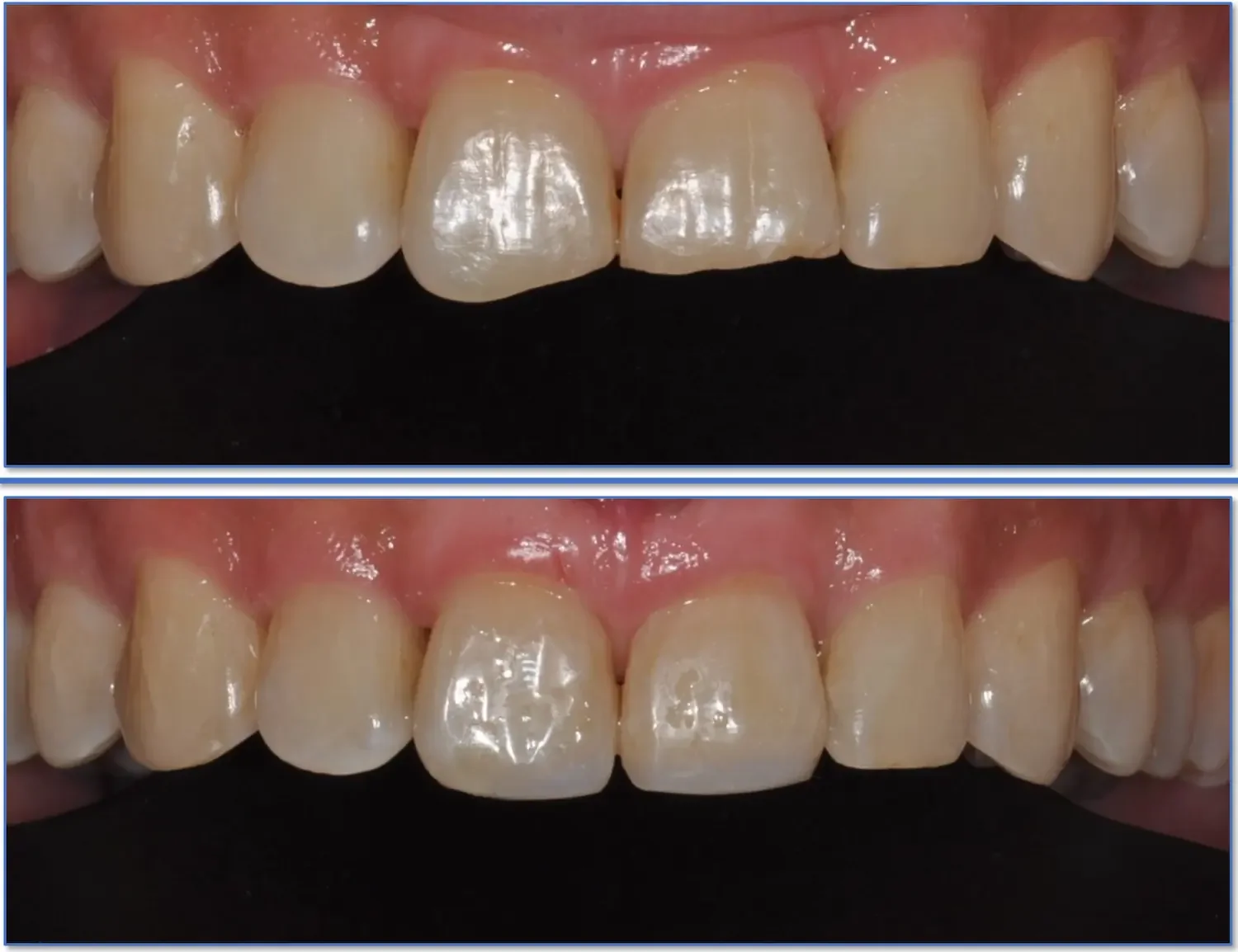
A real example of dental bonding at Teuscher Legacy Dental
They come in saying:
“I don’t like to smile in family photos”
“My teeth look worn or aged”
“My grandkids have teased me about my teeth”
“I just want something natural”
That’s the real starting point.
Our philosophy is simple:
We don’t “sell” cosmetic dentistry.
We design smiles that:
Fit your face
Match your personality
And feel like you
Because the best cosmetic work is the kind people don’t notice… they just notice you look better.
What Makes Our Approach Different
There are a lot of dentists who offer cosmetic dentistry.
Very few do it at a consistently high level.
Here’s what we believe actually separates great from average:
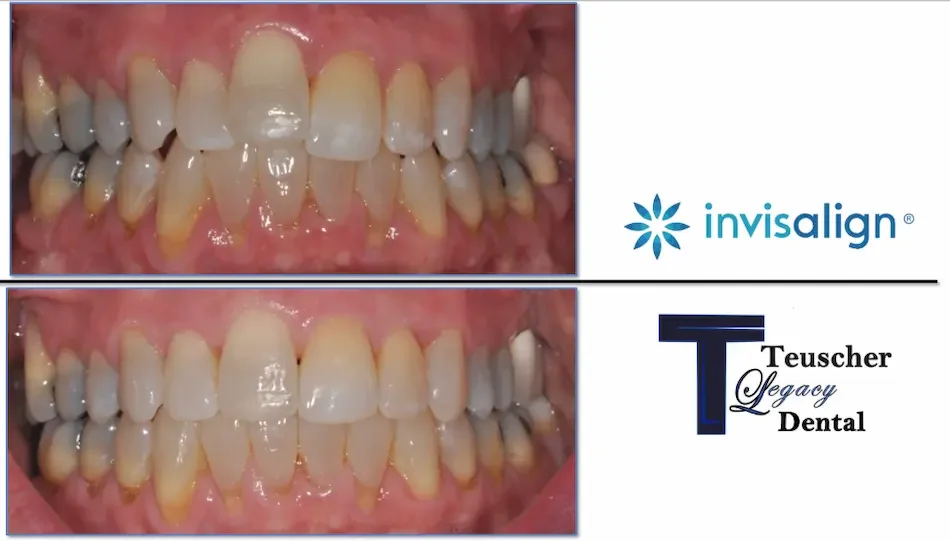
Not everyone chooses orthodontics, but it can be a great way to improve your smile!
1. Planning Before Doing
We use Digital Smile Design so you can see your result before we ever start.
No guessing. No surprises.
2. Conservative, Not Aggressive
We are experts at preserving natural tooth structure whenever possible.
That means:
Whitening when appropriate
Dental bonding in certain situations
Veneers or crowns only when they’re truly the best option
3. Experience You Can Feel
This is where most people notice the difference between our office and other high-end cosmetic practices in Chicago or New York.
They leave saying thrilled with the result, but also:
“Teuscher Legacy Dental listened, and they took care of me.”
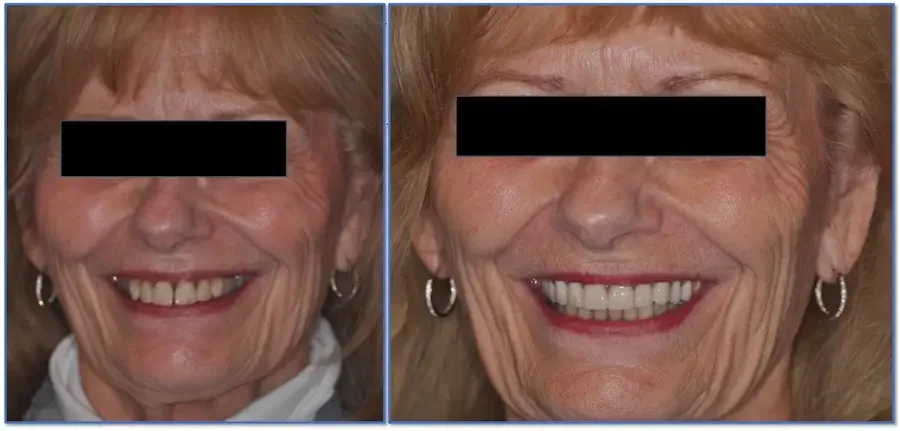
Full arch cosmetic veneers. A huge confidence boost! It can literally be life changing.
Real Results (What You Should Expect)
When cosmetic dentistry is done right:
Your smile looks natural—not fake
Your teeth fit your face—not someone else’s template
You feel more confident without thinking about it
That’s the goal.
The Bigger Picture: Why This Matters for You
Awards are nice, but they only matter if they answer one question:
“Is this the right place for me?”
Here’s the honest answer:
If you want:
The cheapest option
Fast, high-volume cosmetic work
Or something “good enough”
We’re probably not the right fit.
But if you want:
Thoughtful planning
Natural, long-lasting results
And an experience where you feel genuinely cared for
Then this is exactly what we’ve built our practice around.
Frequently Asked Questions
Is cosmetic dentistry worth it?
There are two things to consider. Will cosmetic dentistry improve your confidence, smile, and quality of life? Yes. Studies published in journals like the National Institutes of Health show improvements in confidence, social interaction, and perceived quality of life after smile improvements.
Will it be “expensive”? Sometimes. There are always a range of options. Some patients choose a $70,000 brand new mouth. Others get a few simple bondings done for a few hundred dollars. We will always tailor solutions for your unique situation, including timeline and budget.
How long does cosmetic dentistry last?
It depends on the treatment:
Whitening: months to a few years
Bonding: Most often 3–7 years before visible staining at margins
Veneers or crowns: 10–20+ years with proper care
What’s the first step?
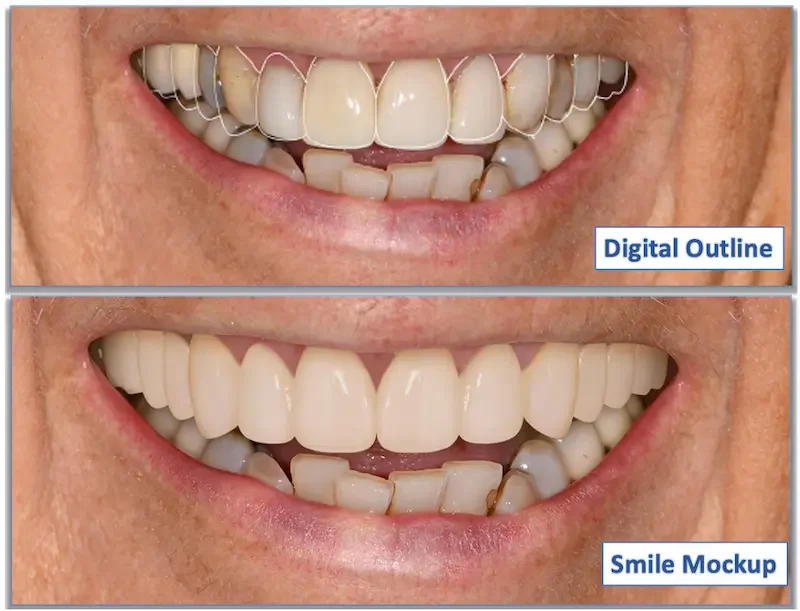
Digital Smile design is fun and easy at Teuscher Legacy Dental!
A free consultation. No commitment, just a conversation about what you want—and whether it makes sense.
If You’re Considering Cosmetic Dentistry in Kane County
You’re doing the right thing by researching.
Take your time.
Look at real cases. Make sure the website isn’t posting AI or “touched up” photos.
Ask questions.
Make sure you trust the person doing the work.
If you want to see what your smile could look like before making any decisions:
👉 Click here to book your Free Digital Smile Design Consult
(Or call us at 630-762-0000)
Final Thought
Winning this award again—on a larger scale—is meaningful to us.
But what matters more is this:
Every single patient who walks through our doors should feel like they made the right decision.
That’s why we were awarded the Benchmark Standard award. And that’s what we’ll continue to build.
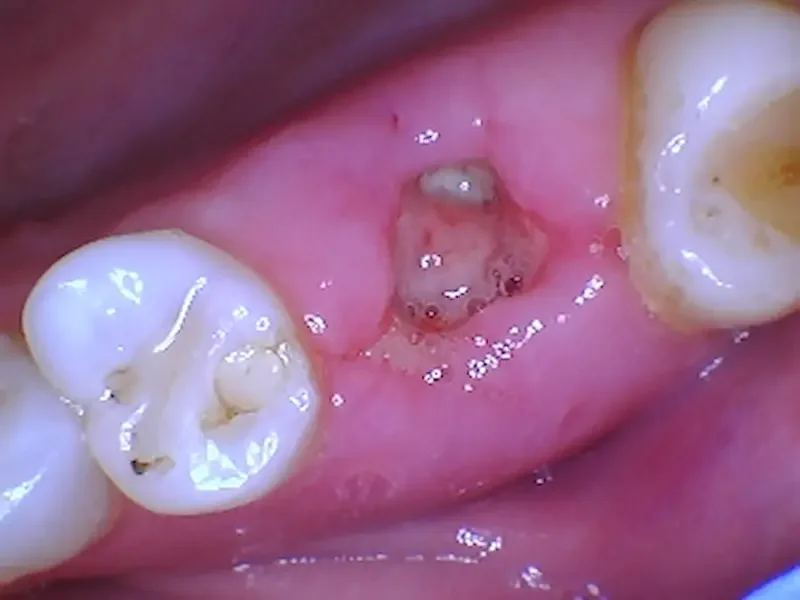
6 Days After Tooth Extraction and Bone Graft — What’s Normal?
Published February 24th, 2026
If you just had a socket preservation extraction and bone graft 5-6 days ago, you may be asking:
“I’m nervous this isn’t healing correctly. Are my symptoms normal?”
If you’re less than 1 week out from an extraction and bone graft, this article will help show what’s normal and what’s concerning, using real patient photos from our St Charles, Illinois dental practice.
Healing Timeline Guide: (Bone Graft Healing Timeline)
Days 1-3: Blood clots, localized swelling, early inflammation. Some soreness is normal, often peaking day 2-3.
Days 5-6 (this article): Transition from blood clot to granulation tissue (where you’re at now)
Week 1: Granulation tissue forms. Soreness gradually getting better.
Weeks 2–3: Gum tissue strengthens, pink color normalizes
Months 1-4: Bone begins to consolidate and strengthen
Months 4–6: Implant readiness (case dependent)
Before Procedure: Abscessed Root Canal Tooth
This case involved tooth #3, an upper molar that had an abscess caused by a large cavity. The tooth was broken at the gumline. The tooth had an old root canal as well.
Before the tooth was removed, there was an abscess visible in the X Ray. This tooth was broken at the gumline for some time, but not bothering the patient (it was not causing pain, and she could chew comfortably with her remaining teeth). But she was aware of the risks with an abscess like this, and wanted to get it taken care of.
The risks in not treating a tooth abscess:
While this tooth wasn’t causing pain at the time, the X-Ray shows a periapical abscess (infection around the roots). This is a bacterial infection that will not resolve on its own and, if left untreated, can continue to spread beyond the tooth and surrounding bone. In some cases odontogenic infections extend into adjacent tissues and fascial spaces, potentially leading to complications such as facial swelling, airway compromise, systemic spread (including sepsis), sinus involvement, osteomyelitis of the jaw, and other serious outcomes documented in the dental literature when abscesses are not definitively treated. In other words, there’s risk an infection like this “blows up” and causes significant damage.¹ ² ³
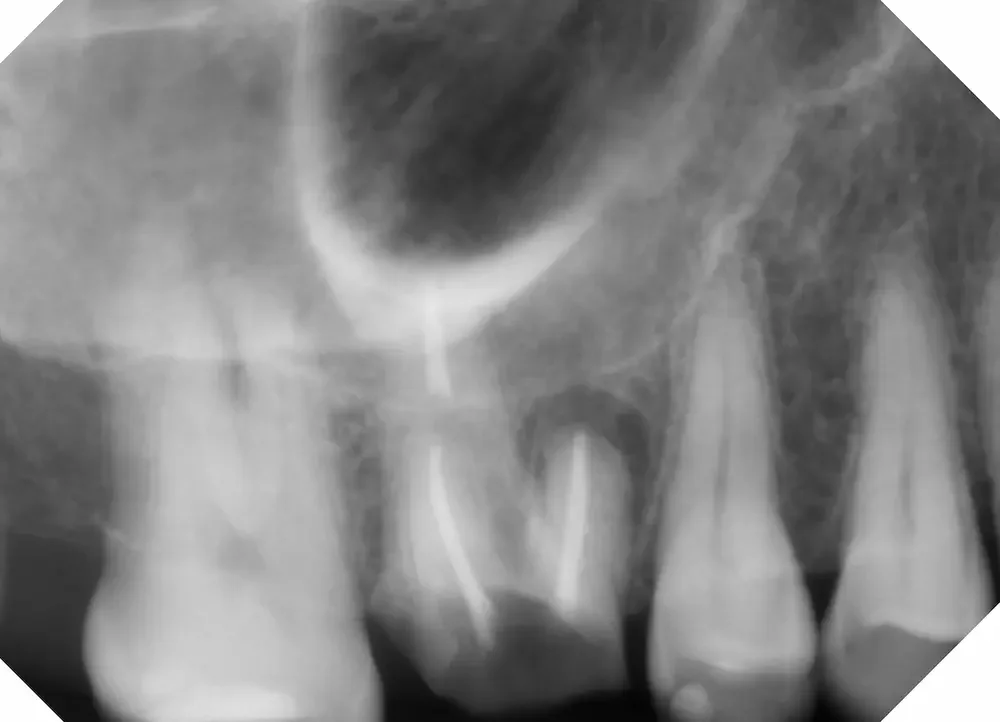
X Ray before Extraction. Notice the darker area around the roots of the root canal treated tooth- that’s where the infection is.
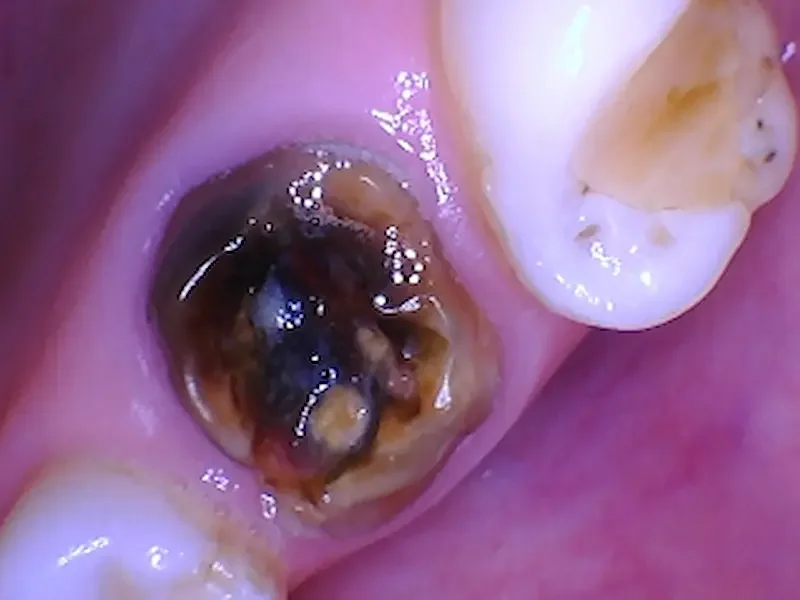
Picture of the tooth. Notice the darkness (decay) in the center of the tooth. This is the infection’s source. There is not enough tooth left to predictably save with a crown.
Immediately After Procedure: How is a bone graft supposed to look?
We got the patient numb and easily removed each of the three tooth roots. Once the tooth was removed, the infected tissue inside the socket was physically scooped out with a tiny spoon instrument. This step is critical, however, because the infection was so close to the patient’s sinus, gentle care was necessary to not damage the sinus. Because there is almost always some residual bacteria in these cases, an antibiotic was also prescribed to support full bacterial clearance from the abscess and prevent infection of the bone graft afterward.
This patient plans to replace this tooth with a dental implant. While evidence is clear a bone graft greatly increases future implant success, it’s also true that not every tooth extraction requires a bone graft. After cleaning the socket, a bone graft was placed to help preserve bone and support future healing.
In this case we used a cadaver bone particulate mix with a collagen plug over the top to help blood to clot. Some white PTFE sutures were used to stabilize the collagen and gum tissue.
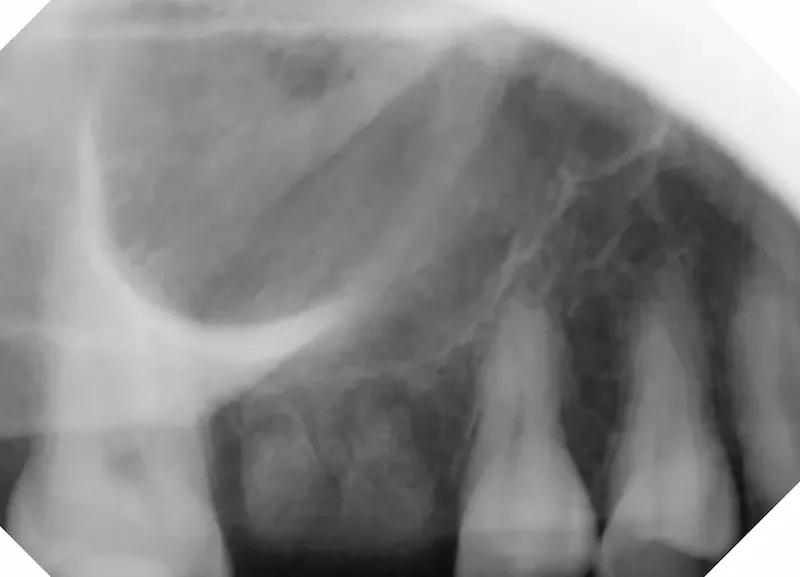
X Ray showing where the tooth used to be, now filled with bone graft particles after extraction at Teuscher Legacy Dental.
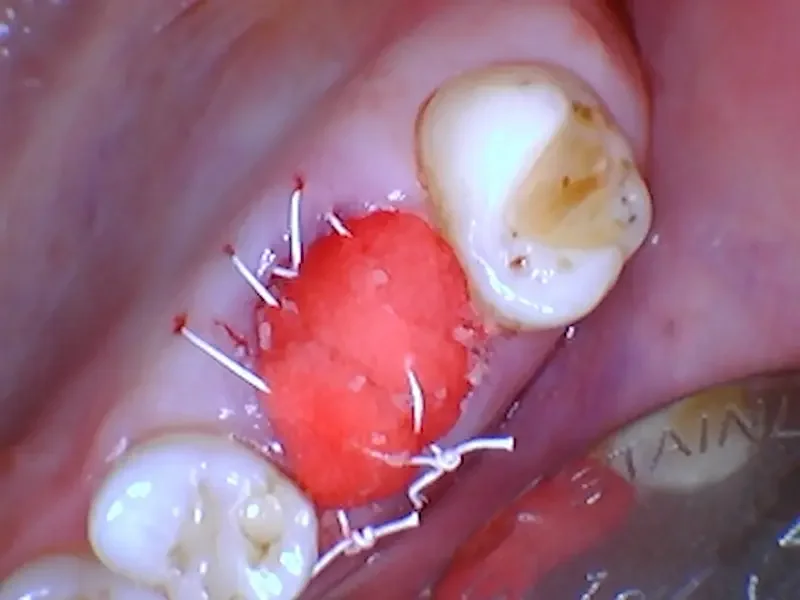
Photo immediately after extraction and bone graft. The shiny red is a collagen material used to help blood clot over the graft. The white sutures blend into that material. This site is stuffed full- intentionally slightly overfilled with graft material. Some of the particles spill out, which is normal and will not cause any harm.
Before Week 1: What’s normal bone graft healing look like 5-6 days after surgery?

6 days after extraction and bone graft, the gums are slowly closing over the hole where the tooth used to be. The gums are not flat normally, there is a slight crater. The mottled yellow appearance inside the crater can look like infection, but this is normal healing of the gum and bone graft. It is immature granulation tissue.
At less than one week post-op, this extraction site looks exactly how we expect healthy healing to look. This particular patient came back 6 days after surgery.
It’s normal to feel:
A small crater or hollow where the tooth used to be
Slight soreness or tenderness, especially on healing gums around extraction site
That mottled yellow appearance inside the socket is normal. It is not pus or infection. It is immature granulation tissue- which eventually turns into healthy bone and gums.
What you should do at this point (before 1 week post op):
Keep taking perscribed medicines until finished (antibiotics)
As long as it is comfortable to do so, gently clean around the area as you brush your teeth.
Continue avoiding popcorn or other foods that could get lodged in the healing tissue
Monitor for large increases in pain or visible swelling
What you should expect to see and feel less than one week out:
Yellow, mottled tissue where the tooth used to be
Tenderness that is gradually improving. Usually patients wean off of advil/tylenol if they’ve been taking it.
Stitches may start to feel loose, if they have not dissolved already
Slight redness and swelling on gums around the site, but not so much that your face or cheek swells
Often, but not always, you feel better than before the extraction now that the infection is gone
What you should expect in coming weeks:
Gums slowly close fully over the site
Soreness continues to improve
See our full guide for more details:
Is Pain Normal At 5-6 Days Post Op?
Some soreness is normal, especially during the first week. But it should be gradually improving.
For our St Charles, Illinois patients, pain is well managed with over-the-counter medications like Advil or Tylenol.
When safe for the patient, a common approach is:
Ibuprofen (Advil) 400–600 mg
Four hours later: Acetaminophen (Tylenol) 500 mg
Continue rotating every four hours as needed
We go over this combination of medicines with all of our extraction patients, but most say they dont need it beyond a day or two.
(Always follow your dentist’s instructions and confirm these medications are safe for you.)
When Should You Be Concerned?
While a crater-like appearance and yellow healing tissue are normal before one week, you should contact your dentist if you notice:
Increasing pain instead of gradual improvement (especially throbbing pain)
Swelling that worsens after day 3–4
Foul taste or active drainage
Fever or feeling unwell
These are not typical signs of normal healing. Call your dentist and let them know.
Your partner in health,
Dr Brayden Teuscher
P.S. - If you’ve been told you need a bone graft or you’re wondering whether your things are healing normally, we can help.
If you’re in the Kane County, IL area, come see us for a free consult!
Sources:
1. Sanders JL, Houck RC. Dental Abscess. In: StatPearls [Internet]. Treasure Island (FL): StatPearls Publishing; Updated February 20, 2023. National Center for Biotechnology Information. Bookshelf ID: NBK493149. Available from: https://www.ncbi.nlm.nih.gov/books/NBK493149/
2. Neal TW, Schlieve T. Complications of Severe Odontogenic Infections: A Review. Biology (Basel). 2022 Dec 8;11(12):1784. PMCID: PMC9775288. doi:10.3390/biology11121784. Available from: https://pmc.ncbi.nlm.nih.gov/articles/PMC9775288/
3. Brizuela M, Daley JO. Oral Facial Infection of Dental Origin: A Guide for the Medical Practitioner. In: StatPearls [Internet]. Updated August 9, 2025. National Center for Biotechnology Information. Bookshelf ID: NBK542165. Available from: https://www.ncbi.nlm.nih.gov/books/NBK542165/
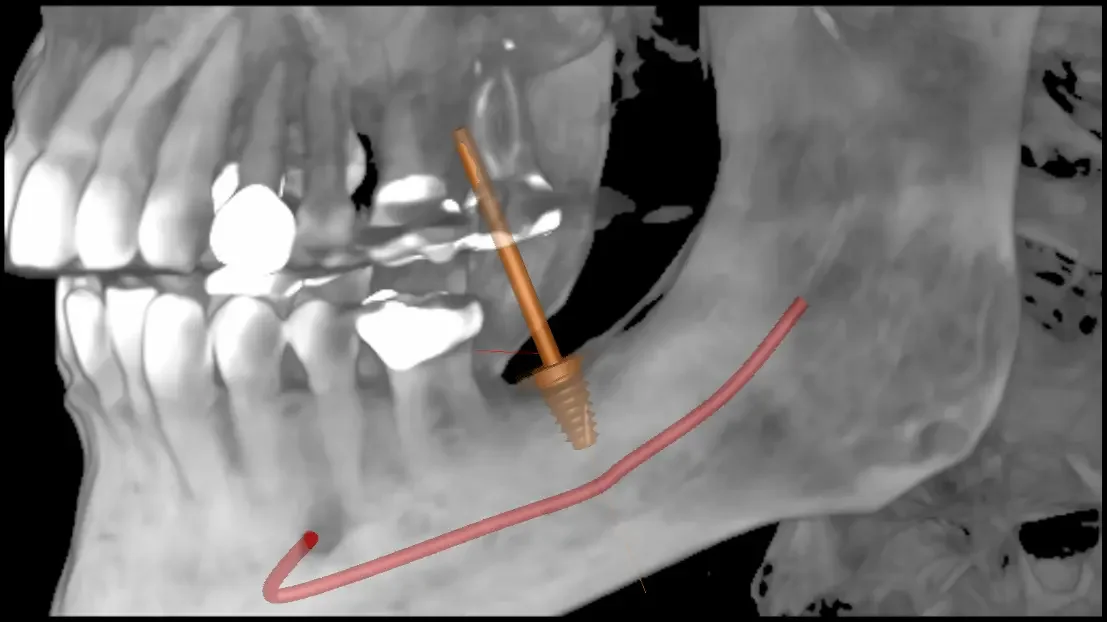
Real Bone Graft Case Part 2: Socket Preservation Graft Healing, CBCT Implant Planning, and Implant Surgery Day
See how we planned this implant case in our 3D software!
Published by Teuscher Legacy Dental – St. Charles, IL
In Part 1, we walked through this patient’s painful failing tooth, gentle extraction, and the placement of a socket preservation bone graft to maintain bone volume for a future dental implant.
In Part 2, we’re going to show you how this graft healed, how we planned and executed implant placement (see the Youtube video for more detail), and what you can expect next as the implant fuses to bone.
1 Week After Socket Preservation — Early Healing

One week after the extraction and bone graft surgery. The tissue is closing nicely, and is pink rather than deep red. Soreness was minimal. The yellow color in the center is normal, immature bone! This site is healing well.
One week after the graft, you can already see how the socket is filling in and the gum tissue is healing nicely. This early phase is all about blood clot stabilization and soft tissue coverage, which protect the graft material while the body begins to lay down new bone. Socket preservation grafts act like a scaffold the body uses to regenerate bone — almost like planting seeds in a garden and letting nature do the rest.
Bonus: Do you really need a bone graft after tooth extraction?
Key things to notice in the photo:
The gum tissue is pink and healthy with minimal swelling, and slowly closing over the extraction socket.
You may see some residual graft particles near the surface — this is normal. There aren’t any in this picture.
There’s no sign of infection, pain, or deep redness — this is an excellent early healing response.
Healing like this tells us the socket preservation graft is doing its job — maintaining ridge height and width so future implant placement will be predictable.
3D Imaging & Implant Planning

A Panoramic image taken from our CBCT Implant Planning Software. We outlined the inferior alveolar nerve in red, which is always a structure to avoid when placing dental implants in the lower jaw.
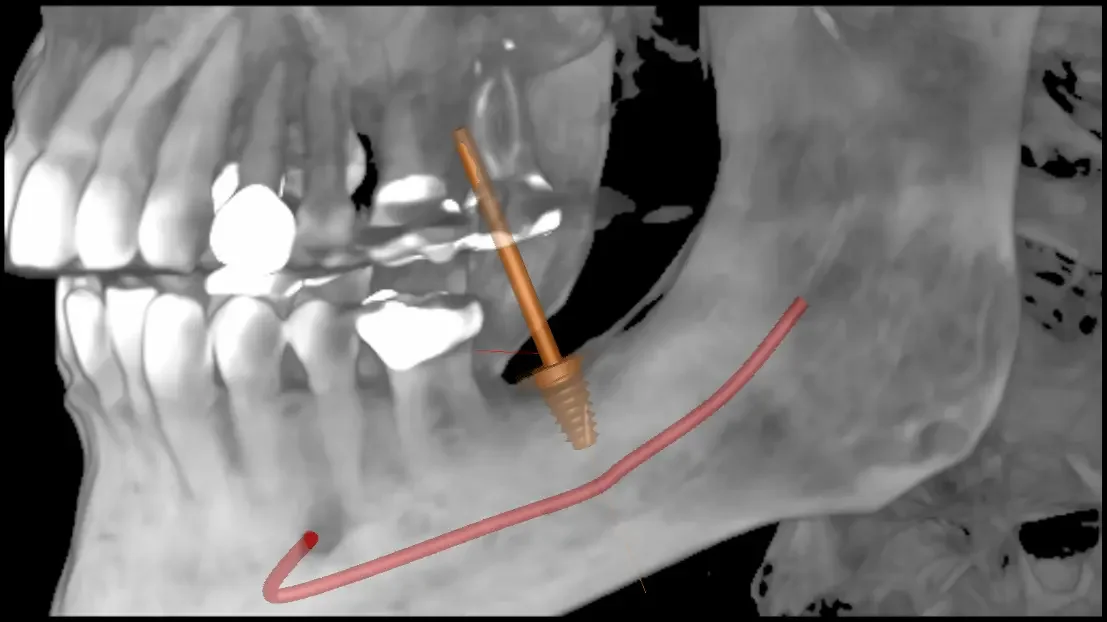
A 3D view of where the implant (highlighted in orange) is planned to go in the lower jaw, along with the inferior alveolar nerve in red. This view helps show how the bite forces will be directed on the impolant from the upper teeth.
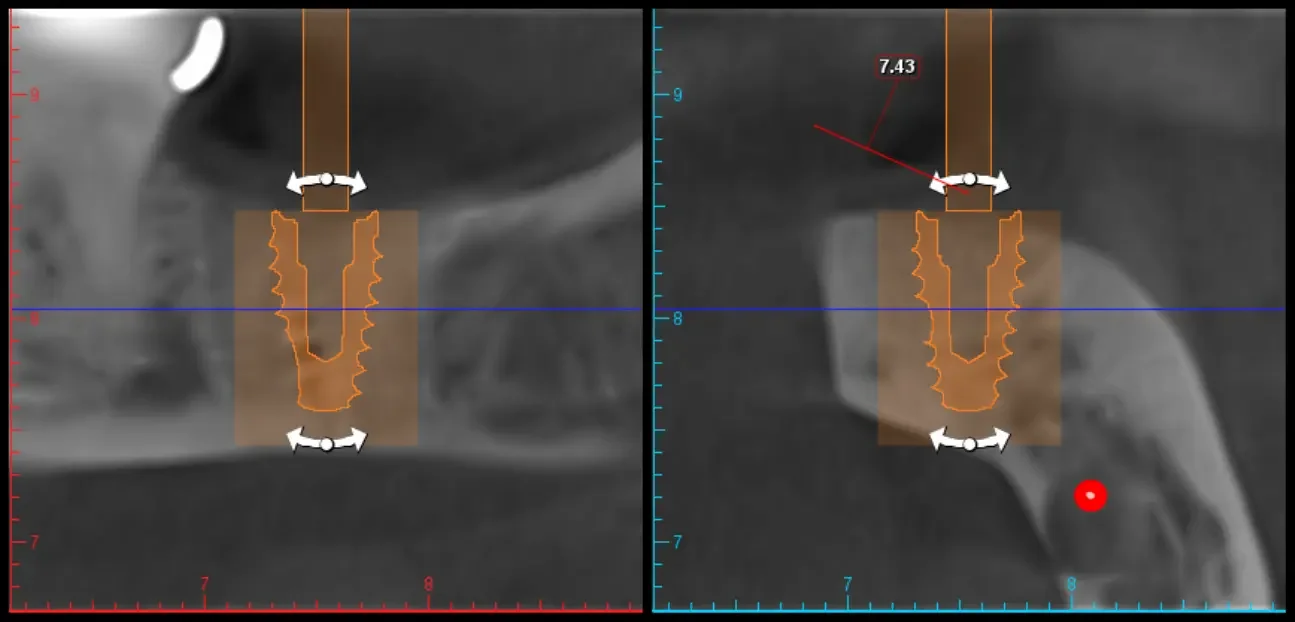
The power of 3D imaging shown. The 2D X ray makes it seem like there is more bone below where the implant was placed. But there is really a ridge making available bone much smaller, which you can clearly see in the right sider of the image. Without a 3D scan, it would have been nearly impossible to know this.

Compare this final X Ray the day of implant surgery with the projected angles in our planning software.
Also notice where the bottom of the implant is. In the 2D X Ray, it seems like there would be more room in the bone below the implant. But we know from our 3D CBCT planning that there is not.
After eight weeks of healing, we took a CBCT scan to measure the bone and plan the implant placement (more detail in the Youtube Video above). These 3D images let us:
Visualize healed bone and ridge contours
Ensure Bone is fully healed
Select the ideal position, angle, and depth for the implant
Precisely plan the case to maximize outcomes
Sometimes incorporate a surgical guide for implant surgery, though we did not use one in this case due to lack of space in the back of this patient’s mouth. Surgical guides are useful but not always necessary.
Eight weeks of healing is a relatively short time for predictable implant placement, and it is often necessary to wait longer. In this particular case, our protocols combined with the patient’s health allowed for a shorter healing timeline. It’s also important to emphasize that instead of focusing solely on placing the implant where there is bone, modern implant planning puts the implant exactly where the final tooth restoration should be — giving the patient the best esthetics and function long-term. The CBCT imaging is vital for that process.
Day of Implant Placement — Healing Cap Placed Over Implant
On the day of implant placement, we used the plan created from the CBCT to place the implant in the exact ideal position. Since the bone was especially strong, the implant was seated with a healing cap, which helps shape gum tissue and protect the site while osseointegration occurs — the biological process where titanium fuses directly with bone. Not all implants get a healing cap the day of surgery. Sometimes it’s necessary to place that later after some bone strength has returned.
The X-ray above shows the implant well-centered in the grafted bone — exactly where we planned it to be for optimal restorative results.
Notice:
The bone prepared by the socket preservation graft creates a stable foundation. This was verified by the CBCT analysis.
A healing cap supports soft tissue for a cleaner emergence profile when the final crown is placed.

Right after implant placement, here is the photo of the implant healing cap and white sutures. The gum tissue is intentionally bunched up on the right side of the healing cap. This allows for more strong, keratinized tissue on the cheek side of the implant, which is protective for the implant’s long term health.
Why The Original Bone Grafting Worked
By preserving bone at the time of extraction and thoughtfully planning implant placement, we help ensure:
✔ predictable osseointegration
✔ better long-term stability
✔ improved esthetics and gum contour
✔ fewer surprises or complications later
The original socket preservation is not required for every extraction — but when an implant is planned, it’s often the smartest long-term choice to protect bone and support future tooth replacement.
What Comes Next in Implant Process?
Right now, this implant is undergoing osseointegration — the process where new bone grows and bonds directly to the implant surface. Once this fusion is strong (usually several weeks), the final implant crown will be fabricated and attached.
Stay tuned for Part 3, where we’ll share:
Final crown placement photos
Before/after comparisons
What the patient can expect for function and esthetics
If you’re curious about your own implant journey — from extractions and grafting to final restorations — we’re happy to walk you through what makes these steps predictable, comfortable, and successful.
Teuscher Legacy Dental — St. Charles, IL
Call or text (630) 762-0000 or visit teuscherdental.com for more information.

What Should a Bone Graft Look Like 1 Month After Surgery?
Find out what a bone graft should look like 1 month post surgery.
Real photos & honest healing expectations — from a surgical case at Teuscher Legacy Dental in St. Charles, IL
Patients Ask Us:
“Is what I’m seeing one month after my extraction and bone graft normal? Is it supposed to look like that?”
About the author
This article was written by Dr. Brayden Teuscher, a general dentist with a surgical focus on tooth extractions, bone grafting, and dental implants in St. Charles, IL, serving Kane County, Campton Hills, Geneva, Elburn, and surrounding communities.
At Teuscher Legacy Dental, we place extraction socket preservation bone grafts every week. The 1-month mark can be a major milestone — usually, soft tissues have mostly healed, bone formation is continuing under the surface, and discomfort should be minimal. But patients often aren’t sure what “normal” healing looks like at this stage.
In this post, I’ll walk you through:
What normal 1-month bone graft healing should look like
Real photos from a current patient case
What we evaluate clinically at this stage
When you might need to be seen sooner
Case Overview: Why This Bone Graft Was Done
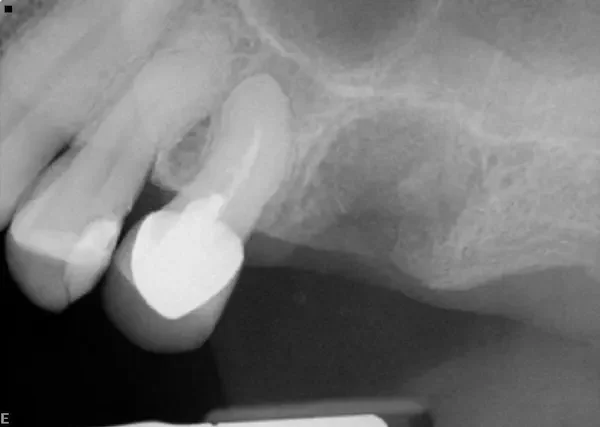
Tooth #13 (center of X Ray) had an old root canal that was infected. In the 2D X Ray, the infection is difficult to see.

The CBCT 3D slice clearly shows the dark infection around the edge of the root. To the right side, a previous extraction site not done in our office.
This patient is a female in her 60s. In the 2D X Ray above, the tooth #13 doesn’t seem so bad. But in the 3D CBCT scan to the right, we can clearly see an infection around the root from the old root canal. This patient did not want to re-do the root canal, and preferred to have the tooth extracted and socket preservation bone graft placed to prepare for future dental implant.
*Notes for this case: The CBCT imaging on the right allows us to see things we never would have known about from a 2D X Ray. Notice how clearly you can see the abscess in the CBCT slice. CBCT imaging in dentistry is the standard of care for implant planning, and an incredibly powerful diagnostic tool when evaluating for infection and other conditions.
Also, This patient had an infected tooth #14 extracted and a collagen base bone graft placed at another office about 2 months before seeing us. That is the darkness on the right side of the X Ray and CBCT screenshot above. This type of bone graft heals more slowly and often less predictably than the demineralized bone particles we most often use. I did not take a picture of this particular site that day since we were evaluating the tooth #13 in front of it. At our office, we use that same collagen base graft in certain select situations. That isn’t the point of this particular post, but worth noting.
The Extraction and Socket Preservation Procedure Day
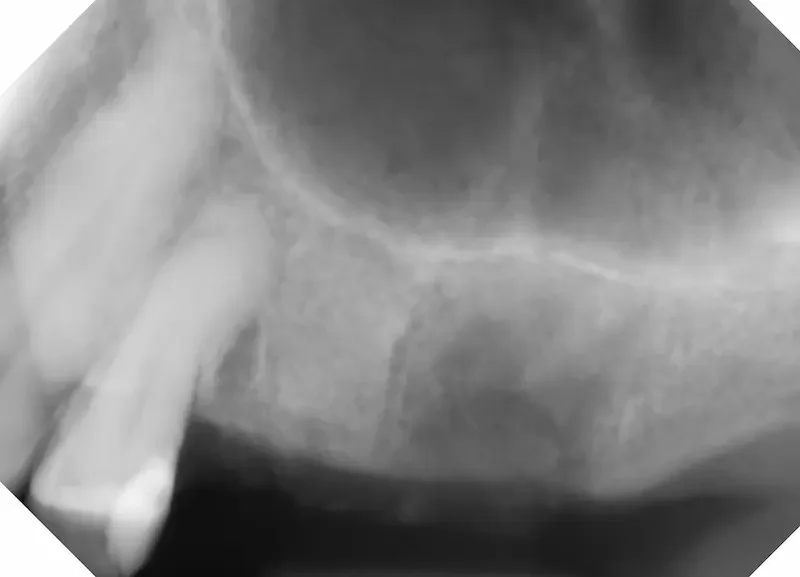
After the tooth was extracted and bone graft placed. Notice how bone particles fill the previous root and infection space.

Photo of the collagen plug and white sutures over the bone particle graft. You can see some of the bone particles over the top of the collagen. It is normal for some of the particles to spill out at first.
In the X Ray above you can see the tooth socket filled with bone graft material. (Our graft is center of X Ray, right next to the tooth that is still there. To the right of center is a larger infection that was previously grafted at a different office using different materials.) In the photo, You can see the pink collagen plug, white sutures that criss-cross over the top, and even some gray bone particles that spilled out onto the collagen. This is normal and the grafted site looks great!
Our method of using demineralized particulate bone with a collagen plug and sutures over the top helps by:
Preserving alveolar ridge (jaw bone) width and height
Supporting new bone formation
Protecting the graft site while soft tissue heals
Extraction and bone graft procedures are quite routine at our office, and this case is a good example of what happens.
What Real Healing Looks Like at 1 Month

One month after procedure, the pink gum tissue is almost fully closed. The darker red area is immature gum tissue. The light pink on the outside is healthy. If it was infected it would be much redder and more swollen.
One month later, our patient was doing great. In general, the way a bone graft site looks after one month can vary dramatically based on patient factors like age, medical history, current medications, smoking status, and the extent of tooth infection prior to extraction. But this picture should give you a good idea of what to expect.
At 1 Month, we see Soft Tissue Progress
By 4 weeks after surgery you should see:
Gum tissue mostly closed over the grafted site
A smooth contour of healed soft tissue
Little to no visible crater
Minimal redness or swelling
This means the gum has largely healed on the surface and your body is moving into deeper phases of bone rebuilding.
Clinically, this is great healing. If the soft tissue border looks pink and stable without irritation, that’s exactly what we want to see.
Bonus: What An Extraction and Bone Graft Site Should Look Like:
What’s Happening Under the Surface at 1 Month
Even if it “looks all the way healed,” real bone growth is still happening deep inside:
The graft material is acting as a scaffold for new bone cells
True bone mineralization continues for months, not days
At 1 month, early bone formation is already underway but will continue strengthening
This matches typical bone graft healing timelines described by peer reviewed surgical literature, where bone integration usually spans weeks 2–6 and beyond.
So if the site seems flatter, closed, or even slightly irregular — that’s normal. The surface has healed; the bone is still maturing.
How It ShouldFeel at 1 Month
Most patients report:
Little to no discomfort
Occasional slight pressure or tightness
More confidence chewing elsewhere — and not thinking about the graft site
By this stage, most pain has resolved and you should feel pretty normal. Some sensitivity is okay, but sharp or worsening pain isn’t. Increasing pain or swelling in that area can indicate infection.
When Healing Isn’t Typical
Contact your dentist if you notice:
Increasing pain or throbbing
Swelling that worsens after initial improvement
Foul taste, active drainage, or pus
Fever or feeling unwell
These are not typical at one month and may need evaluation.
Final Takeaway
At 1 month after a bone graft, your site should look healed on the surface, feel comfortable, and show at least some pink, stable gum tissue.
Deeper bone healing is still in progress — and that’s exactly how it should be.
Healing isn’t “instant perfection” — it’s progress. If you’re not sure whether your graft is healing normally, we can help evaluate and reassure you.
Have Questions or Want Your Site Evaluated?
Call us at (630) 762-0000 or request a surgical evaluation at Teuscher Legacy Dental in St. Charles, IL.
Healing isn’t always pretty — but knowing what’s normal makes it a lot less stressful.
— Dr. Brayden Teuscher

What Does an Extraction & Bone Graft Look Like 2 Weeks After Surgery?
Real Photos & X-Rays From a Surgical Case in St. Charles, IL
One of the most common questions we hear from patients after a tooth extraction and bone graft is:
“Is this what a bone graft is supposed to look like at 2 weeks?”
At Teuscher Legacy Dental in St. Charles, IL, we perform extractions and bone grafts all the time, and the 2-week mark can be a critical checkpoint. It’s often when the slowest healing patients feel better — but still worry that something doesn’t look “right”.
In this post, I’ll walk you through:
What normal healing looks like 2 weeks after extraction and bone graft
Real before-and-after photos and X-rays
What we evaluate clinically at this stage
When we’re reassured — and when we’re concerned
This is a real case from our surgical practice, not a stock example.
About the author
This article was written by Dr. Brayden Teuscher, a general dentist with a surgical focus on tooth extractions, bone grafting, and dental implants in St. Charles, IL, serving Kane County, Campton Hills, Geneva, Elburn, and surrounding communities.
Case Overview: Why This Tooth Needed Extraction & Bone Grafting
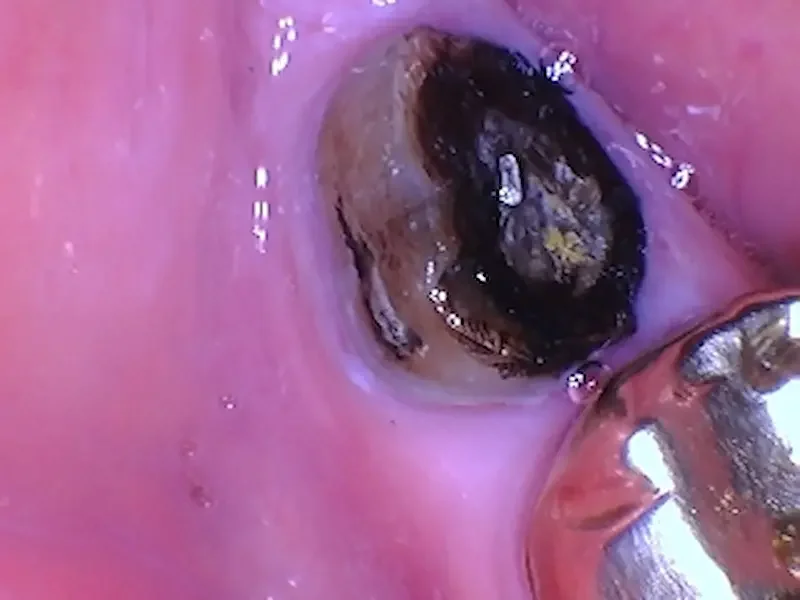
A lower right molar crown fell out. The darkness is mostly stain, but there are small areas of decay that likely contributed to the crown loosening. The tongue side of the remaining tooth is flush with the gums.
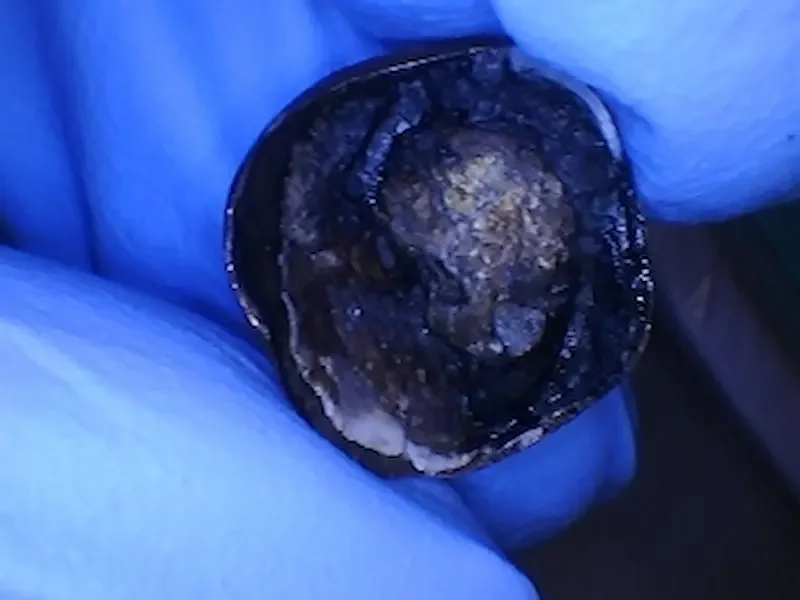
The inside of the crown that fell out. Some old cement came out with the crown.

An X-Ray of tooth #31 with crown missing. You can see this tooth had a previous root canal and large post in the back root.
This patient is a female in her 60s. She patient decided to have this tooth removed due to structural compromise that made long-term restoration unpredictable. Not everyone decides to get their tooth out, but this patient did. Because the patient is planning for a future dental implant, a socket preservation procedure with a bone graft was performed at the time of extraction.
Surgical goals of the bone graft:
Prevent collapse of the socket during early healing
Create a stable foundation for future implant placement
This was a routine procedure for us at our surgical practice. We extracted the tooth, then filled the root spaces with a 70/30 ratio cancellous to cortical cadaver bone particulate graft. Next we stabilized the graft with a collagen plug and suture to support predictable bone regeneration. Photos below:
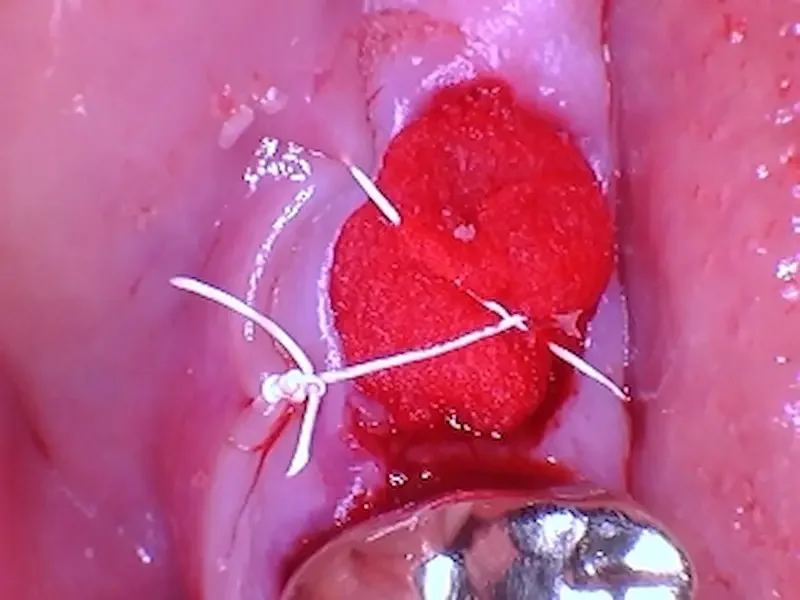
A photo of the grafted site. The red part is the collagen plug over the top of the particle graft. In this case one figure 8 suture was enough to keep everything stable for healing.
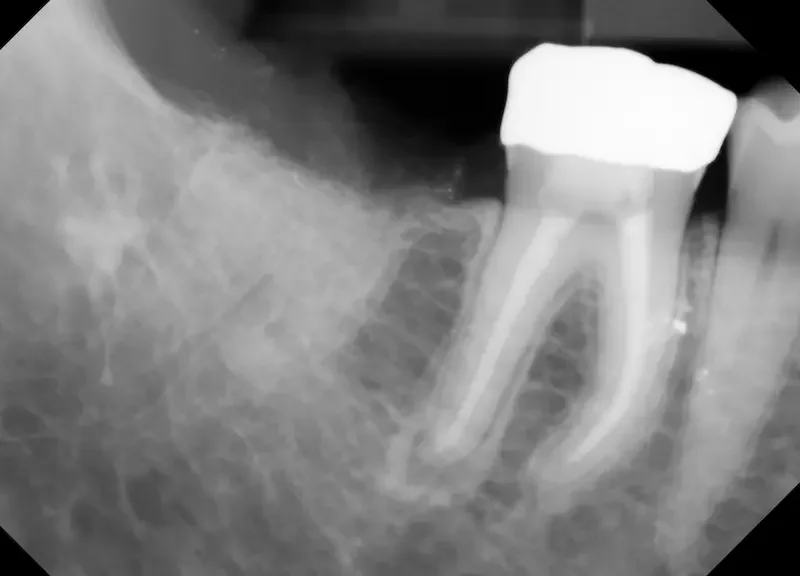
An X-Ray of the extraction site after bone graft placement. You can see how the lighter shade of the grafted particles fills in the space where the tooth roots were before the extraction.
What We Look for Clinically at the 2-Week Healing Mark
At two weeks, bone has not yet fully regenerated — and that’s important to understand.
This phase is primarily about soft tissue stability and graft protection.
At 2 weeks, we evaluate:
Whether the graft material has remained stable (versus completely fallen out)
How the gum tissue is closing over the site
Signs of inflammation or infection versus healthy healing
Whether the site is protected enough to continue healing undisturbed
This is often the visit where patients expect the site to “look filled in.” That usually does not happen yet — and that’s normal.
Real Photo: What You’re Seeing at 2 Weeks
2 Weeks After Surgery

The grafted site is healing well. The white and yellow granules toward the top of the photo are residual bone graft particles, not an infection. and toward the bottom near the gold crown you can see the gums are already almost fully closed over.
Our patient was concerned about the “yellow spots”. We explained these are particles from the bone graft, NOT an infection. They will likely exfoliate (fall out) on their own, and there is plenty of bone graft underneath them. It is very normal to lose a few of the graft granules, especially the cortical granules which are the bigger and denser particles in the particular mix we used in this case.
A big key that you can see in the photo is that the gum tissue around the site and in the cheek area was pink, and minimally swollen. If an infection were present, we’d see deep red, irritated or visibly swollen tissue. Usually it would be painful. Our patient had no pain.
Some of the gums closer to the gold crown are completely covering the extraction site already, which is great healing for someone in their 60s! Remember that medical conditions can affect healing timelines, so sometimes even for a younger person, healing this good doesnt happen for another week or two.
To sumarize:
The gum tissue has migrated inward and downward, almost fully closing the extraction socket
The socket appears shallower, but not closed
Mild surface irregularity is expected
This is normal healing.
True and final bone maturation occurs months later, not weeks.
Is It Normal for a Bone Graft to Look Hollow at 2 Weeks?
Yes — and this is one of the biggest misconceptions we get asked about.
At two weeks:
The body is still forming early connective tissue
New bone has not fully mineralized yet
The graft is acting as a scaffold, not final bone
If the site looked “fully filled in” at two weeks, that would actually be unusual.
Bonus content: What a bone graft should look like after 1 week healing.
Should There Still Be Discomfort at 2 Weeks?
Most patients report:
Minimal soreness or pressure
No sharp or worsening pain
Improved chewing comfort, especially on the opposite side
Pain that increases after week one is not typical and should be evaluated.
How We Know This Graft Is Healing Normally
From a surgical standpoint, this site shows:
Stable graft material
Healthy soft tissue color and contour
No signs of infection or graft loss
At this point, we’re looking for progression, not perfection.
Warning Signs That Are Not Normal at 2 Weeks
While most bone grafts heal uneventfully, contact your dentist if you notice:
Increasing pain after initial improvement
Persistent swelling or pressure
Foul taste or drainage
Fever or systemic symptoms
Early evaluation can prevent larger complications. When these symptoms are present, an infection is possible.
What Happens Next in the Healing Timeline?
Typical progression:
Weeks 0–2: Soft tissue stabilization
Weeks 3–6: Early bone formation begins
3–6 months: Bone matures and strengthens
Implant planning: Based on graft size and location
Every case is different — this is why follow-up matters. At our practice, each surgical case is unique and patients get custom treatment timelines depending on their unique needs.
Unsure If Your Bone Graft Is Healing Normally?
Many patients come to us worried — and leave relieved after we review healing clinically and on X-ray.
If you’ve had an extraction or bone graft and:
Something doesn’t look right
Healing feels slower than expected
You want a second opinion before implant placement
We’re happy to evaluate your site and give you a clear, honest assessment.
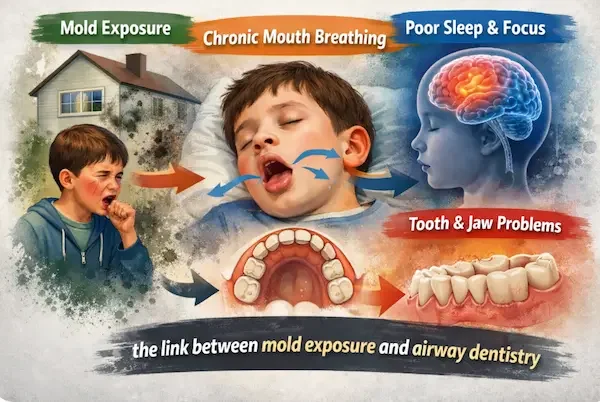
Mold Exposure, Mouth Breathing, and Why Airway Development Matters More Than Cavities
From a Dad and an Airway Dentist…
Myself and my family around the time we discovered the mold in our home
I’m writing this not only as an airway dentist, but much more importantly, as a dad.
My son experienced mold exposure early in life. My wife and I would do anything for our kids! So, like many families, we took the mold exposure seriously:
We identified and extensively remediated the mold source in our home
For over two years, we’ve focused on my son’s gut health and immune support through a pediatric functional medicine practice.
His supplement regiment and food restrictions are exhausting and expensive! But we’ve stayed the course. And yet, he continues to deal with eczema. You may have had a similar experience.
If you’re a parent reading this, you may be wondering:
“We handled the mold—why are symptoms still lingering?”
This article exists because there is often another piece of the puzzle for growing children that goes unaddressed—one that lives in the airway, jaws, and mouth.
Step One: Mold Exposure Must Be Addressed First
When mold exposure is suspected, identifying and dealing with the source is always step one.
This may involve:
Addressing water damage or hidden moisture
Improving indoor air quality
Professional remediation when indicated
No dental, medical, or supplement-based approach can fully work if exposure continues.
Step Two: Immune & Microbiome Support Often Helps
Many families pursue:
Gut and microbiome support
Immune system regulation
Anti-inflammatory nutrition and supplementation
This work—often guided by functional or integrative medicine providers—is incredibly important.
However, even when these steps are taken, many children still struggle.
Why?
Mold Exposure Often Leads to Mouth Breathing
Mold exposure can cause chronic nasal inflammation, even when allergy testing is negative.
When nasal breathing becomes difficult—especially during sleep—children adapt by:
Opening their mouth at night
Lowering the tongue from the palate
Relying on mouth breathing for oxygen
This is not a bad habit.
It’s a protective response.
But over time, this adaptation can affect jaw growth, airway development, and sleep quality.
Bonus: Another factor that influences mouth breathing can be tongue ties. I wrote extensively about that here.
Why Mouth Breathing Affects Jaw and Airway Growth
Proper facial and airway development depends on:
Even with an extensive supplement list and mold removed, my son still struggles with eczema. Thankfully, he’s still a happy dude!
The tongue resting on the roof of the mouth
Gentle outward pressure that widens the upper jaw
A nasal airway that develops alongside the jaws
With chronic mouth breathing:
The tongue rests low
The upper jaw grows narrow
The palate becomes high and vaulted
The nasal airway becomes smaller
This creates a cycle:
Narrow jaw → restricted airway → worse nasal breathing → more mouth breathing
Long-Term Consequences of Mouth Breathing in Children
1. Jaw & Facial Development (Including Appearance)
Chronic mouth breathing during growth is associated with:
Narrow jaws
Crowded teeth
Recessed or underdeveloped jaws
Longer, less balanced facial growth
This is not about vanity—it’s about structure, airway space, and long-term function.
Beauty isn’t necessarily the goal (brain development is. See below.) But it is true that healthy = beautiful. Notice the difference in jaw development in the picture below.

Henry Cavill has a well developed jaw. He is a nose breather! But Napolean Dynamite is notorious for his open mouth and inattention at school!
2. Sleep, Brain Development & Behavior
Healthy brain development requires deep, restorative sleep.
Research shows associations between pediatric sleep-disordered breathing and:
Attention difficulties
Hyperactivity or ADHD-like symptoms
Learning and emotional regulation challenges
Mouth breathing does not cause ADHD—but it can worsen attention and behavior, especially during critical growth periods.
3. Oral Health & the Microbiome
Mouth breathing can also lead to:
Dry mouth at night
Altered oral microbiome balance
Increased cavity risk
Inflamed gums despite good hygiene
Cavities are often a signal of airway dysfunction, not the root problem.
The Key Takeaway for Parents
Cavities matter.
But airway development, jaw growth, and sleep quality matter way more. That’s the perspective of an airway dentist.
Even after mold exposure is addressed and immune support is underway, dental airway evaluation may still be necessary. We always emphasize partnering with functional medicine practitioners and myofunctional therapists!
➡️ In the next post, we explain exactly what an airway dentist evaluates—and what parents can expect…
🎄 The Worst Holiday Treat for Your Teeth
One of my favorite snacks. Perfect with those holiday family movie nights… What is the most frequent holiday treat source of tooth issues?
Unfortunately, it’s popcorn 🍿
Every holiday season, we see patients who cracked a tooth on an unpopped kernel or ended up with a sharp popcorn shell wedged deep under the gums. Those thin hulls are rigid, sharp, and perfectly shaped to irritate gum tissue and cause inflammation—or even infection—if they get stuck.
Popcorn feels light and harmless, but your teeth (and gums) pay the price.
Here’s a real case from last week:
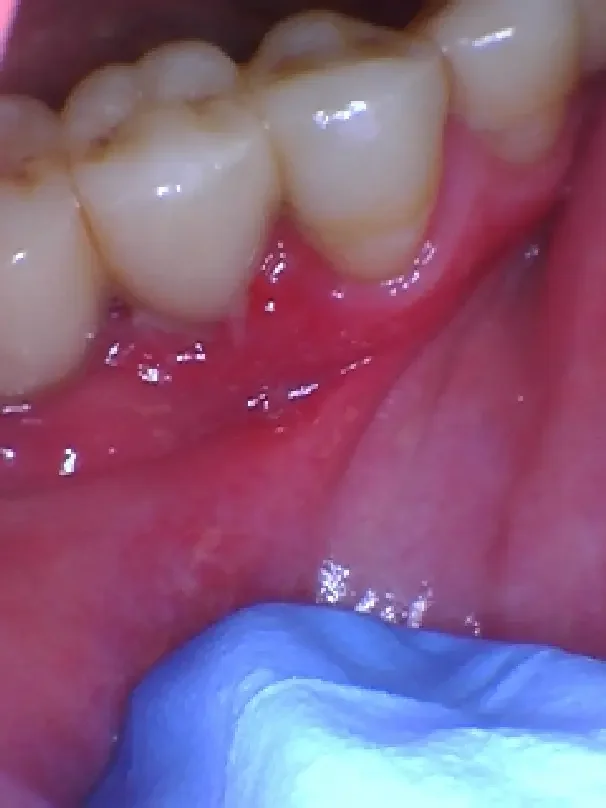
Gum irritation causing the patient lots of pain over the last couple days. We got her numb and cleaned out the area.
The culprit causing the gum pain!
After we fished out this popcorn kernel, our patient felt much better!
If you love popcorn:
Avoid crunching unpopped kernels
Floss gently if a shell gets stuck (sooner than later, so it doesn’t lodge itself deeper!)
Call or text us if irritation lasts more than a day or two… we can get it out
We hope your teeth make it through the holidays intact 😄
Merry Christmas and Happy New Year from Teuscher Legacy Dental!

What Does an Extraction Bone Graft Look Like 1 Week After Surgery?
Edited February 4th, 2026
One of the most common questions patients ask about 1 week after a tooth extraction with a bone graft is:
“Is this what it’s supposed to look like?”
If you’re about one week out from an extraction and bone graft, this article will show you exactly what normal healing looks and feels like, using real patient clinical photos from our St Charles, Illinois dental practice.
Quick orientation: Where You’re at 1 Week Post Op (Bone Graft Healing Timeline)
Days 1-3: Blood clot, swelling, early inflammation
Days 5-6: Transition to early granulation tissue (If you aren’t quite 1 week out, start here!)
Week 1: Granulation tissue forms (what you’re seeing now)
Weeks 2–3: Gum tissue strengthens, color normalizes
Months 1-4: Bone begins to consolidate
Months 4–6: Implant readiness (case dependent)
About the author
This article was written by Dr. Brayden Teuscher, a general dentist with a surgical focus on tooth extractions, bone grafting, and dental implants in St. Charles, IL, serving Kane County, Campton Hills, Geneva, Elburn, and surrounding communities.
Why This Tooth Needed an Extraction and Bone Graft
This case involved tooth #19, a lower molar that had a large infection caused by a crack on the back (distal) side of the tooth.
Before the tooth was removed, there was a draining sinus tract, which means the infection had been present long enough that the body created a small channel to release pressure and bacteria.

X Ray before Extraction. Notice the darker area around the roots of the molar- that’s where the infection is.

Picture of the back side of the tooth. Notice the crack in the center of the tooth. This is the infection’s source. And the pimple to the right side is where the pus from the infection is draining out of the gums.
Once the tooth was removed, the infected tissue inside the socket was physically cleaned out. This step is critical—bone grafts only work when infection is thoroughly removed first. The long term plan is to replace this tooth with a dental implant. We do this all the time for patients in Kane County, Illinois. An antibiotic was also prescribed after surgery to support healing once the infection source was eliminated.
Not every tooth extraction requires a socket preservation bone graft. And, at one week, the grafted site is far from fully healed. In fact, while socket preservation reduces alveolar ridge bone collapse, bone remodeling and maturation still continues for months, but the evidence is clear socket preservation maximizes the chances at maintaining bone volume (Byrne GJ et al. Socket preservation of implant sites — Journal of the American Dental Association (JADA). 2012)
What Type of Bone Graft Was Used?
After cleaning the socket, a bone graft was placed to help preserve bone and support future healing.
In this case, the graft included:
70/30 cancellous to cortical bone particulate
Cancellous bone helps new bone form more quickly
Cortical bone helps maintain strength and volume
A collagen plug placed on top of the graft
A PTFE suture in a figure-8 pattern to hold everything stable
This is a very common approach after extracting an infected molar, especially when preserving bone for possible future implant placement.
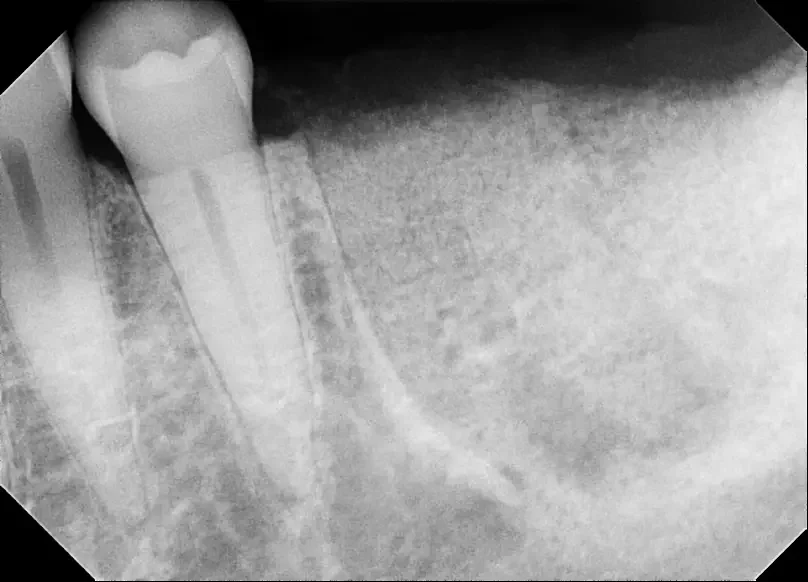
X Ray showing where the tooth used to be, now filled with bone graft particles after extraction at Teuscher Legacy Dental.

Photo immediately after extraction and bone graft. The shiny red is a collagen material used to help blood clot over the graft. The sutures blend into that material. The draining infection to the right side of the graft was cleaned out physically after the tooth was extracted.
What Does an Extraction Bone Graft Look Like After 1 Week?

One week after extraction and bone graft, the gums are closing over the hole where the tooth used to be. The white appearance inside the crater can be alarming, but it is normal healing of the gum and bone graft. Here you can see the figure 8 of the stitches more clearly. Typically we remove these stitches after 1 week.
At one week post-op (or even 8-10 days later), the extraction site looked exactly how we expect healthy healing to look.
Most patients notice:
A small crater or hollow where the tooth used to be
A white or off-white material inside the socket
Gums that are slowly healing inward, but not fully closed yet
That white appearance is normal. It is not pus or infection.
It usually represents:
Healing tissue
Residual collagen material
Early bone formation happening underneath
At one week, the gums are not supposed to be fully closed yet.
How Should an Extraction Bone Graft Feel After One Week?
In this case—and in most similar cases—patients report:
Significant relief once the infected tooth is removed
Mild soreness rather than sharp pain
Gradual improvement each day
Many patients are surprised that they feel better after the extraction than they did before, especially when a chronic infection was present.
Bonus Resources: What Does an Extraction & Bone Graft Look Like 2 Weeks After Surgery?
What Does an Extraction & Bone Graft Look Like 1 Month After Surgery?
Is Pain Normal After an Extraction Bone Graft?
Some soreness is normal, especially during the first week.
For many patients, pain is well managed with over-the-counter medications.
When safe for the patient, a common approach is:
Ibuprofen 400–600 mg
Four hours later: Acetaminophen (Tylenol) 500 mg
Continue rotating every four hours as needed
This combination helps control both inflammation and discomfort without stronger medications.
(Always follow your dentist’s instructions and confirm these medications are safe for you.)
When Should You Be Concerned?
While a crater-like appearance and white healing tissue are normal at one week, you should contact your dentist if you notice:
Increasing pain instead of gradual improvement (especially throbbing pain)
Swelling that worsens after day 3–4
Foul taste or active drainage
Fever or feeling unwell
These are not typical signs of normal healing.
The Big Takeaway: This Is Normal Healing
At one week after an extraction with a bone graft:
The site often looks open
The graft is working underneath the surface
Gums heal slowly and intentionally
Bone regeneration takes months, not days
Healing doesn’t look “pretty” early on—but that doesn’t mean something is wrong.
Remember, that healing will take a matter of months. But it’s often worth the wait: Studies indicate significant long-term positive effects on alveolar ridge height and volume when socket preservation is used compared to extraction alone (Atieh MA, Alfardan L, Alsabeeha NHM, et al.Alveolar ridge preservation after extraction: systematic review and meta-analysis. PubMed. 2022).
If you’ve been told you need a bone graft or you’re wondering whether your extraction site looks normal, these are exactly the kinds of questions we want patients to ask. In our St Charles, Illinois dental practice, we hear these questions all the time.
Clear answers reduce anxiety—and better understanding leads to better healing.
If you’re in the Kane County, IL area, come see us for a free consult!
The Truth About Same-Day Extractions and Implants in St. Charles
Everyone loves the idea of walking in with a broken tooth and walking out with a dental implant the same day. It sounds efficient, high-tech, and convenient — and sometimes, it really is.
But here’s the truth most people never hear:
same-day dental implants are a phenomenal option in the right situation… and a costly mistake in the wrong one.
At Teuscher Legacy Dental in St. Charles, IL, we place and restore dental implants every week — including immediate-placement (“same-day”) cases. The key is knowing when it’s the smart move and when patience leads to better long-term success.
What “Same-Day” Actually Means
“Same-day dental implants” (also called immediate implant placement) means the implant is placed at the same appointment as the tooth extraction.
Sometimes a temporary crown or healing cap is attached right away, giving you the appearance of a new tooth while the implant integrates beneath the surface.
That’s very different from “same-day final teeth.” True final restorations still require a healing period — usually several months — for the bone to bond securely to the implant.
So the real question isn’t “Can you place an implant right away?”
It’s “Will that implant heal predictably and last decades?”
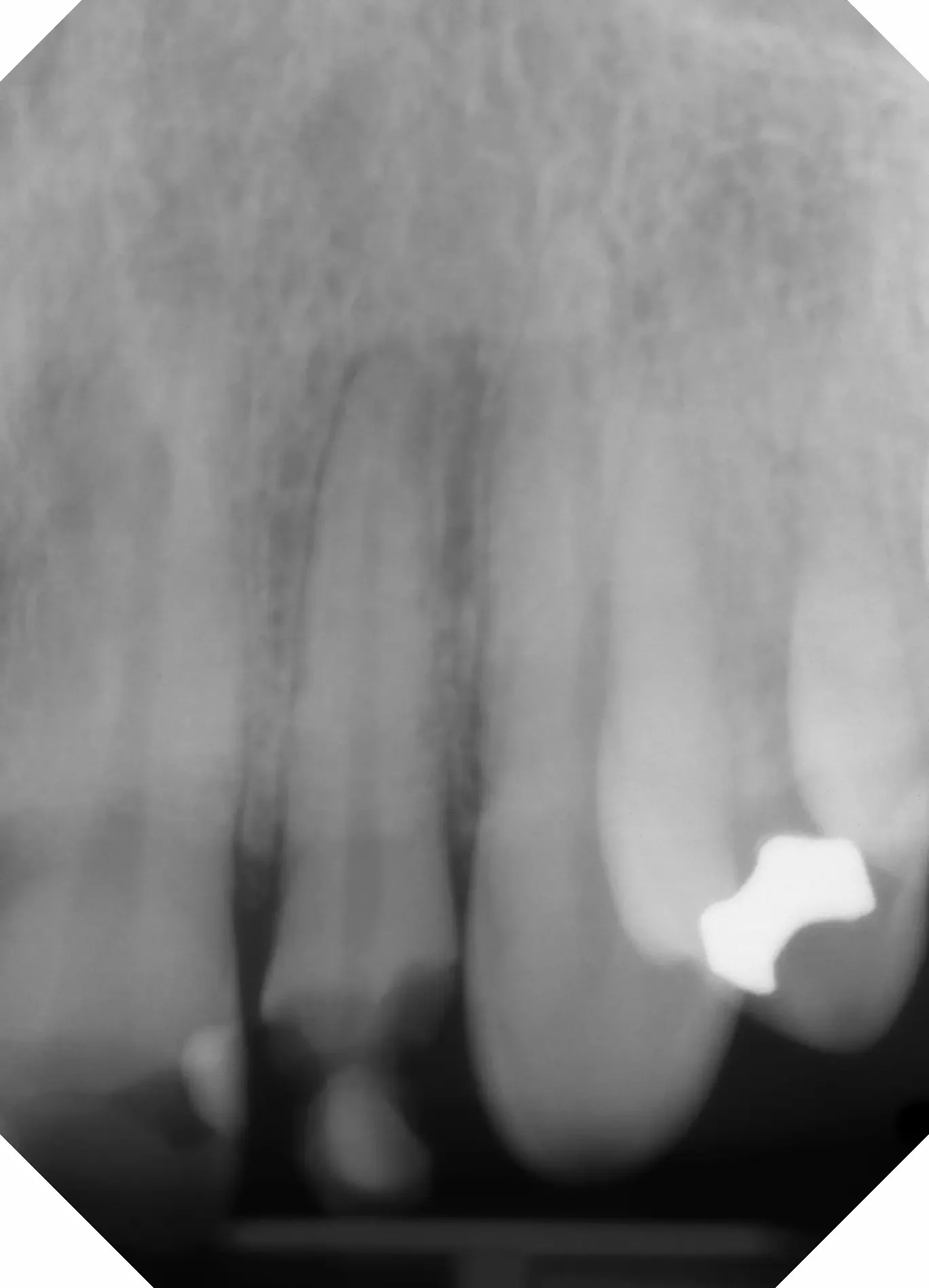
Before Extraction
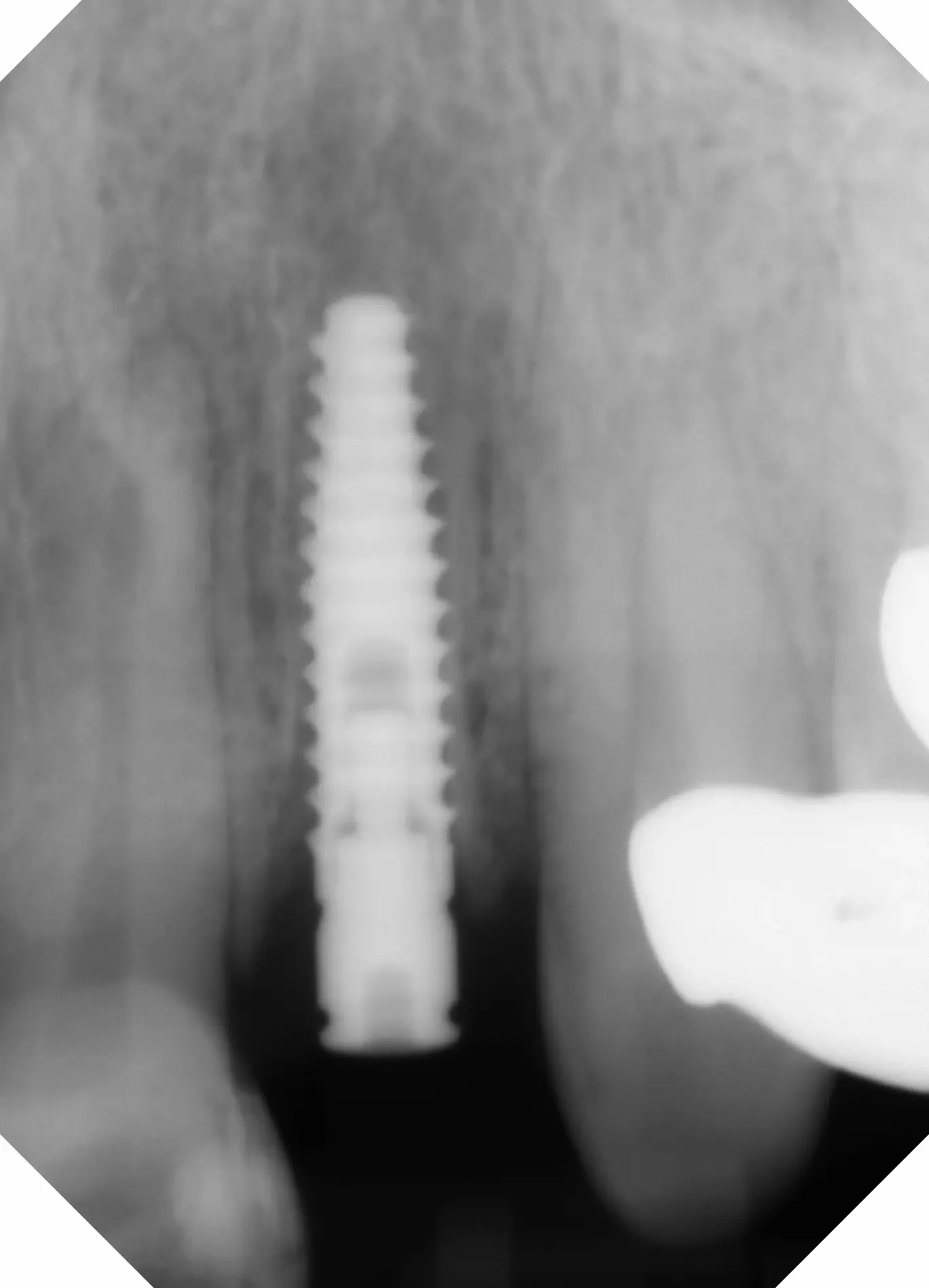
After Extraction, Same Day Implant in root socket
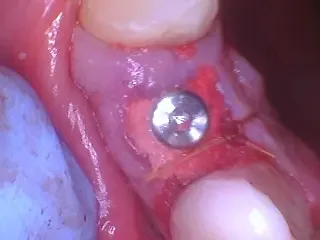
Picture of same day implant and healing cap sticking out of gums
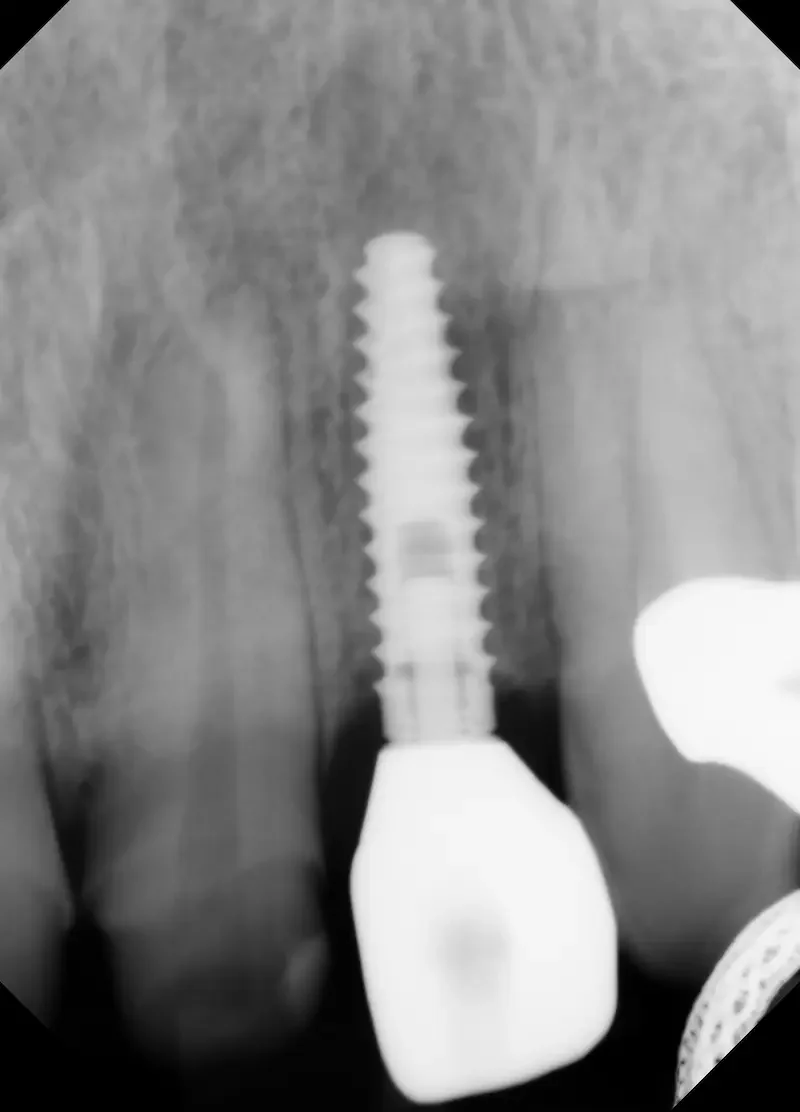
X Ray of final crown over immediate dental implant
✅ When It’s a Genius Move
Same-day implant placement works beautifully when a few key conditions are met:
Healthy bone surrounds the tooth being extracted
No active infection in the gums or bone
Thick, healthy gum tissue for stability and aesthetics
Excellent primary stability (the implant locks in firmly)
Precise digital planning — guided by 3D CBCT imaging
Here’s an example from one of our recent cases (see images above!):
A patient had a broken down front tooth. Because the surrounding bone and gums were perfectly healthy, we used a fully guided surgical approach to remove the tooth and place an implant in the same visit. The patient left with a custom temporary that looked completely natural — and never had to go a single day without a smile. Dr Brayden Teuscher did a much more thorough case breakdown here.
That’s when same-day is a genius move.
❌ When It’s Not Worth the Risk
Not every extraction site is ready for an implant right away. In some cases, placing too soon can actually set you back — leading to bone loss, infection, or implant failure.
We don’t recommend same-day placement when:
There’s infection or abscess near the root
The bone is too thin or fragile to stabilize an implant
Gum tissue is receding or damaged
Sometimes if you smoke or have uncontrolled diabetes
Could an implant technically go in that day? Maybe.
Should it? No.
At Teuscher Legacy Dental, our primary goal isn’t usually to get the implant done fast — it’s to do it right. If we need to rebuild the bone first, that extra healing time protects your long-term success. Of course, we’d go over risks and benefits of each option, because it’s not always black and white!
Why Planning Beats Speed Every Time
Speed means nothing without stability. That’s why we rely on:
3D CBCT imaging to evaluate bone in every dimension
Digital surgical guides for perfect placement
In-house implant surgery and restoration, so every phase aligns under one plan
When you’re working with a team that performs extractions, bone grafts, and implant restorations under one roof, like we do at Teuscher Legacy Dental, every decision serves the long game — not just the quick win.
We can still streamline care when the conditions are right, but never at the expense of the implant’s lifespan.
What to Expect: Cost, Healing & Comfort
In most cases, same-day dental implants cost about the same as traditional implants. The difference mostly lies in timing, not price.
Healing time: Soft tissue typically heals in 2–3 weeks; bone integration takes 3–6 months.
Comfort: With modern anesthesia and guided precision, most patients report less discomfort than expected.
Aesthetics: You’ll often leave with a temporary tooth that looks natural while healing.
When planning correctly, the process is efficient and predictable — not rushed.
Honest Answers to Common Questions
Are same-day implants safe?
Yes — in healthy, well-planned cases. The risk rises when infection or bone loss is ignored.
How long do same-day implants last?
With proper planning and maintenance, the longevity is identical to traditional implants: decades of function and confidence.
Do they hurt more than regular implants?
Not at all. In many cases, recovery feels even easier because we minimize surgical steps and trauma.
The Bottom Line
Same-day dental implants can be a great tool and shorten dental implant timelines! But not if corners are cut.
When the foundation is healthy, they save time and preserve bone. When it’s compromised, waiting — and rebuilding — is the wiser move.
At Teuscher Legacy Dental, our philosophy is simple:
We plan for forever, not just for fast.
But when we can achieve predicatble, long term results with an immediate dental implant, that’s awesome!
If you’ve recently lost a tooth or are facing an extraction, schedule a 3D implant consultation with our team. We’ll show you exactly what your bone looks like, whether same-day placement is possible, and what path gives you the best long-term result.
Teuscher Legacy Dental
40W131 Campton Crossings Dr, St. Charles, IL 60175
📞 (630) 762-0000 | teuscherdental.com
Award-Winning Cosmetic & Implant Dentistry in St. Charles IL

Why Your Teeth Are More Sensitive In Winter
Ever notice your teeth ache when you step outside on a cold day? In this short video, Dr. Brayden Teuscher explains why: breathing cold air through your mouth can chill the teeth and irritate tiny nerve endings inside them.
Cold, dry air can also inflame the sinuses, which press against upper tooth roots and make them feel sore—even if there’s nothing wrong with the teeth themselves. Especially if you have a mild illness or COVID.
If you deal with seasonal tooth sensitivity, try breathing through your nose, using a soft-bristled brush, and scheduling a check-up to rule out enamel wear or gum recession.
Watch below for a quick explanation and simple ways to protect your teeth this winter. See You Soon!
Confidence Restored with Same-Day Full Arch Implant Rehabilitation
Meet one of our real patients: A professional who came to us with failing upper teeth, frequent discomfort, and a mounting hesitation in business settings because of his smile. His case is featured on another blog post: full arch implants explained. On a single transformative day, he underwent full-mouth extraction of the upper arch and immediate placement of a fixed-on-implants prosthetic (“same-day teeth”) using the advanced arch-restoration protocol commonly referred to as “All‑on‑X”. The lower jaw is up next, completing the full-mouth rehabilitation journey.
What happened
Extraction of all remaining upper teeth in one surgical visit.
Placement of multiple implants in the upper arch, angled & planned for optimal support and immediate loading.
Attachment of a fixed provisional full-arch prosthesis the next day (less than 24 hours later), enabling immediate function and aesthetics.
Detailed surgical and prosthetic planning, digital workflows, and coordination to deliver same-day outcomes with strong functional and cosmetic results.
(For background on how full-arch implant rehabilitation works and the key benefits, see another full case breakdown here.)
Why it matters
Function: The patient regained chewing ability and speech confidence almost immediately, rather than waiting months for healing and final prosthetics. Full-arch fixed implants offer a vastly more stable bite compared to removable dentures.
Aesthetics: Missing, decayed, or failing teeth can undermine a person’s professional presence and self-image. By restoring a full fixed smile, this patient no longer hides his teeth when speaking, presenting, or engaging in meetings.
Psychology & business impact: Confidence in appearance translates into presence in business settings. Our patient noted that after the procedure, he walked into his next client meeting without self-consciousness about his smile. This kind of outcome is especially meaningful when your work requires communication, leadership, or public interaction.
Efficiency: By doing the upper arch and same-day loading, we streamlined the treatment experience. Patient downtime, inconvenience, and emotional burden are reduced when the process is efficient and predictable.
Looking ahead
The lower jaw phase is scheduled and will complete his full-mouth fixed restoration. Post-care will include:
Monitoring implant integration and prosthetic fit.
Hygiene and maintenance of the fixed prosthesis (cleaning under the bar, proper recall).
Long-term support for the restoration’s success and the patient’s overall oral health.
It’s critical to point out that while these full-arch fixed solutions are life-changing when done appropriately, patient selection, proper planning, skilled surgical and prosthetic execution, and maintenance are all vital. Some warnings exist in the literature about over-aggressive extraction and blanket promotion of full-arch implants when less-invasive or preservative options may suffice.
Want to learn about your options?
Schedule a Free Consultation with our Expert Team!
2 Veneers → A Wedding-Ready Smile! (Fast Cosmetic Fix Before the Big Day)
Sometimes the biggest transformations come from the smallest, most strategic changes.
Sally came to us hoping for a brighter, more confident smile before her upcoming wedding — but her timeline was tight. Instead of recommending a full cosmetic overhaul, we focused on what would make the biggest impact quickly: two carefully crafted porcelain veneers.
These veneers restored balance, symmetry, and brightness to her smile without aggressive treatment or multiple lengthy appointments. The result? A natural, wedding-worthy smile that photographed beautifully and felt completely like her.
If you’re considering cosmetic dentistry — whether for a wedding, graduation, or simply because you’re ready for a change — you’d be surprised what a small number of well-designed veneers can do.
Ready to explore your own options?
👉 Book a free cosmetic consultation
A Broken Tooth Solved! Cosmetic Dentistry Explained
When you break a tooth and need a quick, (but beautiful and cosmetic!) fix, what do you do?
See Teuscher Legacy Dental of course!
This patient had a broken tooth and adjacent tooth that was cracked and too yellow. We used advanced, minimally invasive techniques to improve the color and strengthen the teeth in a way that will last. Our patient was thrilled!
Get more detail in the video above.
If you have a similar need for cosmetic dental work, see us for a FREE CONSULT!
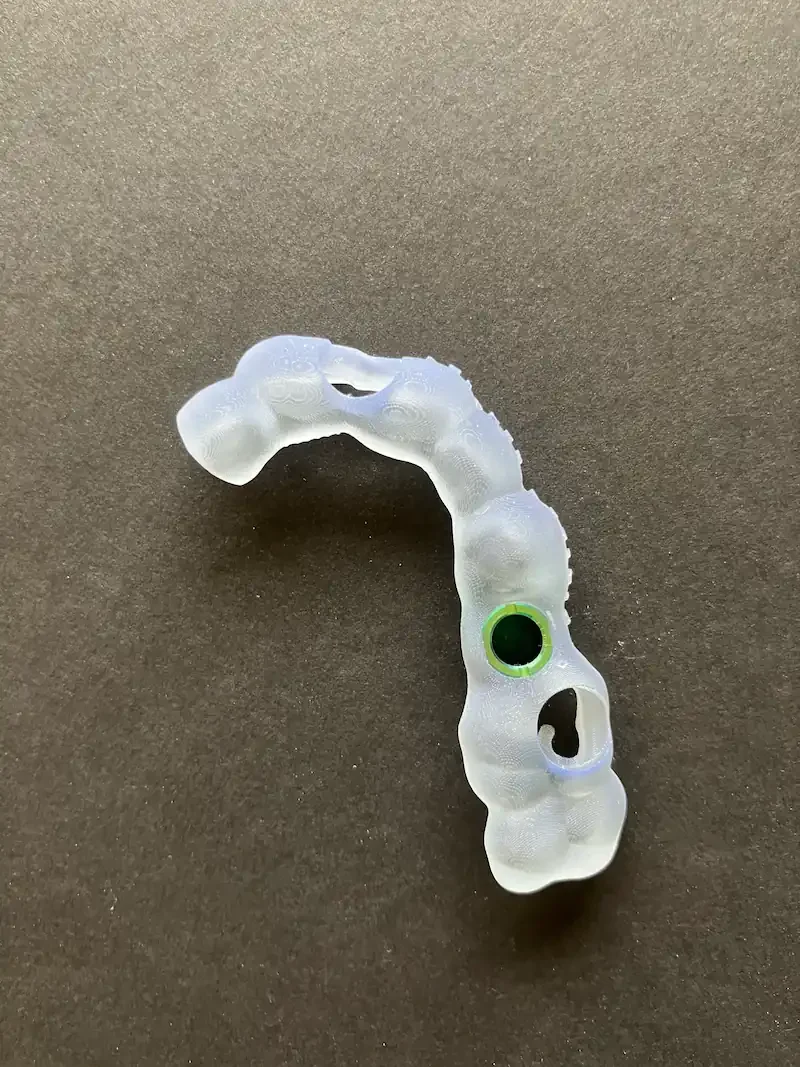
What Are Surgical Guides for Dental Implants — How They’re Made and Used (Real Photos!)
Learn how 3D surgical guides help your implant be placed with pinpoint accuracy. See how Teuscher Legacy Dental plans, prints, and uses them.
What is a Surgical Guide?
A surgical guide is a custom-made template that fits precisely over your teeth or gums during implant surgery.
Think of it like a roadmap — it shows the exact position, depth, and angle where each dental implant should go.
Instead of relying only on visual landmarks or freehand placement, the guide ensures your implant goes exactly where it was digitally planned using your 3D scans.
How a Surgical Guide Is Made
At Teuscher Legacy Dental in St Charles, IL, each guide is made in-house from your Medit digital scan and CBCT 3D X-ray.
Here’s how the process works step-by-step:
About the author
This article was written by Dr. Brayden Teuscher, a general dentist with a surgical focus on tooth extractions, bone grafting, and dental implants in St. Charles, IL, serving Kane County, Campton Hills, Geneva, Elburn, and surrounding communities.
1️⃣ Digital Impression (Medit Scan)

3D digital impression of top teeth to make surgical guide for dental implant
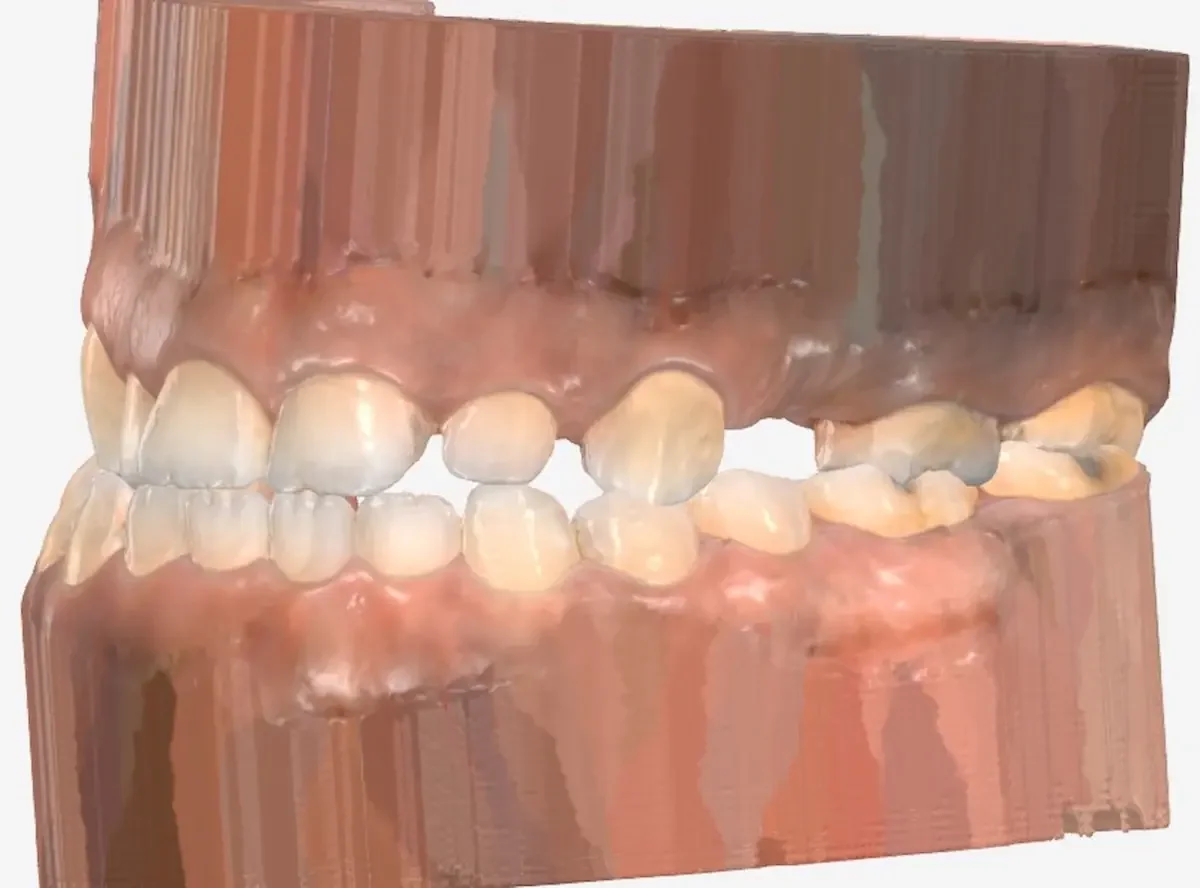
3D digital impression of bite to plan precise bite relationship for final crown BEFORE any implant work is done.
We take a detailed 3D surface scan of your teeth and gums. We have two Medit brand intra-oral scanners at our office. They dont gag you like traditional impression material will!
2️⃣ 3D Bone Scan (CBCT) and Virtual Implant Planning
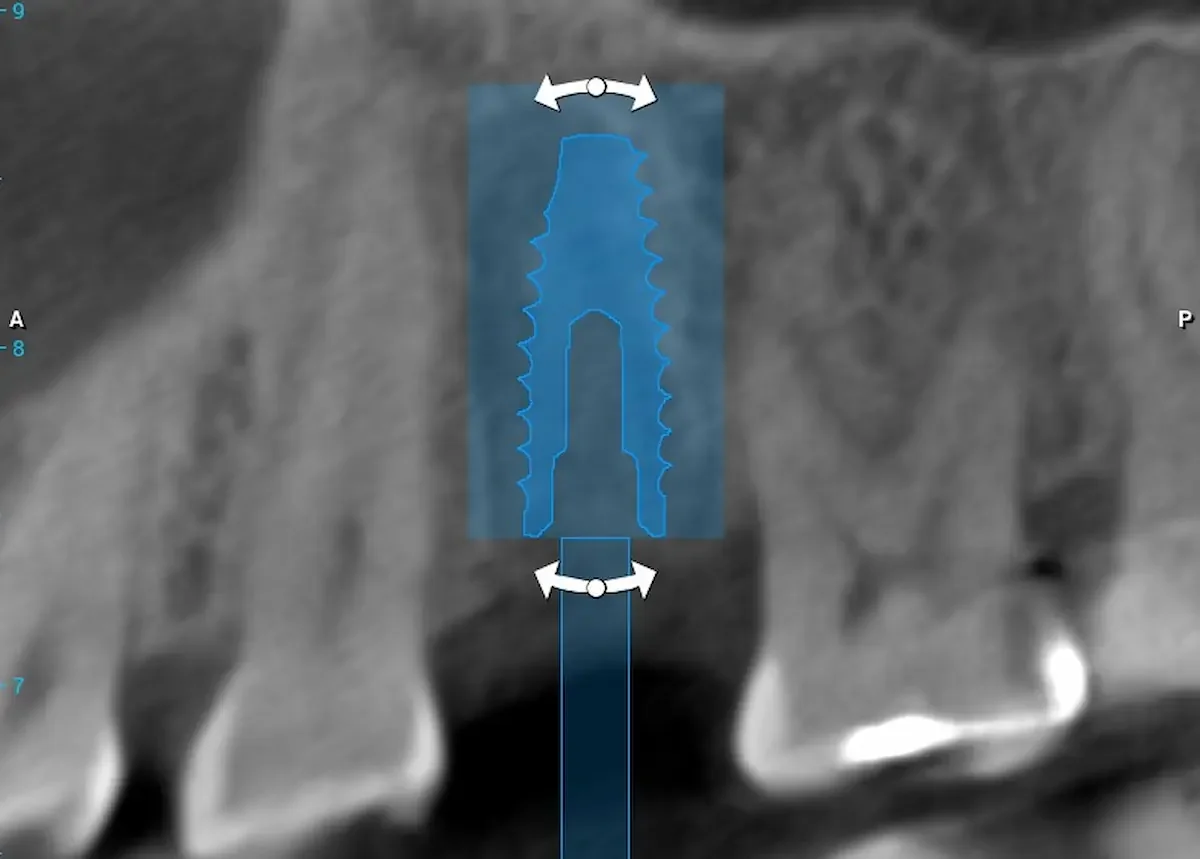
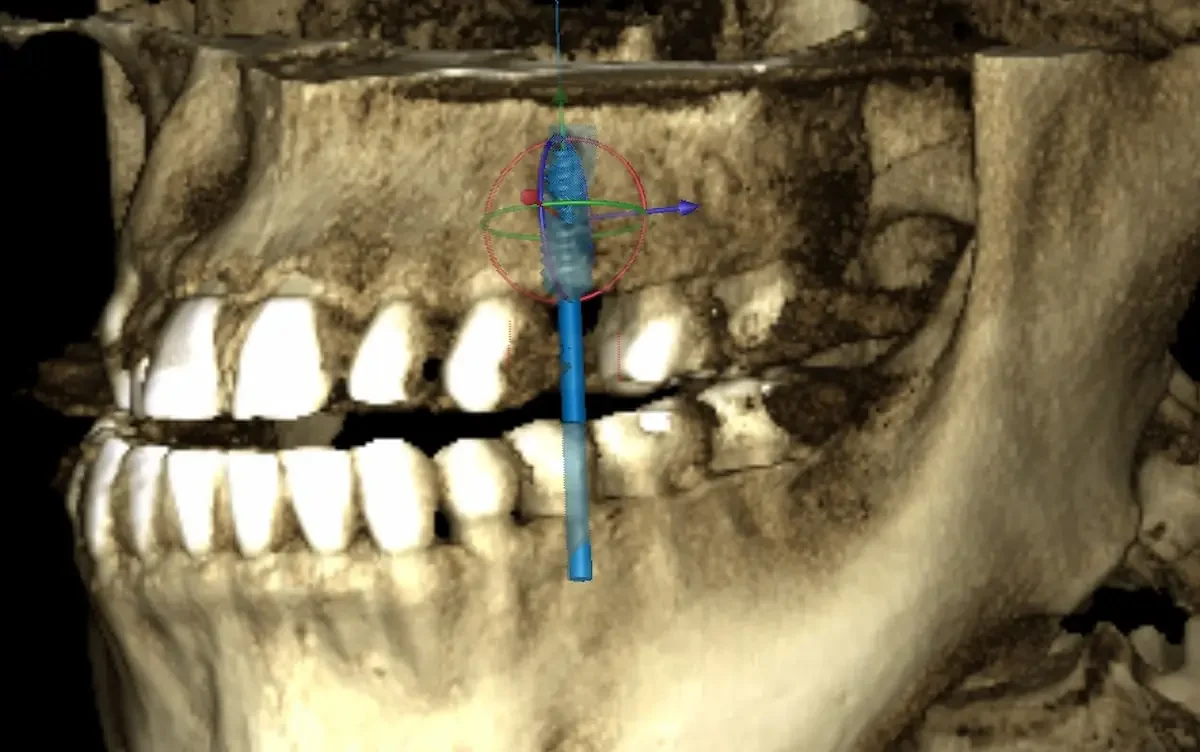
Your CBCT scan shows the underlying bone volume, nerves, and sinus anatomy.
We plan in more detail where the final tooth will go, and the angle the implant needs to be placed. This data is merged with your Medit 3D intra-oral scan inside our implant planning software. This data is used to 3D print the tooth model and surgical guide below.
3️⃣ Guide Design & 3D Printing
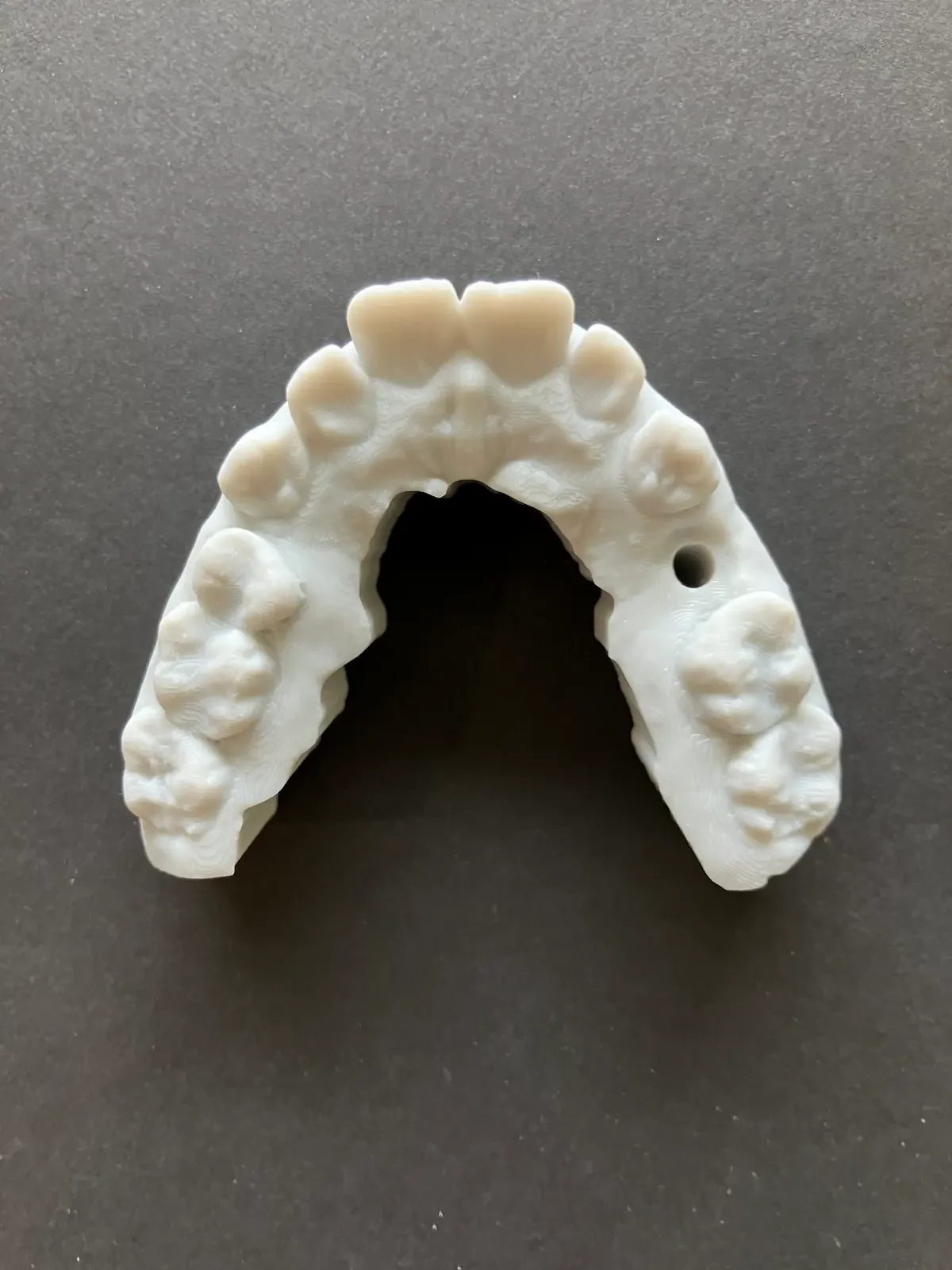
3D printed model of the patient’s upper arch, showing where the implant will be placed
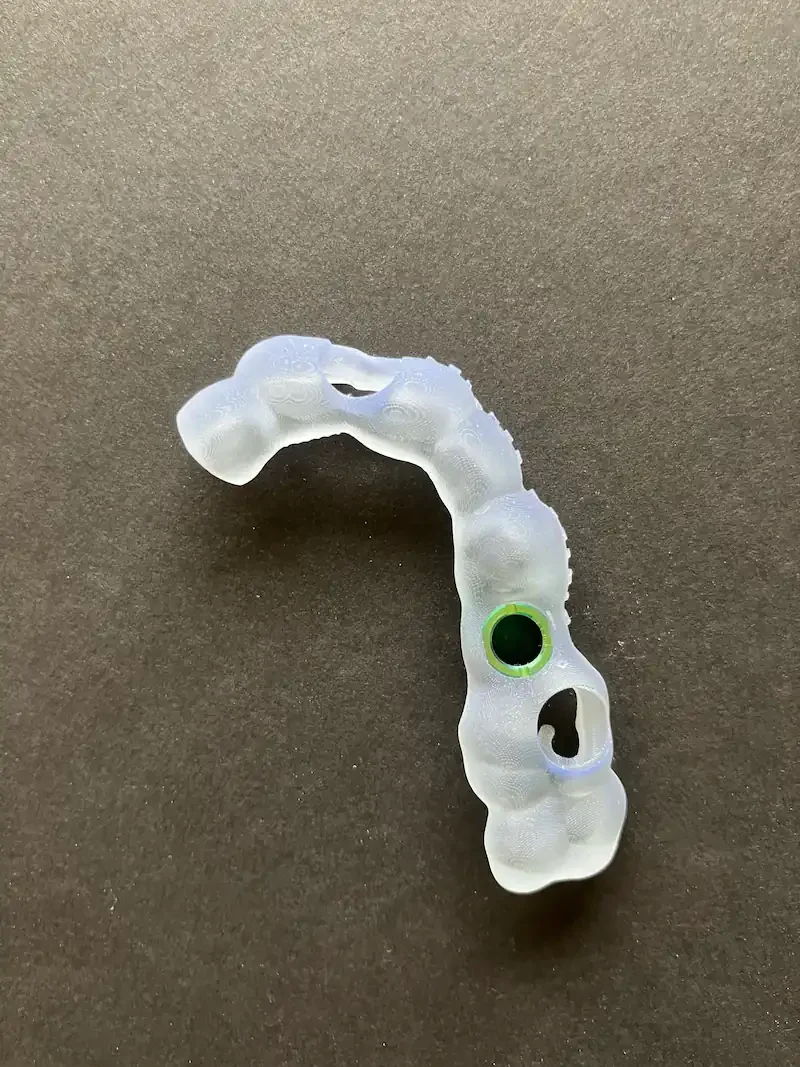
Green metal sleeve only allows the drill to enter bone in one specific direction. This direction is the exact place we decided in the planning phase.
Once the implant and crown plan is approved in the planning software, the surgical guide is designed with metal sleeves to control the drill’s exact path. The file is printed on a dental 3D printer using biocompatible resin and disinfected before surgery.
How the Surgical Guide Is Used During Surgery
On the day of surgery, the guide is seated snugly on your teeth or gums, just like on the initial model.
Each drill step passes through the guide sleeve, keeping your implant trajectory perfectly aligned with the digital plan.
This means:
✅ Smaller incisions and less swelling
✅ Shorter surgery time
✅ Faster recovery
✅ A precisely restored bite that matches your smile design
For patients, this translates to more predictable results and a smoother overall experience.
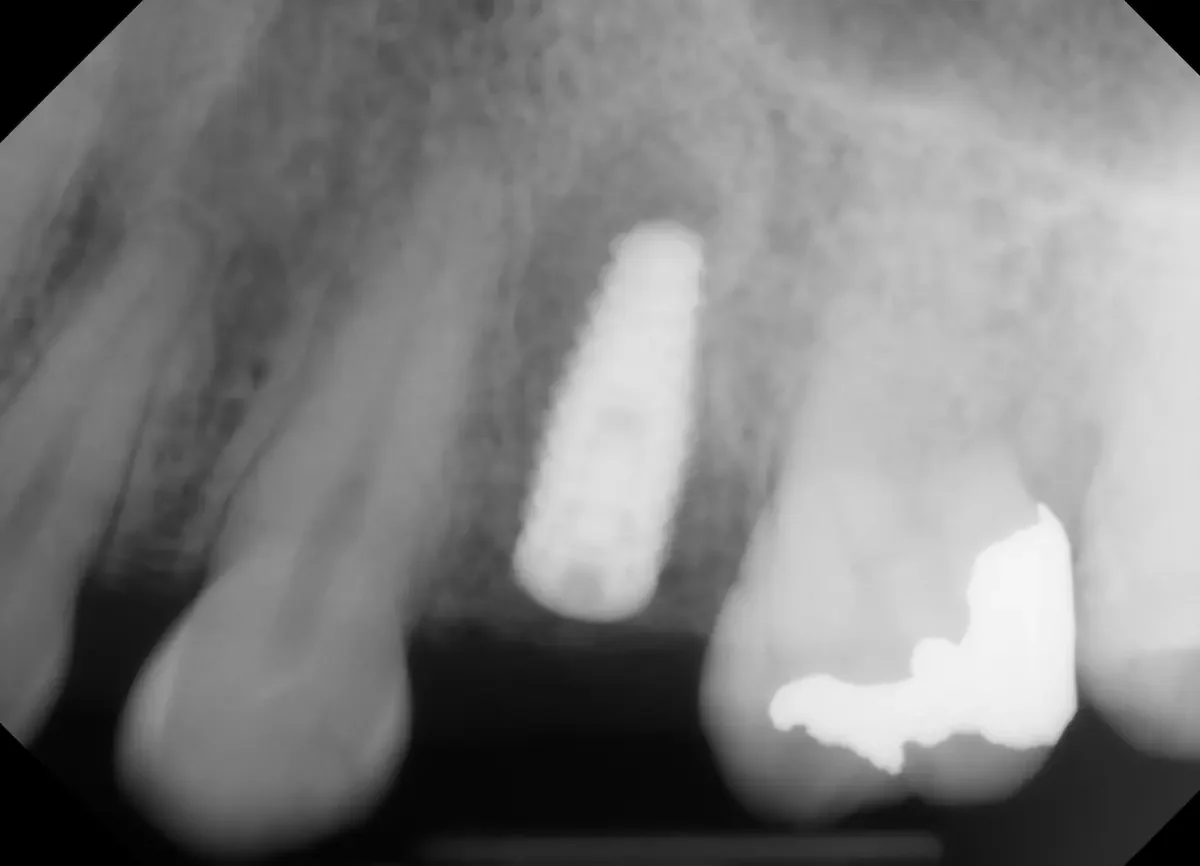
Perfect implant position on surgery day - due to precise planning.
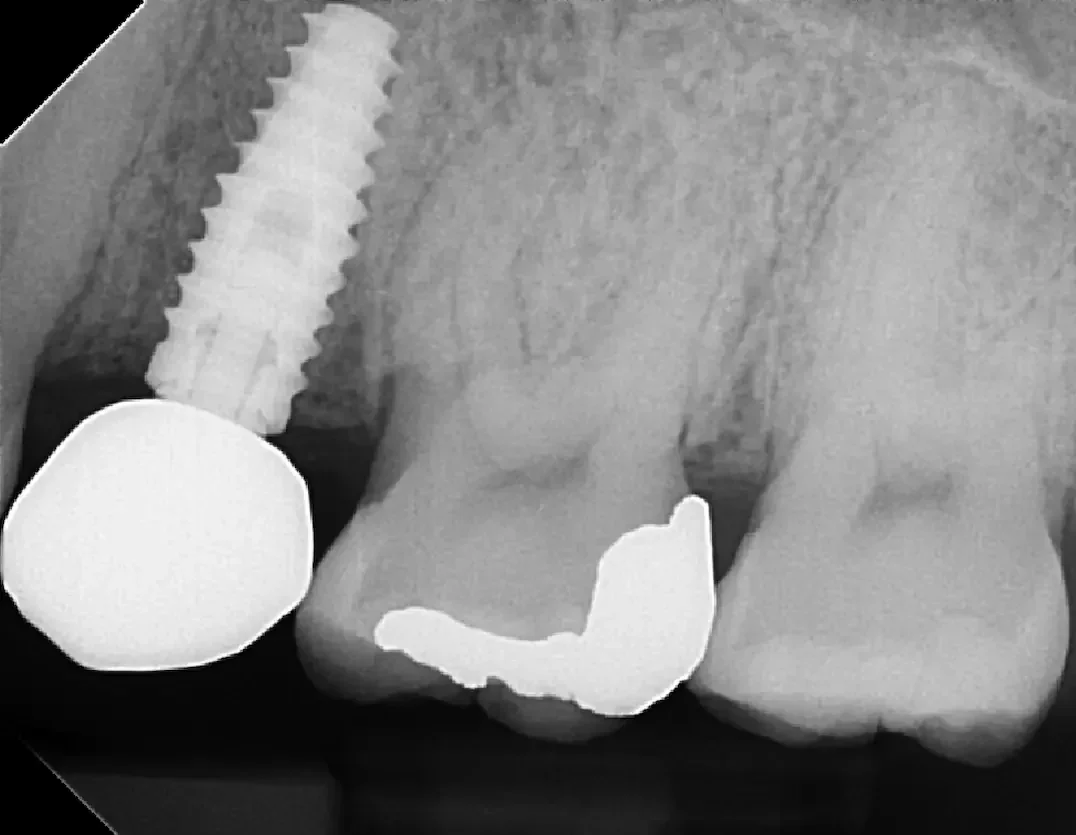
A beautiful final crown that fits perfectly into the patient’s bite - just like we planned.
Why Precision Matters at Teuscher Legacy Dental
Every implant case in our office is planned with BioHorizons implants (most often using Tapered Pro implants) and often using Densah osteotomy protocols — then executed using the same digital plan you see in your consultation.
That consistency creates:
📍 Precision – Implants placed exactly where the restoration belongs
💪 Predictability – More bone contact and less adjustment later
😊 Peace of mind – A precise plan is in place before surgery
Common Questions
Q: Can every implant be done with a guide?
Most can — especially single implants, multi-unit bridges, and full-arch cases. Some immediate extraction sites require slight modification or open-flap visualization, but we still base the surgery on the same digital plan.
Q: How long does it take to make a guide?
Typically 1–3 days from planning to printing.
Q: Is guided surgery more expensive?
Slightly, but it pays off in precision and peace of mind. Most of our implant fees already include guided placement.
Related Reading
Much more info on cost, timeline, and risks of dental implants here: Dental Implants
📍 Serving:
St. Charles IL | Campton Hills | Geneva | Elburn | Fox Valley
💬 Ready to Explore Dental Implants?
Schedule your Free Digital Smile Design & Implant Consult today.
📞 Call (630) 762-0000 or Book Online.