

Resin Infiltration: Erasing White Spots on Teeth - Without a Drill or Needle
Cosmetic Dentistry · St. Charles, IL
Those chalky white marks on your front teeth aren't stains, and no amount of brushing or whitening will remove them. Here's the conservative, single-visit treatment that can make them virtually disappear — while preserving nearly all of your natural enamel.

The Short Version
- White spots are structural — pores inside the enamel that scatter light. Whitening and brushing can't touch them.
- Resin infiltration fills those pores with a clear resin so light passes through normally and the spot blends in.
- One visit, about an hour. No drilling, and usually no anesthetic.
- It's the most conservative option — nearly all of your natural enamel stays intact, and every future treatment door stays open.
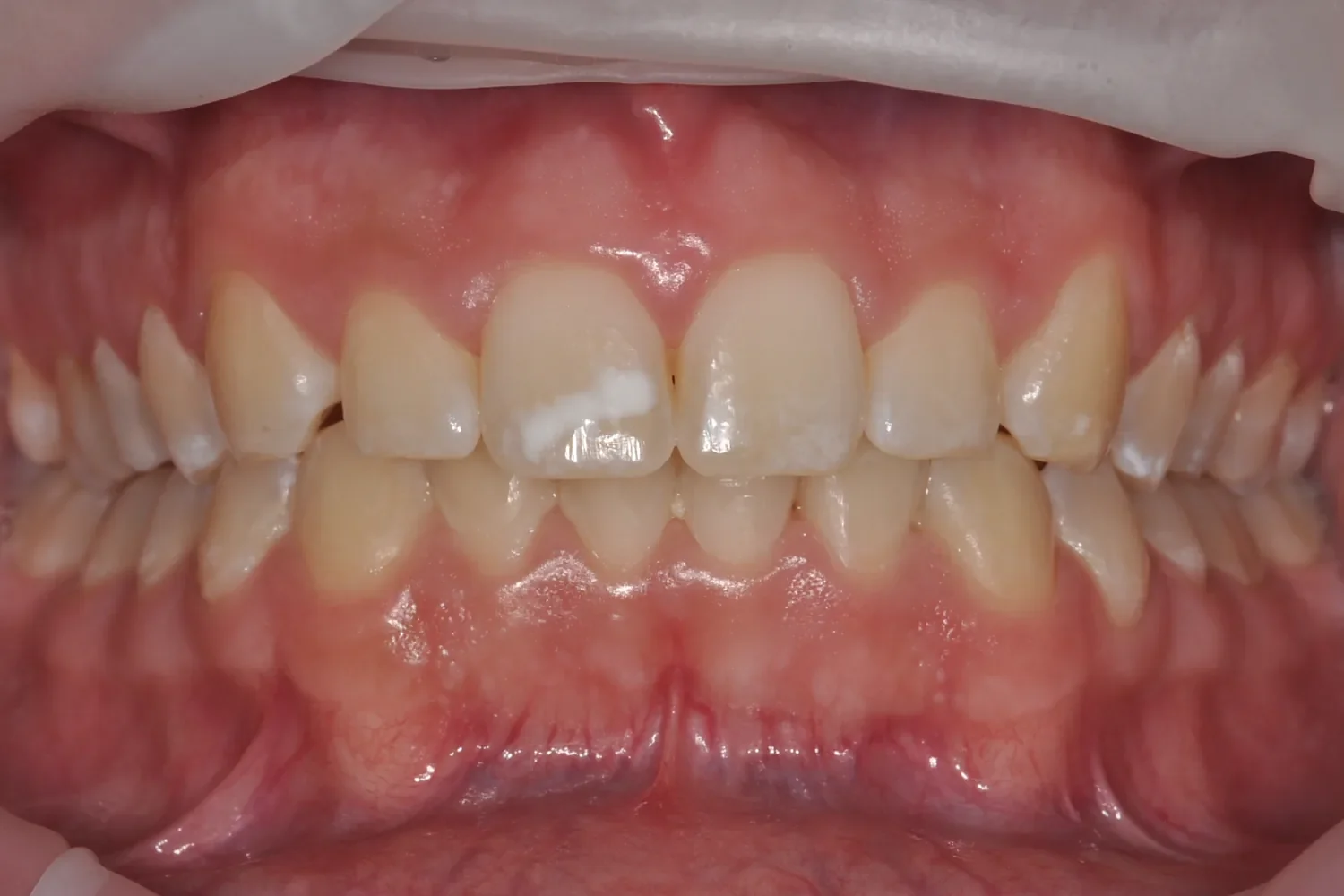
Do you have white, chalky spots on your front teeth that simply won't go away, no matter what you try? You're far from alone — and more importantly, you're not without options. These marks are notoriously resistant to brushing, whitening strips, and even professional cleanings, because they aren't surface stains at all. They're a structural change within the enamel itself.
The encouraging news: we can now treat many of these cases in a single visit, with no drilling and usually no anesthetic at all.
What Actually Causes White Spots on Teeth?
Healthy enamel is naturally translucent, allowing light to pass through smoothly to the dentin beneath. But when microscopic pockets of air or water form within that enamel, they change how light travels through it. Instead of passing evenly, light scatters off these pores — creating the chalky, opaque appearance dentists call a white spot lesion.
Because we approach dentistry from a whole-body perspective, we look at enamel health as one piece of a larger picture. White spots can develop from several different sources:
- Early demineralization — often driven by acid exposure, diet, dry mouth, or the oral microbiome
- Orthodontic treatment — difficulty cleaning thoroughly around brackets during braces
- The earliest stage of tooth decay — before an actual cavity forms
- Fluorosis — excess fluoride exposure during childhood tooth development
- Developmental enamel defects — irregularities that occurred while the tooth was still forming
Whatever the underlying cause, most white spots can be dramatically improved without a drill or a needle.
What Is Resin Infiltration?
Resin infiltration is a conservative cosmetic treatment that fills those microscopic pores with a clear, medical-grade dental resin. Once the resin cures, it restores the enamel's natural refractive properties — meaning light passes through the tooth the way it was designed to again, and the white spot visually blends back into the surrounding enamel.
Unlike a filling or a veneer, resin infiltration doesn't cover the problem — it corrects the way light interacts with your enamel at a microscopic level, preserving nearly all of your natural tooth.
What to Expect During Your Appointment
One of the greatest advantages of resin infiltration is how straightforward the visit is. Here's what treatment looks like from start to finish:
- Clean and isolate. The tooth is thoroughly cleaned and isolated to keep the treatment area completely dry.
- Prepare the enamel. A specialized gel is applied to gently open the surface of the affected enamel.
- Infiltrate. The tooth is dried and a low-viscosity liquid resin is applied, allowing it to soak deep into the porous, weakened enamel.
- Cure and polish. The resin is hardened with a curing light, then polished to a smooth, natural-looking finish.
Most patients describe the procedure as comfortable and easy, and it's typically completed in about an hour — often with no numbing required at all. Many watch something on the TV mounted above the chair and are surprised when we tell them we're finished.
Why Patients Choose Resin Infiltration
- No drilling
- Usually no anesthetic or numbing
- Preserves your healthy, natural tooth structure
- Immediate, visible cosmetic improvement
- Completed in a single one-hour visit
A Real Patient Case
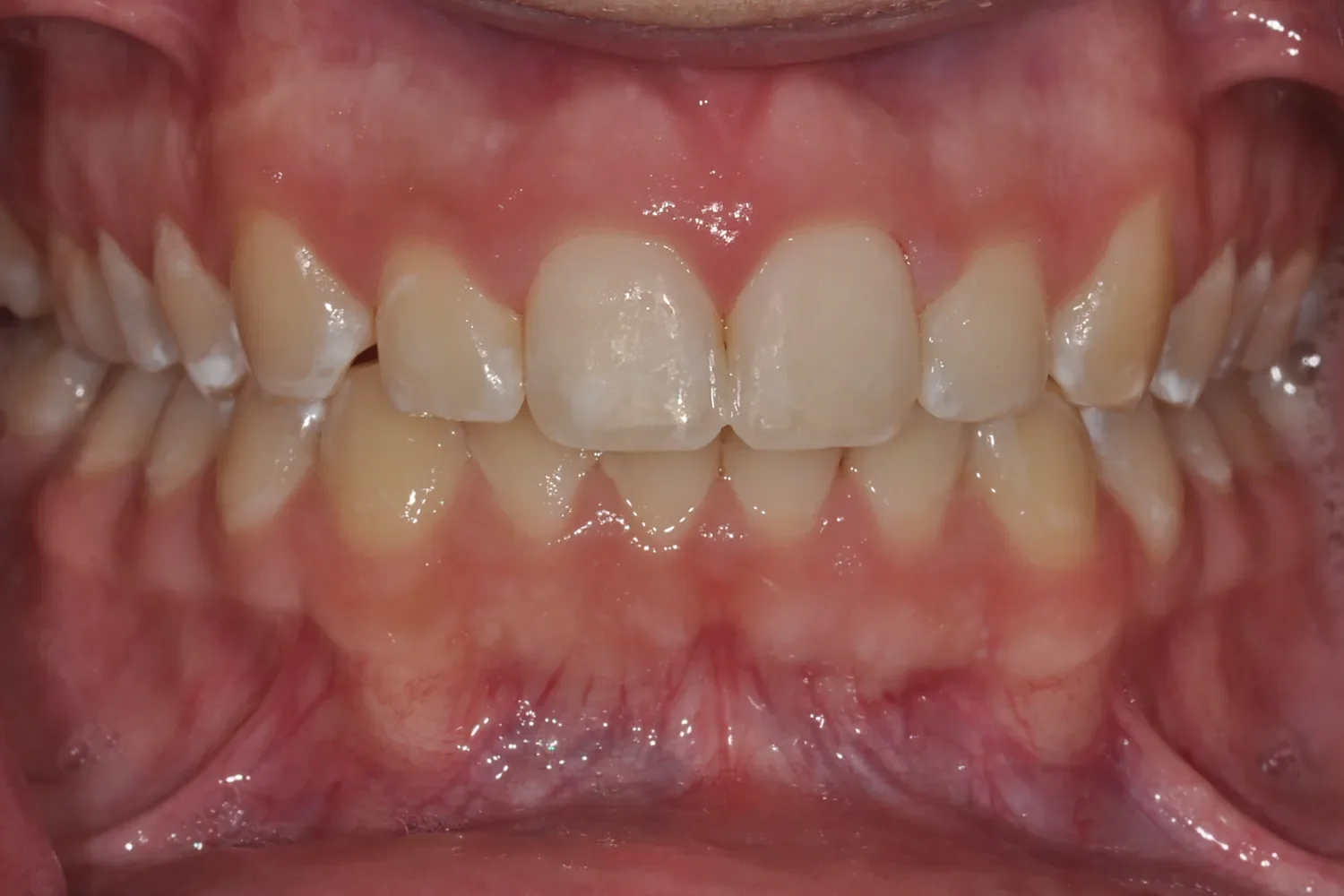
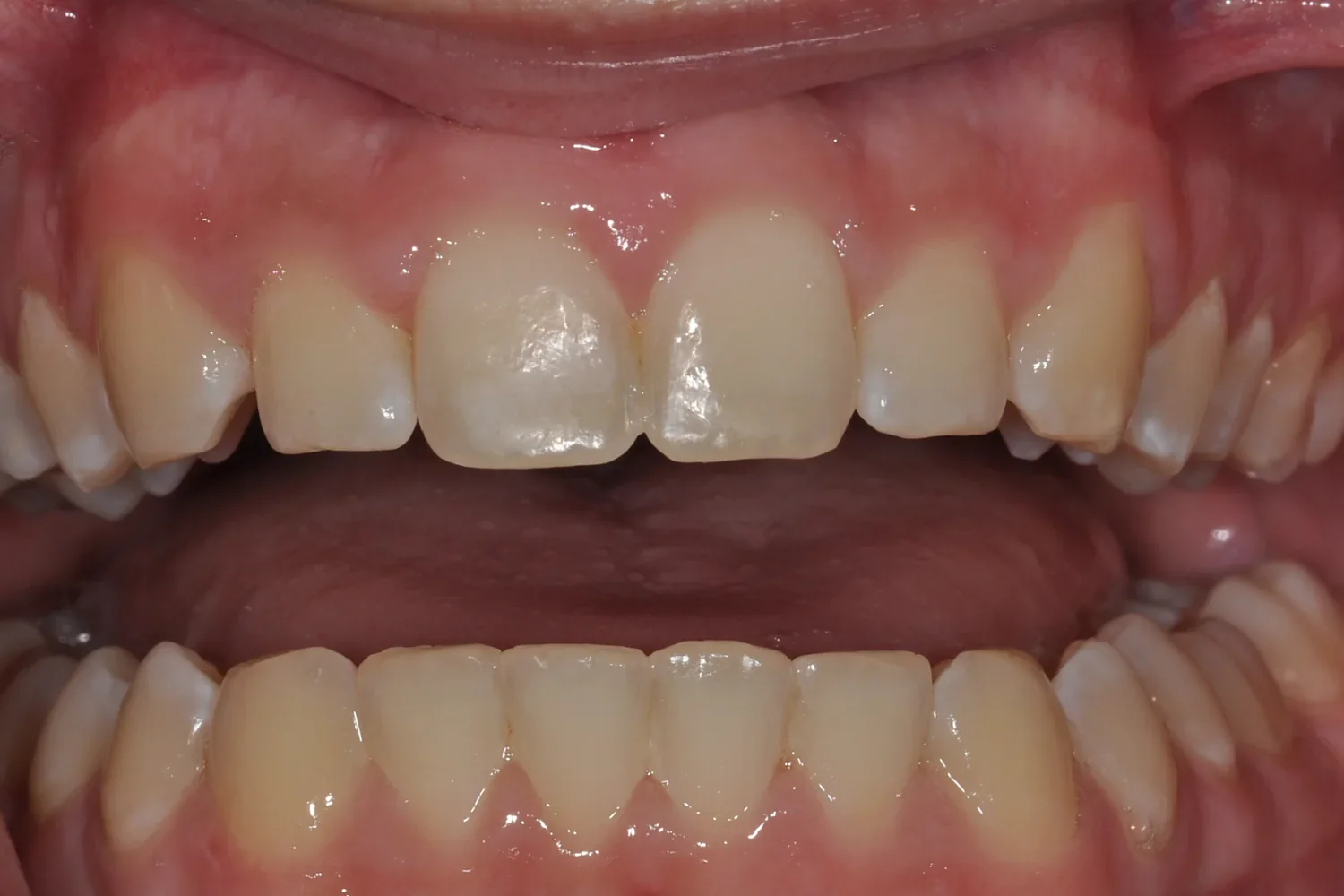
This young man was thrilled to finally have his braces removed — and who wouldn't be? His teeth were beautifully aligned, but the moment the brackets came off, chalky white spots on his two front teeth were impossible to ignore.
In a single one-hour appointment — no drill, no anesthetic — we performed resin infiltration on both central incisors. He walked out with an even, natural smile on the very same day his braces came off.
Curious what your own results could look like? A consultation takes about 30 minutes.
Book a ConsultIs Resin Infiltration Right for Everyone?
Every smile is different, and results vary depending on the depth and origin of the lesion. Deeper white spots and certain developmental enamel defects may improve significantly while remaining faintly visible. During a personal consultation, we'll carefully evaluate your enamel — often with magnification and digital imaging — and walk you through exactly what you can expect in your case. An honest conversation up front is what leads to a result you'll genuinely love.
How Long Do the Results Last?
With consistent home care and regular dental visits, results from resin infiltration can last well beyond a decade. Protecting that investment is simple: brush and floss consistently, follow the remineralization plan we recommend for you, and keep up with routine hygiene visits so the surrounding enamel stays strong.
Resin Infiltration vs. Veneers or Bonding — Which Is Right for You?
The right treatment always depends on your specific goals.
If white spots are your only concern, resin infiltration is typically the most conservative first step, because it preserves the maximum amount of natural enamel. Porcelain veneers or cosmetic bonding may be the better fit when a tooth has several concerns at once — discoloration, chips, worn edges, or a shape you'd like changed.
Whenever possible, we recommend the least invasive treatment capable of achieving an excellent, lasting result — never more dentistry than a smile actually needs.
Wondering if resin infiltration could work for you?
If white spots have kept you from smiling with full confidence, the best next step is a professional evaluation. We'd love to answer your questions and show you what's possible.
Book Your Consultation Or call us at (630) 762-0000 · Send us a messageFrequently Asked Questions
Does resin infiltration hurt?
For the vast majority of patients, no. Because there is no drilling and no removal of healthy tooth structure, anesthetic is usually unnecessary. Most patients describe the appointment as comfortable and relaxed.
How much does resin infiltration cost?
Cost depends on how many teeth are treated and the complexity of the case. Because resin infiltration preserves natural tooth structure, it is typically a fraction of the cost of veneers on the same teeth. We provide a clear, itemized estimate before any treatment begins — no surprises.
Will insurance cover it?
Resin infiltration is generally considered a cosmetic procedure, so most dental plans do not cover it. We're happy to review your specific benefits and discuss payment options during your consultation.
Can resin infiltration be combined with teeth whitening?
Yes, and sequence matters. When whitening is part of the plan, we typically whiten first and allow the shade to stabilize before infiltrating, so the resin blends seamlessly with your final tooth color.
Will the treated area stain over time?
The infiltrating resin is highly stain-resistant and doesn't respond to whitening the way natural enamel does. Routine hygiene visits and polishing keep the treated teeth looking their best long-term.
Is resin infiltration safe for teenagers?
Yes — in fact, teens who have just finished orthodontic treatment are among the most common candidates. It's a conservative option that leaves all future treatment doors open as they grow.
Dr. Jameson Teuscher, DMD Dr. Jameson practices cosmetic and family dentistry at Teuscher Legacy Dental in St. Charles, Illinois, where he and the team combine advanced technology — CBCT imaging, digital Medit scanning, and modern minimally invasive materials — with an unhurried, whole-body approach to care. He has a particular passion for conservative cosmetic dentistry that keeps as much natural tooth as possible. Meet our team →
This article is for educational purposes and is not a substitute for an in-person evaluation. Individual results vary. Photos are of an actual Teuscher Legacy Dental patient, published with permission.